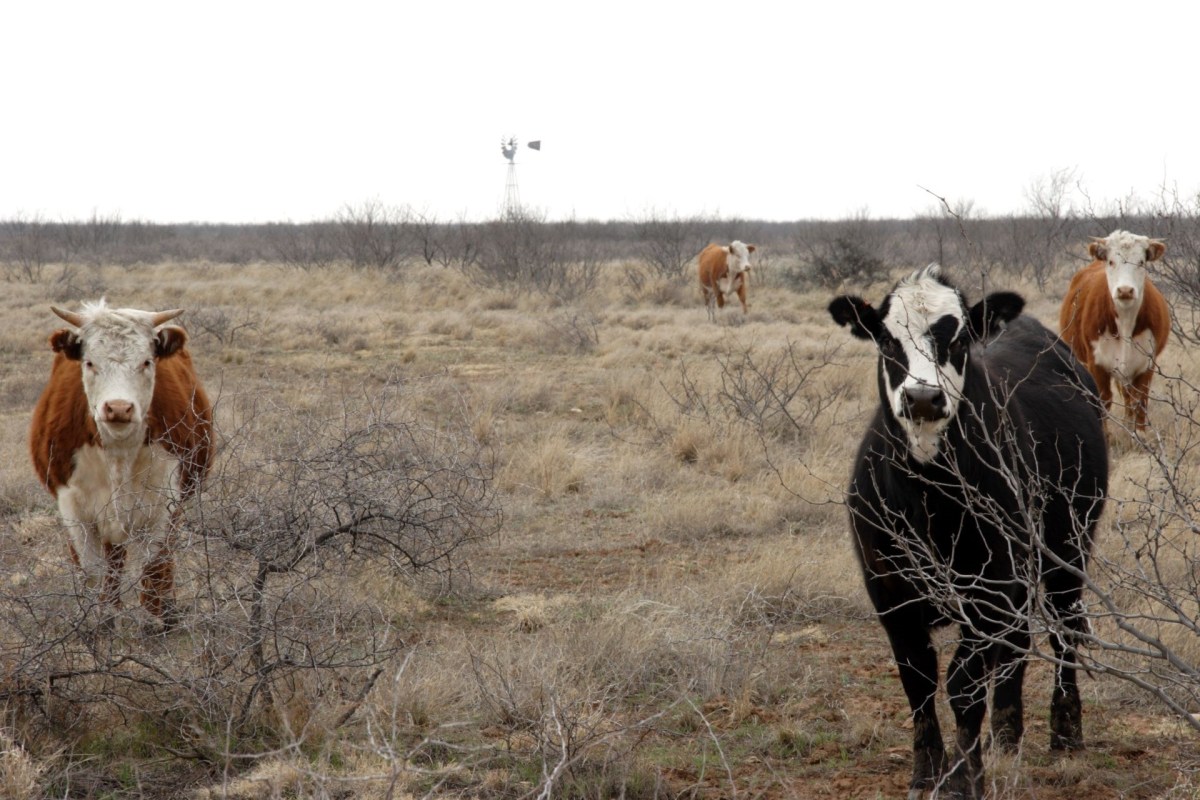
The Southern Plains are entering a sixth straight year of drought, and experts say the historic dry spell could permanently reshape one of the United States' most important industries: cattle ranching.
What's happening?
Large swaths of Oklahoma, Texas, and beyond have been locked in severe drought conditions.
According to Down to Earth, this cost the agriculture industry in Oklahoma, Texas, and Kansas an estimated $23.6 billion from 2020 to 2024.
In 2022 alone, 25% of Texas corn went unharvested, 45% of soybeans were abandoned, and 74% of the cotton crop was lost. Ranchers have been forced to sell off cattle because dried-out rangelands can't support grazing.
Experts point to a combination of rising global temperatures and repeated La Niña weather patterns, which tend to bring warmer and drier winters to the region.
Meanwhile, water reserves are under intense pressure. Key Rio Grande reservoirs were recently reported to be at just 11%, 34%, and 20% capacity. Even heavy rainstorms haven't been enough to fully replenish depleted rivers and aquifers.
TCD Picks » Quince Spotlight
💡These best-sellers from Quince deliver affordable, sustainable luxury for all




Why is this news concerning?
The Southern Plains have always experienced dry cycles, but today's droughts are lasting longer and hitting harder.
A recent study by the University of Reading found that warmer air pulls moisture from soil faster than rainfall can replace it. That means even regions with occasional storms can still experience severe agricultural drought if temperatures remain high.
For farmers and ranchers, this creates a dangerous cycle: failed crops, shrinking herds, rising feed costs, and mounting debt. Rebuilding a cattle herd takes years, and if another drought hits before recovery is complete, losses are compounded.
Beyond agriculture, prolonged drought increases wildfire risk and strains water supplies for millions of people. The Edwards Aquifer, which provides water to roughly 2.5 million Texans, has reached record-low levels in recent years.
|
Which of these savings plans for rooftop solar panels would be most appealing for you?
Click your choice to see results and speak your mind. |
 Save $1,000 this year 💸
 Worsening extreme weather endangers both lives and livelihoods. When water runs low and crops fail, food prices can rise, jobs can disappear, and rural communities face economic instability.
What's being done about these droughts?
Scientists are racing to help the agriculture industry adapt.
Researchers have uncovered how plants naturally grow deeper roots during dry periods. Teams at the University of Nottingham and Shanghai Jiao Tong University found that two plant hormones help roots grow at steeper angles, allowing crops to access water deep underground.
Farmers are also experimenting with soil conservation practices, drought-resistant seeds, and more efficient irrigation systems to reduce water waste.
For individuals, preparing for extreme weather is increasingly important. Simple steps, such as staying informed about the critical climate issues impacting the planet, can help communities stay resilient.

Get TCD's free newsletters for easy tips to save more, waste less, and make smarter choices — and earn up to $5,000 toward clean upgrades in TCD's exclusive Rewards Club.