


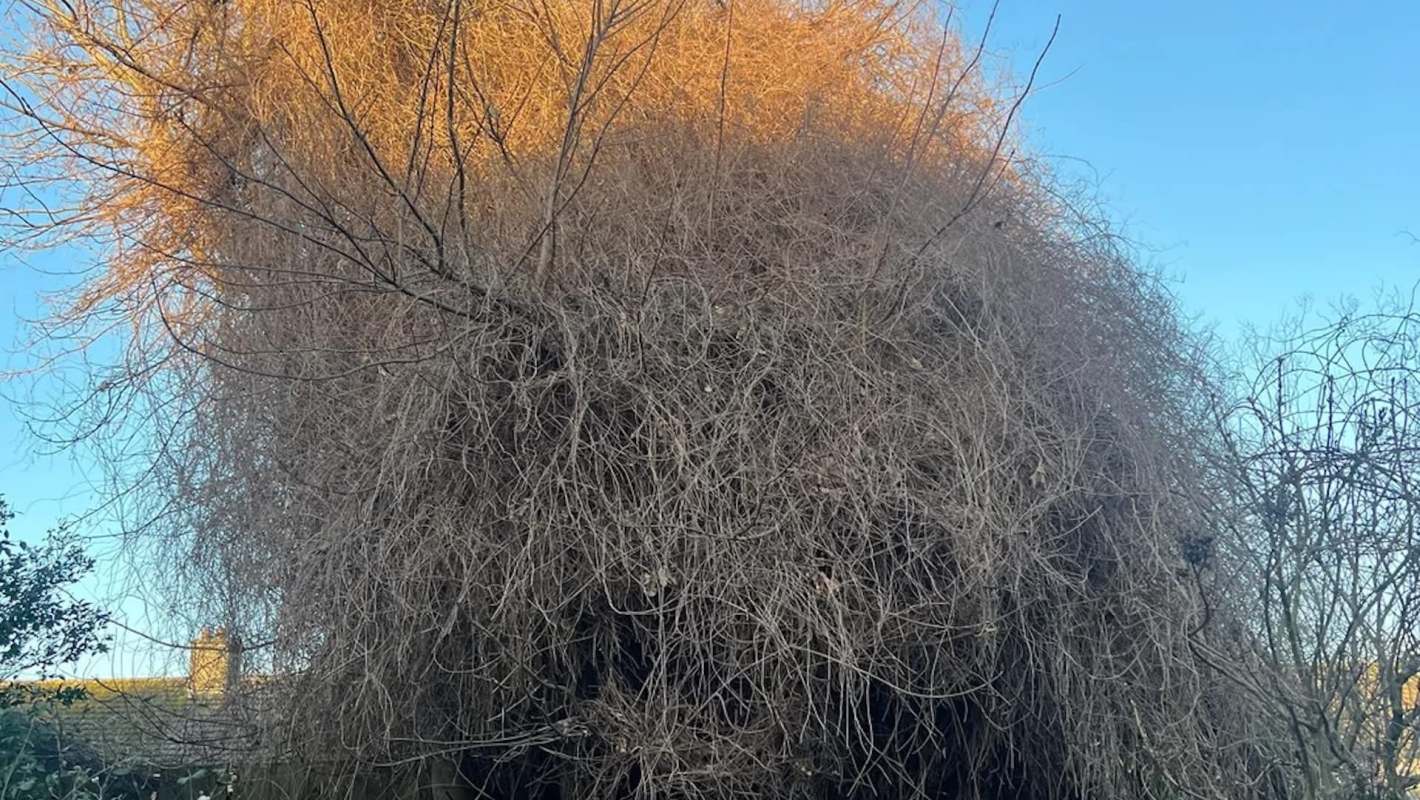
A Redditor encountered a threat sprawling across their backyard and looked to the community at r/GardeningUK for advice.
"A heavy invasive vine (I've been told it's Russian vine) is coming in from my neighbour's side and has basically taken over the back of the garden and a large tree," the original poster wrote alongside a couple of pictures. "I've cleared a decent chunk already, but the growth is so dense that even a short petrol multi-tool/mini chainsaw isn't really up to it."
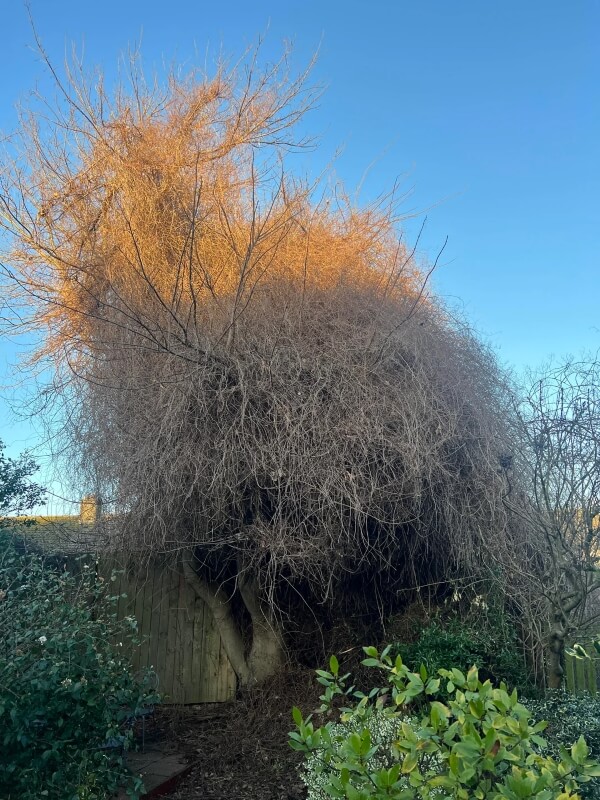
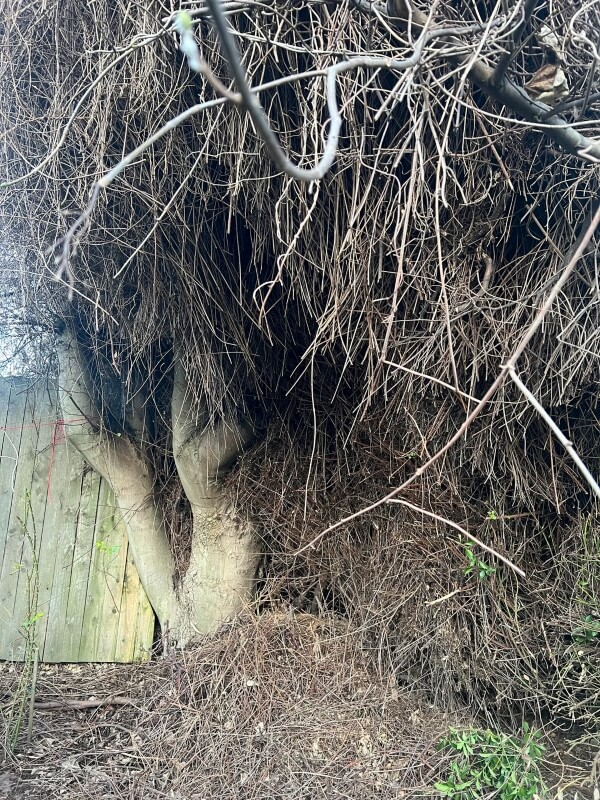
Russian vine has the nickname "mile-a-minute" for good reason. This plant is able to spread rapidly when left unchecked. Other homeowners have had cousins of Russian vine invade their yards as well.
Invasive species are usually brought into new environments by human transportation, whether intentional or accidental. Once freed from the balances that kept them in check, plants and animals can outcompete native species in their new homes. This creates monopolies on vital resources and results in a downturn in biodiversity.
Besides ecosystem damage, this cycle incurs costs on humanity, too. One estimate says invasive species generate hundreds of billions of dollars in economic losses annually.
Combatting the issue generally requires diligence. Once an invasive species is removed, it's important to maintain a yard with native plant varieties. Not only does this help ensure that no single species takes over everything, but it's also a way to reduce maintenance requirements. After all, native species have evolved for their local climates, making them notably cost-effective.
TCD Picks » Quince Spotlight
💡These best-sellers from Quince deliver affordable, sustainable luxury for all




The community had loads of warnings for the original poster.
"That looks like a massive fire waiting to happen," one commenter said.
"Chop it down. It's gonna starve other plants that gonna need water here and kill ya grass," another replied. "I cut three conifers down for same reason. Now lawn is trying to live again."
|
Which of these savings plans for rooftop solar panels would be most appealing for you?
Click your choice to see results and speak your mind. |
 Save $1,000 this year 💸
Get TCD's free newsletters for easy tips to save more, waste less, and make smarter choices — and earn up to $5,000 toward clean upgrades in TCD's exclusive Rewards Club.






