


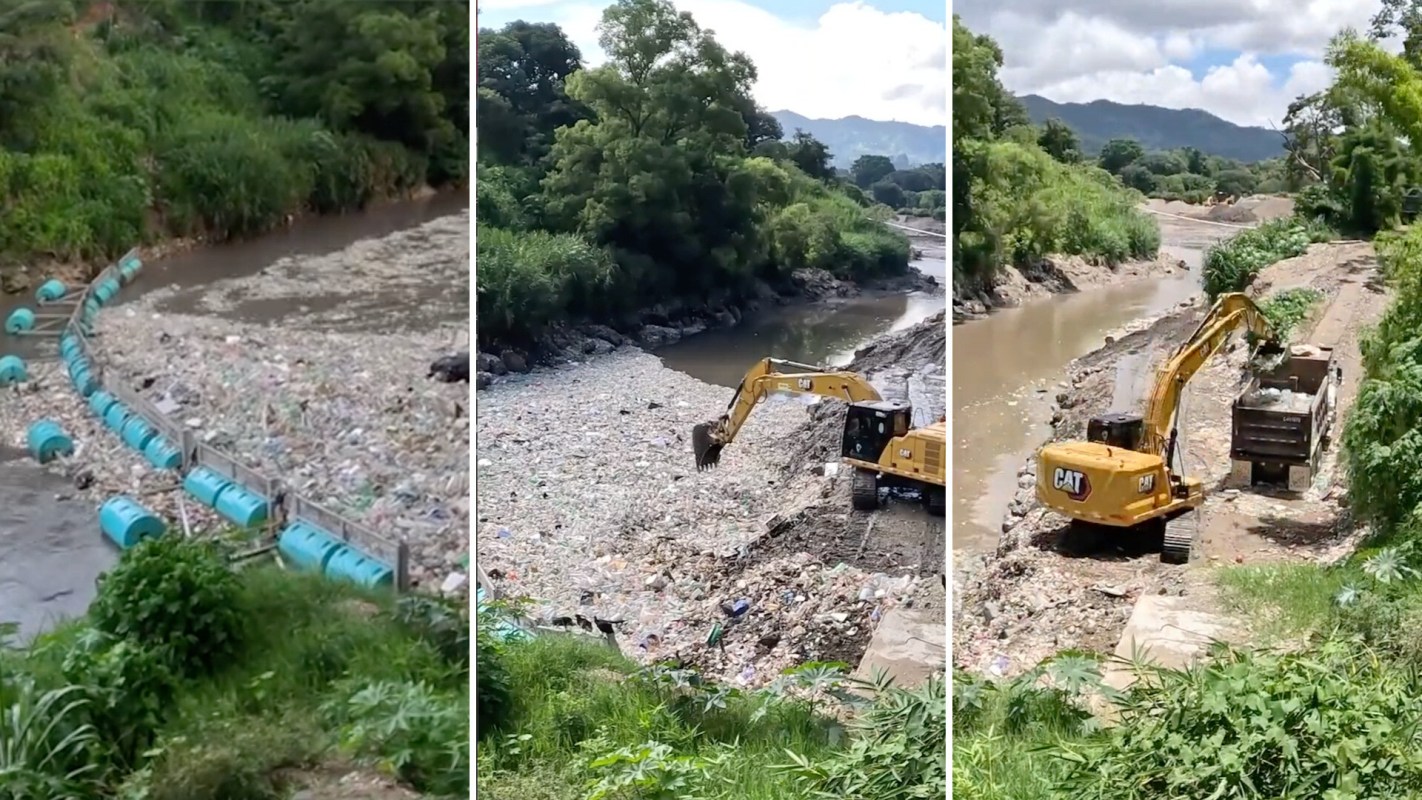
A time-lapse video of trash being removed from Guatemala's Rio Las Vacas illuminated the staggering depths of plastic pollution in rivers while providing hope for the future.
The organization behind the garbage removal, The Ocean Cleanup, posted the footage to its TikTok account (@theoceancleanup).
@theoceancleanup Another 140 tons (37 truckloads) intercepted and extracted from the Rio Las Vacas, Guatemala. #theoceancleanup #plasticpollution ♬ original sound - The Ocean Cleanup
The footage shows the beginning stages where approximately 140 tons of waste are captured in the Dutch nonprofit's Interceptor 006 Trashfence design. The satisfying part occurs next as an excavator comes to collect and remove all that garbage. It loads truck after truck, 37 in all, until nothing's left.
The Ocean Cleanup works on projects like this all over the globe, including Bangkok and California. For Rio Las Vacas, it revealed on its website that the trash problem was so immense during the rainy season that it had to upgrade and repair the system after it got overwhelmed.
The group's work keeps huge piles of trash from heading into the Gulf of Honduras and the world's oceans. The Ocean Cleanup's targeting of rivers is based on its findings that 80% of river plastic comes from a mere 1,000 rivers.
That's why it's deployed projects in other heavily-polluted rivers while it attacks pollution already present in the ocean, like the Great Pacific Garbage Patch.
TCD Picks » Quince Spotlight
💡These best-sellers from Quince deliver affordable, sustainable luxury for all




The challenge is immense, but the footage of the Interceptor 006 in action provides hope that by deploying technology smartly, cleaning the world's oceans and rivers is far from a lost cause. The company is targeting a 90% decrease in ocean plastic by 2040.
Clearing rivers is vital for reducing the impact of microplastics on marine life and further controlling the spread of plastics deep into the ocean. While fish and other species are the first to be impacted, the ripple effects extend to humans in our food and water sources. The associated microplastics are linked to a number of concerning health conditions.
Commenters expressed appreciation for The Ocean Cleanup's work.
"37 truckloads really puts [it] into perspective," a TikToker wrote. "Thank you guys so much for doing this."
|
What's the most you'd pay per month to put solar panels on your roof if there was no down payment?
Click your choice to see results and speak your mind. |
 $200 or more 💰
 "Man, watching the work y'all are doing is giving me life!" another user remarked.
"This is insaneee - one day only one river that many plastic," a viewer reacted. "We need to take a lesson guys."

Get TCD's free newsletters for easy tips to save more, waste less, and make smarter choices — and earn up to $5,000 toward clean upgrades in TCD's exclusive Rewards Club.







