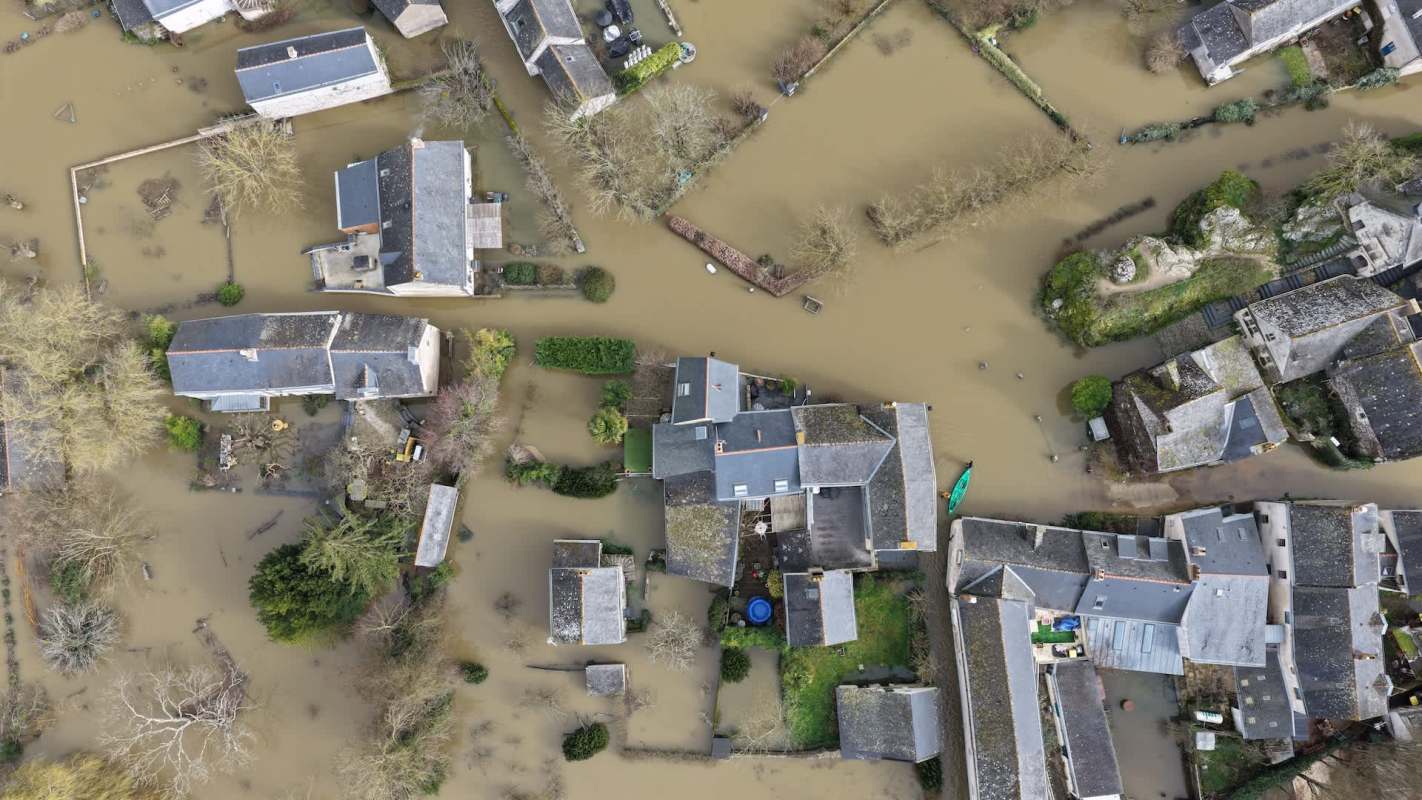
Back-to-back winter storms have left three dead between France and Spain, with France's flood monitoring network reporting that conditions have shattered every previous record, reported Euronews.
What's happening?
France has spent the last 30 days on continuous high-level flood watch, per Météo-France, the national weather service. The country's flood monitoring agency, Vigicrues, said the situation is unlike anything they've tracked before.
"For 30 days we have been in continuous orange or red alert somewhere on the national territory," Lucie Chadourne-Facon, director of Vigicrues, said on Feb. 14. "That is 81 departments in alert simultaneously for 154 rivers, so we have exceeded all our records."
The Garonne River overflowed in southwestern France, sending water through roads and homes. The ground across the country is wetter than at any point since 1959, when monitoring started.
"We are facing a generalised flood situation across the entire country because all the soils are saturated everywhere" and have "lost their infiltration capacity," Chadourne-Facon said.
Two people died in France because of Storm Nils. One person died in Landes, and another person lost their life in Tarn-et-Garonne, according to government spokesperson Maud Bregeon. Days later, Storm Oriana struck Spain with winds peaking at 166 kph, or about 103 mph, and rescue teams moved over 3,000 residents to safety.
TCD Picks » Quince Spotlight
💡These best-sellers from Quince deliver affordable, sustainable luxury for all




Why are these floods concerning?
Flooding on this scale puts people in real physical danger, and for those who survive, the recovery can take years. Homes fill with contaminated water, and small businesses shut down for good.
Then there's the money side. Every time a flood hits the same area, insurance companies raise premiums or pull out of the market altogether. That leaves families stuck paying out of pocket or unable to sell their homes.
A warmer atmosphere holds onto more moisture, which leads to heavier downpours when storms roll through. Weather-related disasters occur five times more frequently than they did half a century ago, according to the World Meteorological Organization. What's happening in France and Spain fits that pattern, and our overheating planet is making these events harder to avoid.
What's being done about these floods?
Flood warning systems like Vigicrues are already working overtime, and governments across Europe have been investing in upgraded levees and water management programs.
TCD Picks » Quince Spotlight
💡These best-sellers from Quince deliver affordable, sustainable luxury for all
|
What's the most you'd pay per month to put solar panels on your roof if there was no down payment?
Click your choice to see results and speak your mind. |
 $200 or more 💰
 On a personal level, if you're in an area prone to flooding, stock a kit with at least three days' worth of water, food, and any medications you take. Map out your evacuation routes now, before you need them. Consider talking with your neighbors about preparing as well.
You can make your voice heard on the policy side, too. Contact your elected officials, and push for stronger infrastructure spending and community-level flood preparation programs.

Get TCD's free newsletters for easy tips to save more, waste less, and make smarter choices — and earn up to $5,000 toward clean upgrades in TCD's exclusive Rewards Club.