


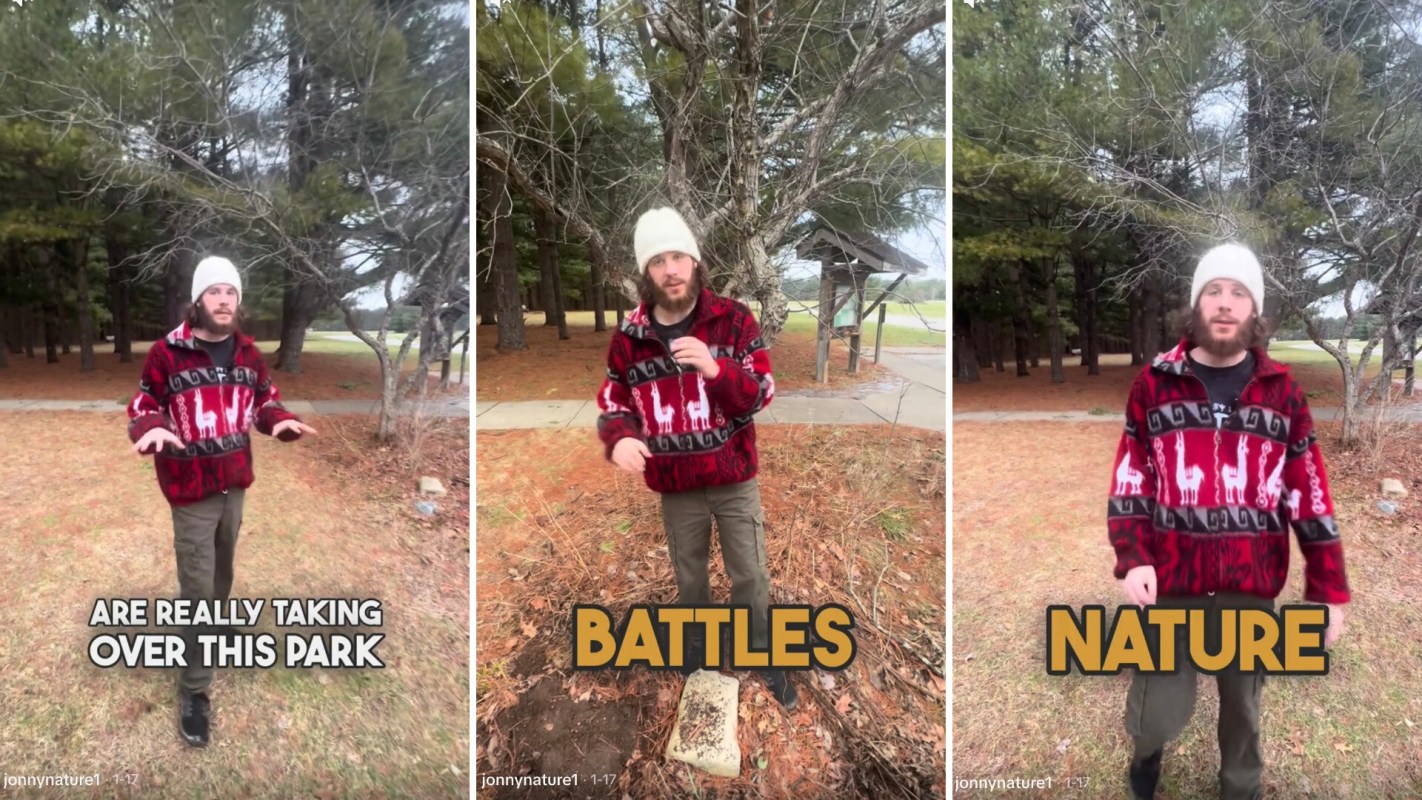
Certain honeysuckle bushes have been popular ornamental landscaping plants in North America, but over time, they have become invasive pests. One nature enthusiast shared a quick way he dealt with this problem.
On TikTok, Jonnynature (@jonnynature1) shared a video of himself visiting a nature park and spotting a honeysuckle bush. "I just cannot allow honeysuckle to be here, so I need to do my part," he said before ripping the bush straight out of the ground.
@jonnynature1 We can't allow invasive species to continue taking over all our landscapes 🌿 #native #nature #ecosystem ♬ realization (slowed) - FutureVille
Jonny added, "They're invading the woodlands" and said that he wanted to at least remove one that's so close to the park's parking lot to hopefully educate people. Jonny didn't leave the area a bare mess, either; he added some native plant seeds to help take back the space once held by the honeysuckle plant. It is not clear whether the park had approved of him pulling the plant, though this would ideally have been the case.
Although some honeysuckle species are native to the U.S., invasive bush honeysuckle plants are often able to outcompete native plants due to the fact that they are among the first to flower in spring and last to drop leaves in the fall, as noted by the Brandywine Conservancy. Additionally, the invasive species benefit by being quick-growing and having fruits whose seeds are easily dispersed by birds over wide ranges.
They can be a headache to remove for homeowners too, as they require repeated cutting back or mowing. They can often grow back denser after a single cut. According to the Brandywine website, removing them in winter, as shown in the TikTok video, is the best way to combat their growth. Several other sites recommend uprooting the shrubs entirely, where possible.
Opting for native plants in your yard or garden can help reduce your maintenance demands and save money on other resources, including water. There are many options, such as clover and buffalo grass, that provide low-maintenance ground cover for yards, as well as xeriscaping, a landscaping technique focused on reducing water use.
TCD Picks » Quince Spotlight
💡These best-sellers from Quince deliver affordable, sustainable luxury for all




Native plants also support pollinators, which play a crucial role in the life cycles of thousands of plants, including human food crops.
People in the comments loved Jonny's suggestion to be aggressive when it comes to invasive bush honeysuckle removal.
However, unsanctioned plant-pulling in a park, even if it's well-intentioned, can have various risks, especially if you don't know exactly what you are doing.
For one thing, you should be sure you know how to distinguish nonnative and invasive plants from native ones. The Vermont Invasives organization, for example, discusses some of the differences between invasive bush honeysuckles and native honeysuckles.
|
What's the most you'd pay per month to put solar panels on your roof if there was no down payment?
Click your choice to see results and speak your mind. |
 $200 or more 💰
 For another, removal of plants can be illegal in some public spaces. Or, if not performed properly, it can actually spur the growth of weeds or harmful erosion.
The National Park Service says not to remove invasive plants in a national park on your own and instead recommends telling a park official or joining a volunteer effort to help. Indeed, supervised volunteer events that focus on pulling invasives are widespread and positive options for taking action in various communities.
One commenter on the video noted: "I'm constantly participating in invasive plant pulls in my local parks. We need more people doing this!"

Get TCD's free newsletters for easy tips to save more, waste less, and make smarter choices — and earn up to $5,000 toward clean upgrades in TCD's exclusive Rewards Club.






