


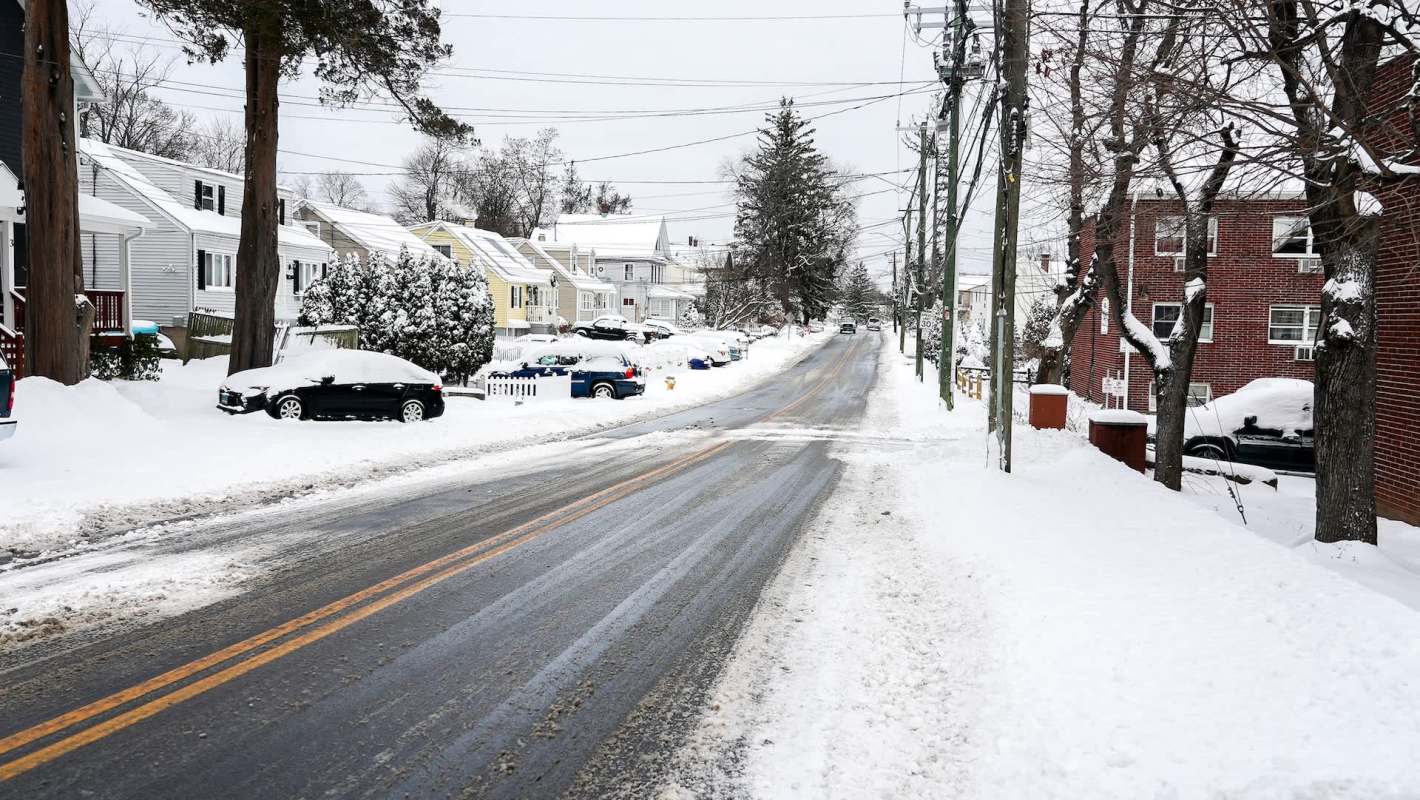
Winter storms that brought record-breaking cold and unprecedented snowfall made headlines in January, but in the end, the middle month of meteorological winter was warmer than average by a big margin.
The eastern half of the country was impacted by at least five of what the National Centers for Environmental Information describes as "notable weather and climate events" during the first month of the year.
"A long-duration winter storm crippled a broad swath of the central and eastern U.S. during Jan. 23-26, bringing significant snow and ice from the southern Plains through the Deep South and across the Ohio Valley into the Northeast," noted the NCEI's January national climate report.
Despite that storm and another that followed a few days later, which for the first time ever brought snow to all 100 of North Carolina's counties, last month was the 24th-warmest January on record for the contiguous U.S. The average temperature was more than 3 degrees above the 20th-century average.
Arctic blasts and winter storms took the greatest toll on states in the Ohio Valley, the Mid-Atlantic, and the Northeast. Ohio recorded its 32nd-coldest January, about 4 degrees below normal. Pennsylvania also had its 32nd-coldest January, just over 3 degrees below average, while West Virginia's 41st-coldest January came in nearly 3 degrees below average.
More than 1,800 record lows were tied or broken in January, according to NCEI climate data. Some of the jaw-dropping temperatures reported during the month included 39 degrees below zero at Gunflint Lake, Minnesota; minus 38 at Old Faithful in Wyoming; minus 34 in Eagle River, Wisconsin; and minus 34 at New York's Watertown International Airport.
TCD Picks » Quince Spotlight
💡These best-sellers from Quince deliver affordable, sustainable luxury for all




Arctic blasts couldn't offset the West's heat, which made January overall warmer than normal across the U.S. Several western states were unseasonably warm. Arizona, Oregon, Idaho, California, Utah, Nevada, and Wyoming each had a January that ranked among their 10 warmest on record. Montana experienced its 11th-warmest January on record, while Washington had its 12th-warmest.
While there are extreme examples of weather whiplash, especially during winter, it's important to look at a longer-term range of climate data. Canaan Valley Wildlife Refuge near Davis, West Virginia, dropped all the way down to 27 degrees below zero Monday before soaring to 53 degrees Tuesday for an 80-degree swing in temperatures in just 24 hours.
Looking further back removes some of the statistical noise and reveals a clear picture: Record warmth is far outpacing record cold. Over the last 365 days, more than 40,000 record-high temperatures were set in the U.S., compared with just over 12,000 record-low temperatures.
It's complex, but scientists warn that a warming planet is destabilizing the polar vortex, potentially sending more frequent Arctic air outbreaks south into the midlatitudes. Scientists say Arctic amplification is contributing to the disruption of the jet stream. The Arctic is heating two to four times faster, with December sea ice hitting a record low.
"The big swings of the jet stream tend to be very persistent and to stay in the same place for a long time," according to Dr. Jennifer Francis, senior atmospheric scientist at the Woodwell Climate Research Center, per the Arctic Council.
"As each wave brings either warm or cold air to a region, this slow movement can cause extreme weather patterns, such as heat waves, floods, cold spells, storms, and droughts — and we are seeing these wavey patterns happen more frequently."
|
What's the most you'd pay per month to put solar panels on your roof if there was no down payment?
Click your choice to see results and speak your mind. |
 $200 or more 💰
Get TCD's free newsletters for easy tips to save more, waste less, and make smarter choices — and earn up to $5,000 toward clean upgrades in TCD's exclusive Rewards Club.







