


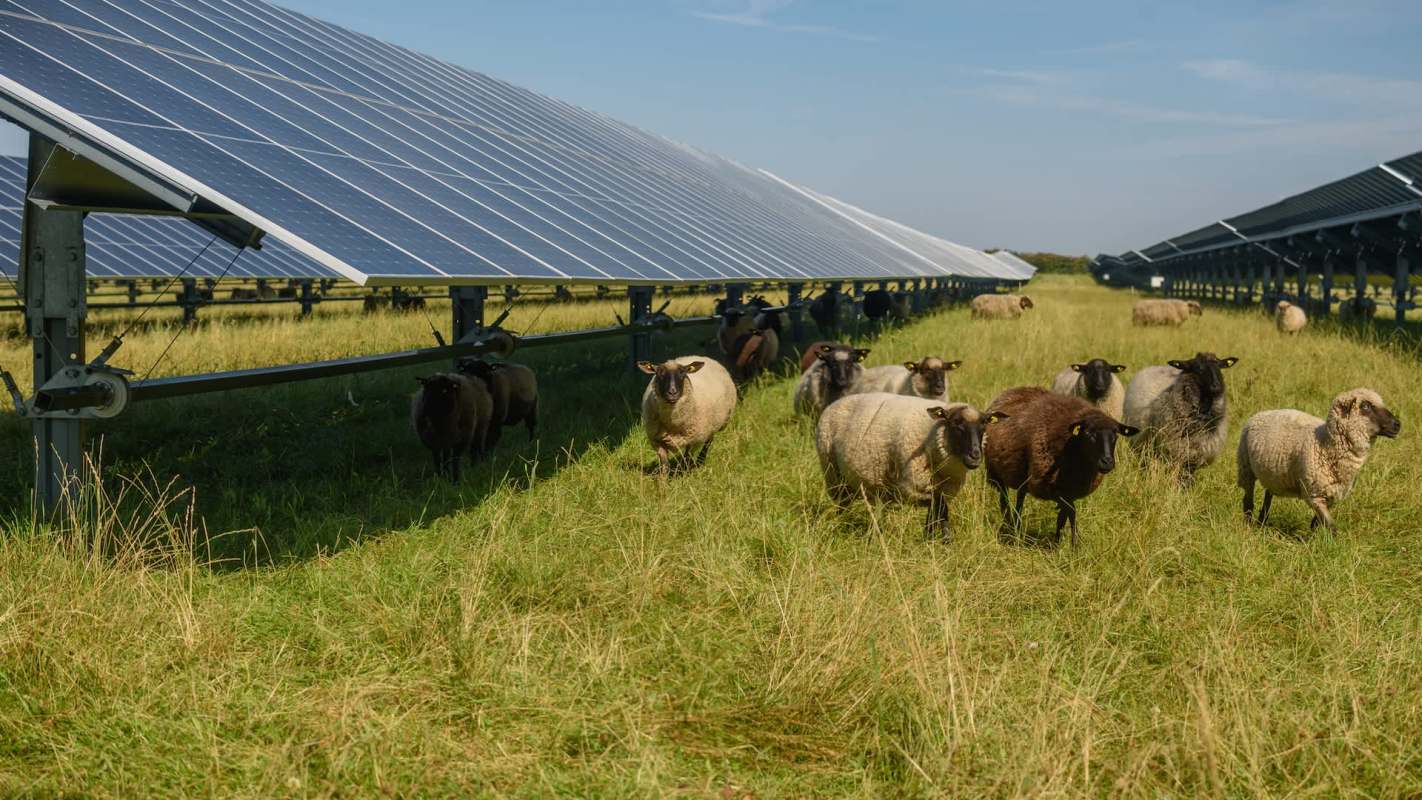
Solar power is re-energizing a staple U.K. job: sheep farming.
The Guardian reported that farmers are unlocking acres of free grazing opportunities underneath and around arrays. The practice, called agrivoltaics, is a unique way to maximize land use with multiple benefits. Electricity generation is an important one as global power demand continues to increase.
Lincolnshire shepherd Hannah Thorogood told the publication that she has been able to grow her flock from 20 sheep to 200 thanks to abundant grazing allowed by certain solar site operators.
"Solar grazing has given me a massive leg up," Thorogood said.
The extra grass is arriving at an opportune time for the industry. The animal is grown in England for meat and wool, but high costs have contributed to the lowest herd numbers on record. Data collector Statista listed the 2023 population at 21.2 million, its lowest since at least 2015.
On the energy side, solar and wind are the cheapest and fastest power sources to develop, according to New York financial advisory firm Lazard. More juice is needed to meet surging data center energy demand that's driving electricity rates higher. In America, it's widely reported that utility costs are rising twice as fast as inflation.
TCD Picks » Quince Spotlight
💡These best-sellers from Quince deliver affordable, sustainable luxury for all




It's a seemingly perfect scenario, as there's plenty of grass that would otherwise require costly equipment and human labor to cut. But the reception isn't entirely warm and fuzzy.
Solar farm critics are concerned about using acres of land, often agricultural property, for panel installations. The Campaign to Protect Rural England reported that two-thirds of "mega solar farms" are built on once-productive fields that are now leased for solar use.
In response, CPRE is lobbying for 60% of the country's solar power to be generated via rooftop systems, with protections for farmland. Home solar is a great way to achieve energy independence by reducing or eliminating electricity bills. But the need for grid-level energy stability remains.
Agrivoltaics could be a middle ground for solar developers and farmland advocates to deliver the megawatts without completely removing land's agricultural value. And the possibilities go beyond sheep.
|
What's the most you'd pay per month to put solar panels on your roof if there was no down payment?
Click your choice to see results and speak your mind. |
 $200 or more 💰
 An operation in Virginia is combining panels with beekeeping, boosting habitat for crucial pollinators. Certain crops thrive when planted in shade under arrays as well.
The National Sheep Association's Nicola Noble told The Guardian that free solar grazing is a "valuable opportunity for new, younger, or smaller farmers."
Pennsylvania's Lancaster Farming added that an acre of good grassland can sustain four to six sheep. Solar systems typically use between 1 and 100 acres of land, the London-based Solar Trade Association noted.
For their part, solar operators enjoy well-abled grass tenders that slip between panel legs to access hard-to-reach places. The sheep also cut down on the use of exhaust-fuming machinery, unless the crews have electric tools. Mowing and spraying costs can reach £50,000 ($68,843) a year on an average solar farm, according to The Guardian.
What's more, a sheep study from a Lightsource BP grazing-solar operation in Australia found that the shady experience might improve wool quality, pending longer-term data to confirm early results.
"This sort of multiple land use is vital," professor Alona Armstrong of England's Lancaster University said.

Get TCD's free newsletters for easy tips to save more, waste less, and make smarter choices — and earn up to $5,000 toward clean upgrades in TCD's exclusive Rewards Club.






