


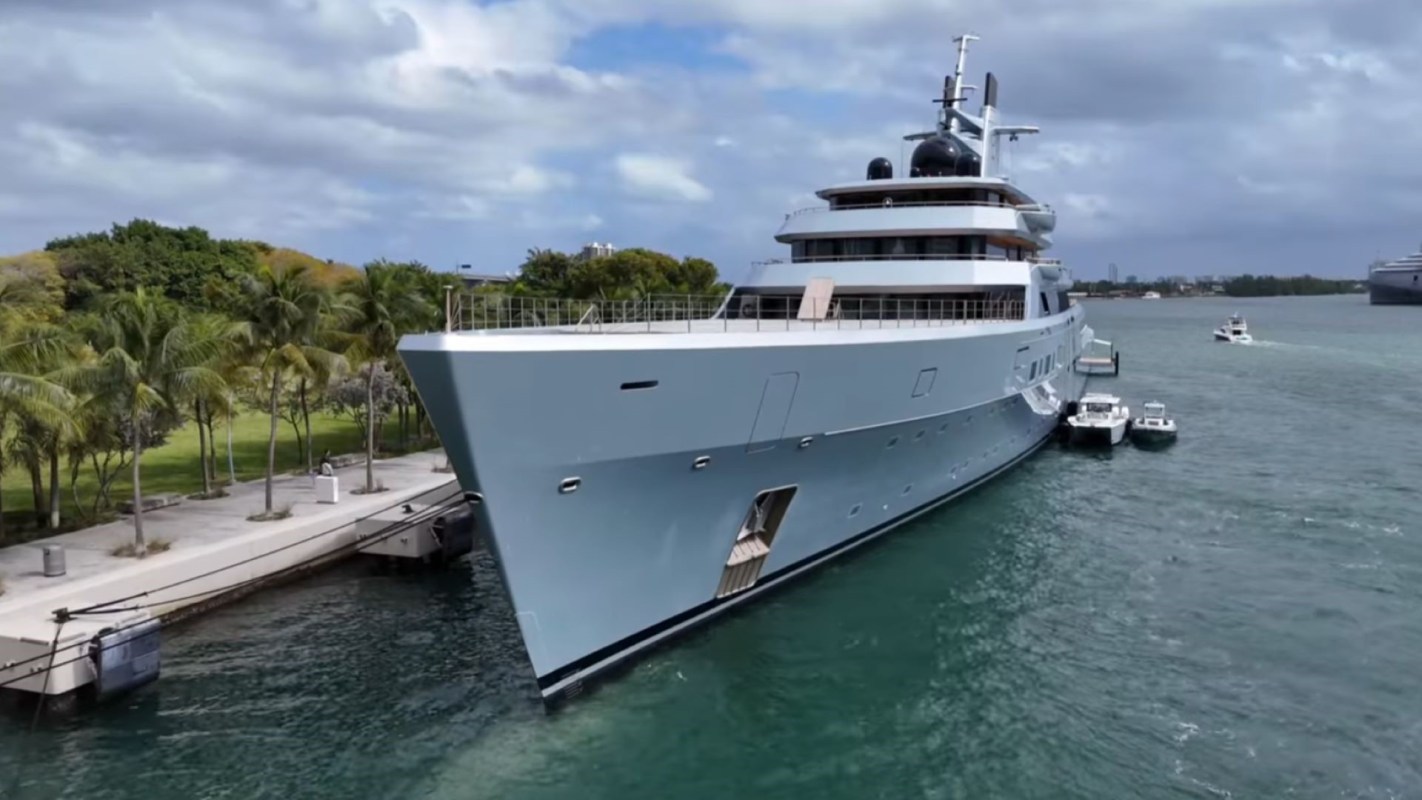
While millions of Americans worry about rising home energy costs, one $450 million megayacht consumes enough electricity each day to supply about 800 homes.
The colossal 466-foot-long vessel was on stark display in early December, docked during the Art Basel 2025 show in Miami Beach. Called Dragonfly, the megayacht is owned by Google co-founder Sergey Brin, who sailed it into Florida for the elite art showcase.
With a status as one of the largest private yachts in the world, Luxurylaunches described Dragonfly as "something closer to a floating skyscraper than a yacht." The vessel has enough space to house up to 18 guests — and a 40-member crew.
While Brin visited Art Basel, his docked megayacht continued to run its extensive energy-hungry systems — including air conditioning, lights, IT infrastructure, security systems, and more. The result is a concerning environmental impact that shows the gap between the ultra-wealthy and the average American.
Together, all of Dragonfly's luxe megayacht accommodations consume electricity at a rate equivalent to powering hundreds of average Florida homes per day. Experts told Luxurylaunches that on a heavy operational day, Dragonfly can consume an estimated 28,800 kilowatt-hours in 24 hours. The average Florida household uses about 1,104 kilowatt-hours per month.
"Dragonfly's single day at the dock equals the daily electricity use of roughly 780 to 800 Florida households," the outlet noted. "Look at it another way, and it is about 26 Florida households' entire monthly consumption, burned through in 24 hours."
TCD Picks » Quince Spotlight
💡These best-sellers from Quince deliver affordable, sustainable luxury for all




With electricity totaling an estimated $0.30 per kilowatt-hour, Luxurylaunches noted that Dragonfly's electricity bill alone comes to roughly $8,640 per day. Dragonfly runs on a hybrid diesel-electric system, which helps offset some of its environmental impact — but certainly not enough to classify it as environmentally clean or neutral.
As many communities face rising energy costs and feel the burdens of rising global pollution, the ultra-wealthy continue to burn resources at an astonishing — and largely unchecked — scale.
This massive consumption simply for pure luxury undercuts collective efforts to slow rising global temperatures. Stronger climate policy, true accountability, and greater investment in clean energy are needed to help address resource overuse and the growing damage superyachts cause to our oceans.
All superyachts also have outsized impacts on marine ecosystems and human health, regardless of whether they are electric, hybrid, or powered entirely by dirty energy. Beyond harmful carbon pollution, superyachts release wastewater, generate plastic waste, and flood marine environments with artificial light.
|
What's the most you'd pay per month to put solar panels on your roof if there was no down payment?
Click your choice to see results and speak your mind. |
 $200 or more 💰
 Notably, superyachts also generate a great deal of noise pollution, an often overlooked threat that experts warn can be as damaging as air pollution. Research links chronic noise exposure to hearing loss, sleep disruption, cardiovascular disease, high blood pressure, and developmental delays in children.
At sea, excessive noise can interfere with whale and dolphin communication, placing species that depend on sound for navigation, feeding, and survival at risk.
Dragonfly may turn heads for its massive size and luxury, but its harmful environmental impact is impossible to ignore. As the realities of environmental pollution become increasingly dire, the extreme excess of superyachts like Dragonfly shows how the wealthy can sidestep environmental responsibility — while contributing to global pollution on a scale few others ever could.

Get TCD's free newsletters for easy tips to save more, waste less, and make smarter choices — and earn up to $5,000 toward clean upgrades in TCD's exclusive Rewards Club.






