


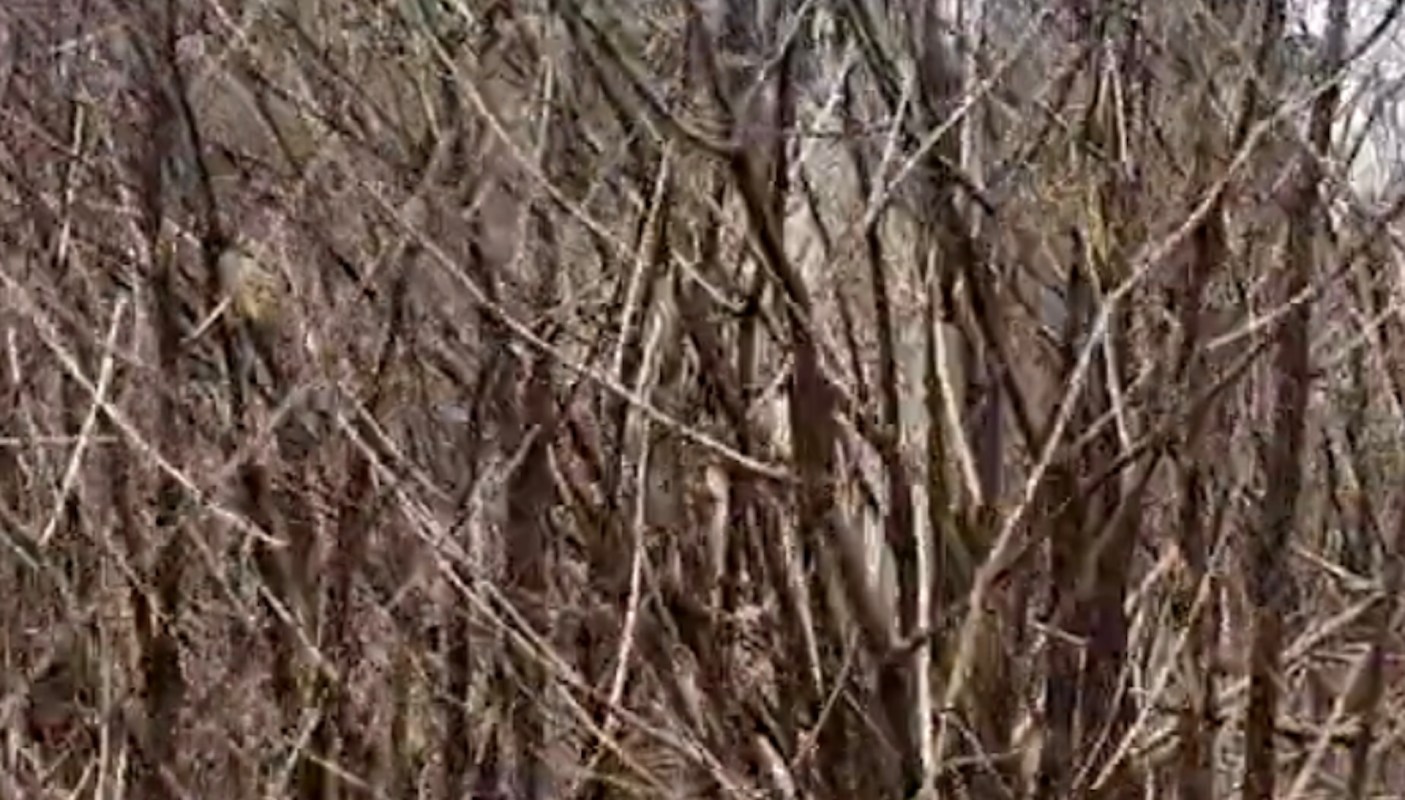
Foraging is an incredibly useful skill if you live in an area with abundant wild foods. Instead of paying $16 a pound for wild mushrooms or $50 a bottle for an anti-aging serum, one can simply gather some ingredients while on a nature walk.
One knowledgeable forager on TikTok, Amelia (@TheOriginalMealChan), shared her advice in a video on why Japanese knotweed should not be passed up.
"Japanese knotweed is insanely invasive. It's a little bit more than seven or eight inches tall, but once the leaves are open, it's not as good. It tastes like rhubarb, but it's not as tart. You would cook it into a pie, just like rhubarb," Amelia said as she demonstrated pulling the roots.
Amelia also mentioned that Japanese knotweed has health and beauty applications, as it has high levels of resveratrol, an ingredient found in many anti-aging formulas. In the video, she shows that she uses her foraged roots to make a jar of tincture and an oil. To make them, she lets the plant steep for a couple of months.
According to New York Invasive Species Information, the Japanese knotweed can be found in 42 U.S. states. It is a member of the buckwheat family and was brought over to the U.S. from East Asia in the late 1800s.
People first used it as an erosion-control plant, but it became overabundant by the 1930s. When unchecked by human management, Japanese knotweed can create imbalance in ecosystems.
TCD Picks » Quince Spotlight
💡These best-sellers from Quince deliver affordable, sustainable luxury for all




Japanese knotweed can form dense thickets that block sunlight from reaching other plants. It doesn't allow other plants to grow alongside its root system and can withstand higher temperatures, drought, and high soil salinity.
You can pull it by the roots to use it all for food and prevent it from resprouting. Another long-term management strategy, as Jessecology mentioned, is cutting it back repeatedly to weaken its root system. Pairing Japanese knotweed with other fast-growing plants, like goldenrod or pokeweed, can actually mimic natural processes and rebalance the environment.
Nonetheless, commenters were excited to know about the foraging strategy.
"Love my Japanese knotweed! I make a serum with it," one user commented.
"We cook it like asparagus," another shared.
|
What's the most you'd pay per month to put solar panels on your roof if there was no down payment?
Click your choice to see results and speak your mind. |
 $200 or more 💰
Get TCD's free newsletters for easy tips to save more, waste less, and make smarter choices — and earn up to $5,000 toward clean upgrades in TCD's exclusive Rewards Club.







