


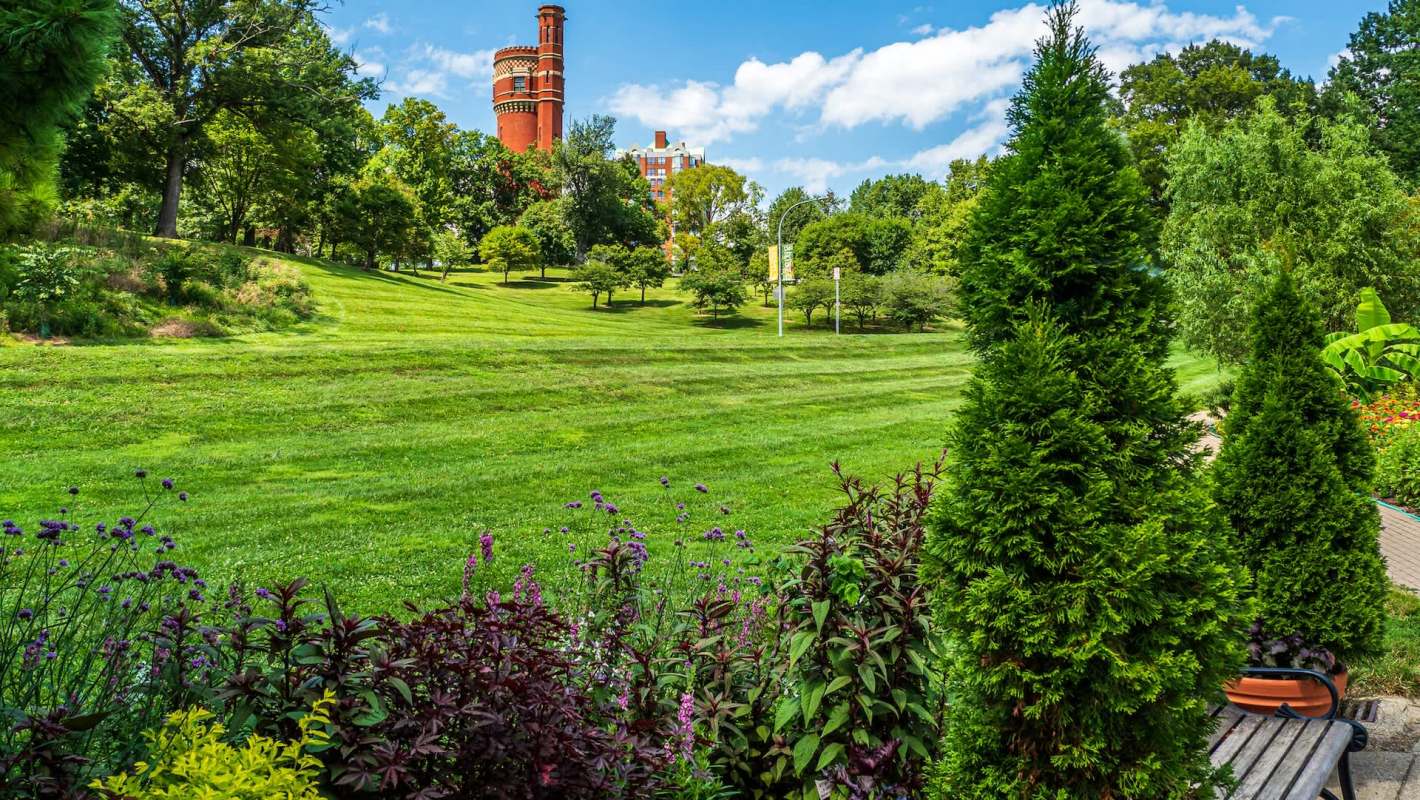
Volunteers in Hamilton County, Ohio, are working to beautify local parks by clearing out invasive honeysuckle so that native plants and wildlife can flourish.
WCPO 9 reported that community members have teamed up with officials from the Great Parks of Hamilton County to remove acres of the harmful species from various parks and forested areas.
They've been digging up plants like honeysuckle, which is notoriously difficult to remove and requires multiple treatment methods over a long period.
Honeysuckle grows in dense thickets and can even strangle trees if it's an aggressive vine variety like Japanese honeysuckle.
Invasive plants outcompete native flowers and trees for sunlight, water, and oxygen. They can disrupt biodiversity and even cause structural damage to properties if they're especially aggressive.
Honeysuckle was introduced to the United States from Asia in the 19th and 20th centuries, mostly for ornamental use. But because of its vigorous growth and birds spreading the seeds, honeysuckle quickly became an environmental menace, taking over parks and backyards at an astonishing pace.
TCD Picks » Quince Spotlight
💡These best-sellers from Quince deliver affordable, sustainable luxury for all




Homeowners dealing with these unwanted garden guests may need to use a combination of mechanical removal and targeted herbicide applications for larger shrubs.
However, if you'd rather go the non-toxic route, cutting plants at the base and smothering them with a black garbage bag to block out light has also been recommended by University of Cincinnati botanist Denis Conover.
Once they're removed, you can replace them with eco-friendly native plants that will benefit the environment and your wallet since they don't require nearly as much water or fertilizer as non-native varieties.
Some low-maintenance options include buffalo grass, clover, and milkweed, the latter of which attracts bees and butterflies and creates a healthy ecosystem.
|
What's the most you'd pay per month to put solar panels on your roof if there was no down payment?
Click your choice to see results and speak your mind. |
 $200 or more 💰
 WCPO 9 reported that volunteers cleared honeysuckle from the Kingfisher Trail at Winton Woods, a popular park in the Cincinnati area. Park staff showed volunteers how to identify the honeysuckle by looking at how the branches grow, which is easily distinguishable from native plants.
All their efforts have paid off, as visitors have noticed the trails are much easier to navigate.
"My family and I actually came up hiking last summer," meteorologist Jennifer Ketchmark told the news station. "I noticed coming up the trail that it was a little wider, and then as you get past the bridge here, it starts to enclose — it really was the honeysuckle. You can see the difference and not just how it looks, but the experience that you have with the honeysuckle."
And without volunteers showing up to help their community, the honeysuckle would likely still be thriving.
"This work can't be done without volunteers," Adam McCosham with Great Parks of Hamilton County said. "It seems impossible to tackle to make any headway without the volunteers."

Get TCD's free newsletters for easy tips to save more, waste less, and make smarter choices — and earn up to $5,000 toward clean upgrades in TCD's exclusive Rewards Club.







