


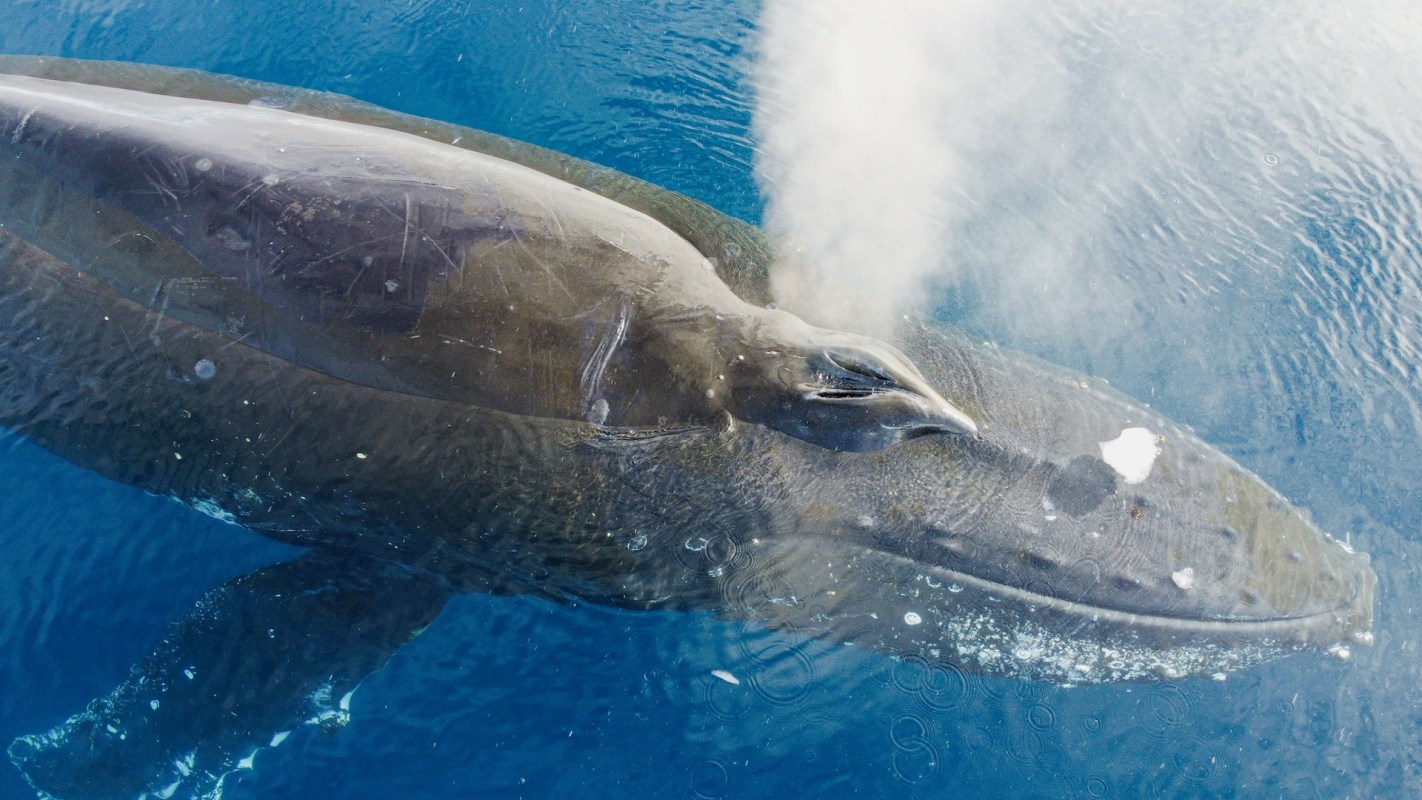
Researchers have unlocked a new method of studying whale health thanks to drone technology. However, their findings have uncovered a threat to whales in Arctic regions: a deadly virus.
What's happening?
A team of researchers published a groundbreaking study in the journal BMC Veterinary Research, providing key evidence of a dangerous whale virus — cetacean morbillivirus — spreading in the Arctic and other North Atlantic areas. First discovered in 1987, the virus causes respiratory, neurological, and immune complications that can be deadly in whale and dolphin populations — as noted in a summary of the research from King's College London.
The scientists used drone technology to gather samples of respiratory droplets when the whales exhaled, or "blew," from their blowholes. After collecting blow samples from wild humpback, sperm, and fin whales in northern Norway, Iceland, and Cape Verde, the researchers screened the samples for infectious pathogens. In some cases, the researchers also collected skin biopsies, and in one case, an organ sample.
Evidence of cetacean morbillivirus was detected in humpback whales in northern Norway, as well as a sperm whale that was "in poor health" and a stranded pilot whale.
Why is this new research study important?
The new study provides researchers and conservationists with an effective method for gathering data on some of the most difficult species to detect. Whales spend the majority of their time underwater, making it challenging for scientists to collect information on their health.
However, with drone technology, researchers can better monitor whale populations and understand what factors are impacting their survival rates.
TCD Picks » Quince Spotlight
💡These best-sellers from Quince deliver affordable, sustainable luxury for all




"Drone blow sampling is a game-changer," study co-author Terry Dawson said in the King's College London report. "It allows us to monitor pathogens in live whales without stress or harm, providing critical insights into diseases in rapidly changing Arctic ecosystems."
What's being done about pathogen detections in whale species?
Now that the researchers have an effective method for studying pathogens in whales, they can better assist and inform conservation initiatives.
Helena Costa, lead author at Nord University, said, "Going forward, the priority is to continue using these methods for long-term surveillance, so we can understand how multiple emerging stressors will shape whale health in the coming years."
|
What's the most you'd pay per month to put solar panels on your roof if there was no down payment?
Click your choice to see results and speak your mind. |
 $200 or more 💰
Get TCD's free newsletters for easy tips to save more, waste less, and make smarter choices — and earn up to $5,000 toward clean upgrades in TCD's exclusive Rewards Club.







