


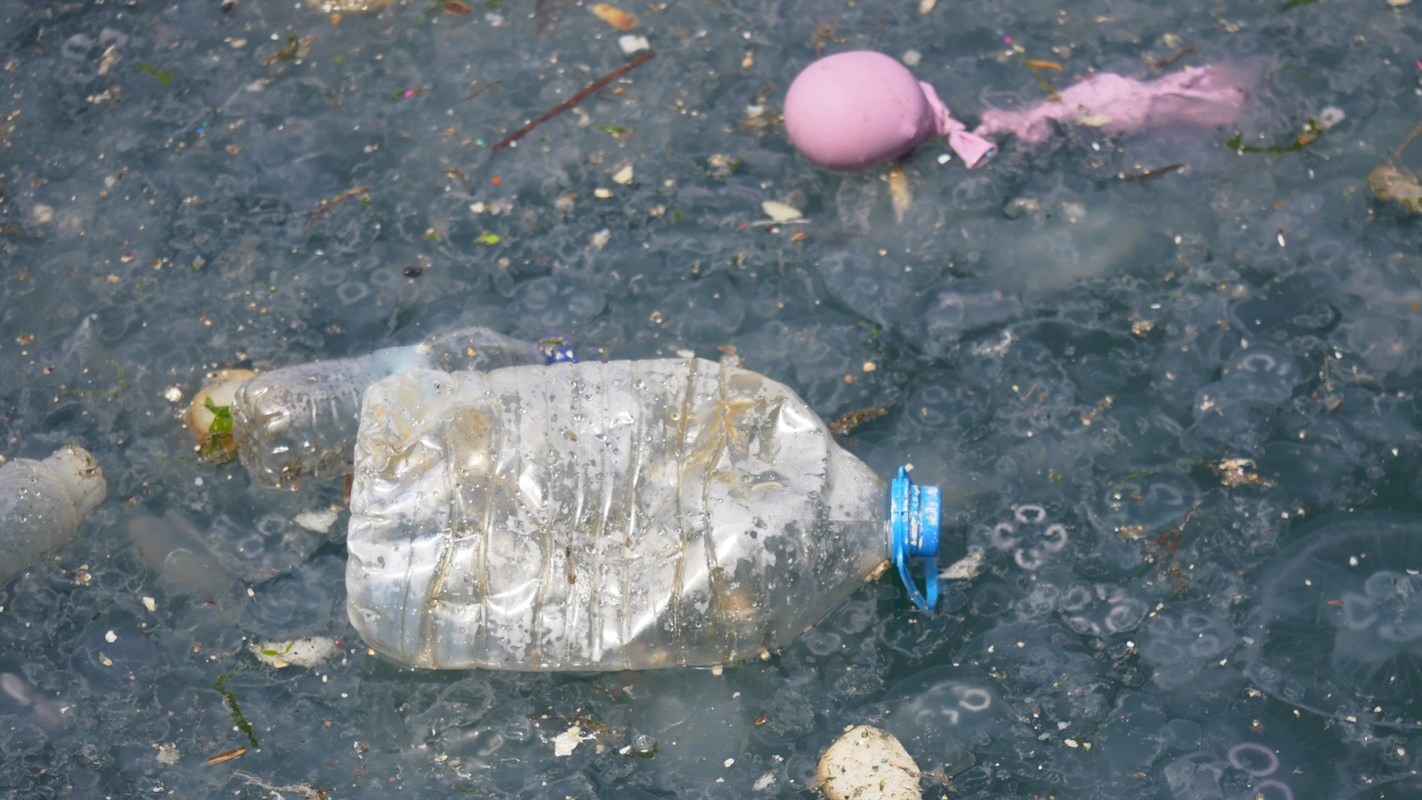
A new study from Shenyang Agricultural University found that viruses on plastic surfaces could be playing a big role in creating antibiotic-resistant bacteria.
What's happening?
News-Medical.net reported on the research, which was published in the journal Biocontaminant.
"Most research has focused on bacteria in the plastisphere, but viruses are everywhere in these communities and interact closely with their hosts," said corresponding author Dong Zhu of the Chinese Academy of Sciences.
According to the Smithsonian, the plastisphere is the thin coating that microscopic organisms create on pieces of plastic in the ocean.
The study found that viruses in the plastisphere carry out a process called horizontal gene transfer. In that process, viruses transfer genes between potential pathogens like bacteria.
Viruses can give those pathogens genes that make it easier for them to resist antibiotics. If this continues to happen, it could create dire consequences for public health.
TCD Picks » Quince Spotlight
💡These best-sellers from Quince deliver affordable, sustainable luxury for all




Why is it important to understand viruses in the plastisphere?
This research is beneficial in a lot of ways. It allows scientists to better understand how viruses work, and it's more reason to minimize plastic use all around.
Reducing the spread of pathogens can help reduce illness.
This is especially important for older people, people who receive inpatient care at hospitals, and people with weakened immune systems. UC Davis Health noted that those groups are most susceptible to antibiotic-resistant infections. The organization stated as well that anyone can develop an antibiotic-resistant infection.
Efforts that aim to keep oceans free of plastic shrink the plastisphere and the amount of places where viruses can live and mutate. That also means that viruses have fewer chances to pass antibiotic-resistant genes on to bacteria.
|
What's the most you'd pay per month to put solar panels on your roof if there was no down payment?
Click your choice to see results and speak your mind. |
 $200 or more 💰
 This all leads to the likelihood that current technologies, like vaccines and antibiotics, will be more effective against pathogens.
What's being done about viruses in the plastisphere?
News-Medical.net stated that the authors have called for further study into this issue. Looking at how viruses and bacteria exchange genes, for example, could lead to better environmental management strategies. Those strategies would likely help keep people safer from antibiotic-resistant pathogens.
If you're concerned about plastic use, consider encouraging companies to use plastic-free packaging. Supporting companies that are already adding more plastic-free products to their shelves can encourage them to do even more.
And if you're concerned about viral spread in other ways, consider wearing a KN95 or better in indoor public spaces.
According to the New York City Department of Health and Mental Hygiene, a high-quality mask or respirator can protect you from airborne pathogens like the COVID-19 virus.

Get TCD's free newsletters for easy tips to save more, waste less, and make smarter choices — and earn up to $5,000 toward clean upgrades in TCD's exclusive Rewards Club.







