


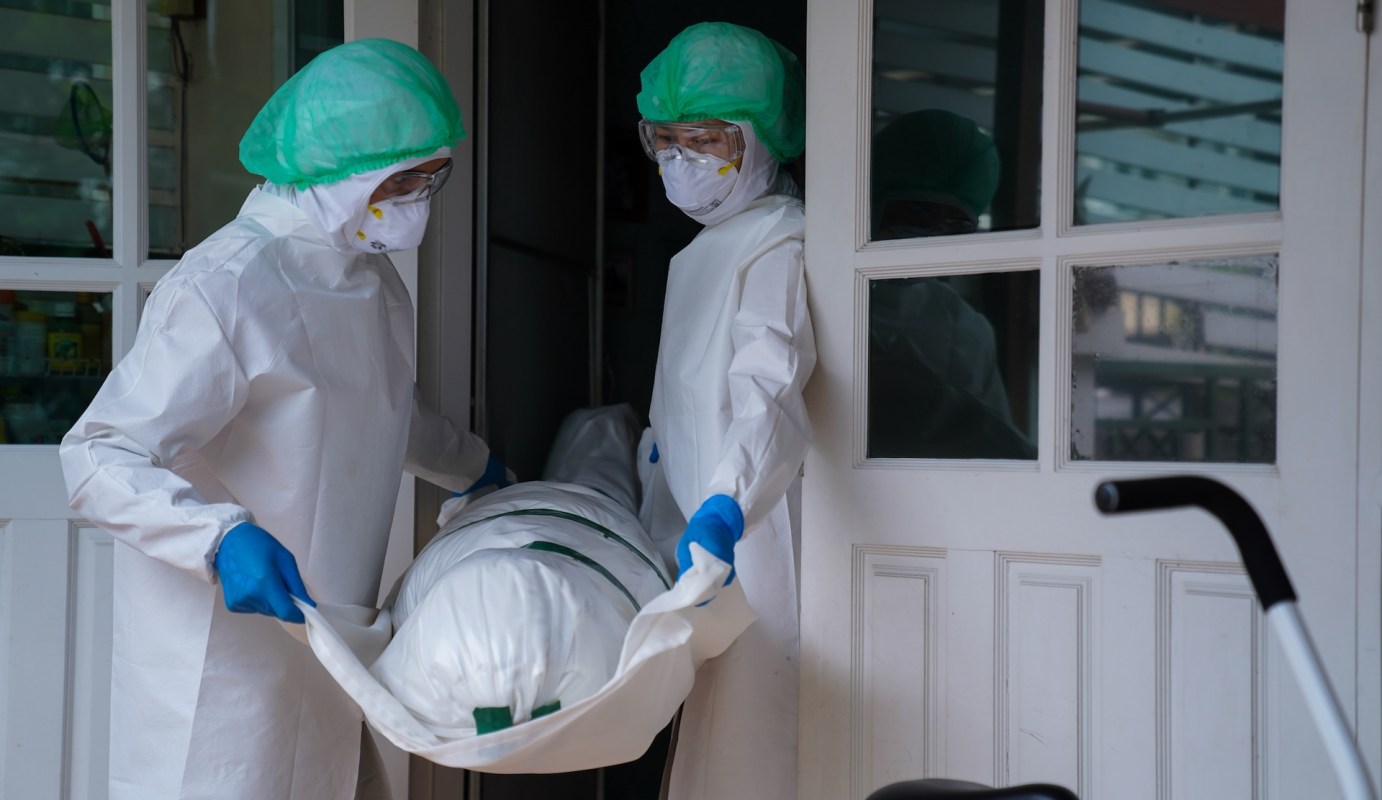
Public health agencies and border officials are on high alert after a rare but potentially deadly virus outbreak in West Bengal, India, The Washington Post reported.
What's happening?
Two cases of Nipah virus have been confirmed, according to an Indian Health Ministry statement Tuesday reviewed by the Post.
Nipah virus outbreaks occur cyclically in South Asia and Southeast Asia, particularly in Bangladesh.
A November study in the Journal of Infection and Public Health described the virus as a "significant public health threat," attributing the pathogen's prevalence in Bangladesh to the consumption of raw date palm sap tainted by fruit bats.
Nipah virus is a zoonotic disease transmitted from animals to humans, with bats and pigs as the most common vectors of transmission.
Worryingly, the Nipah virus' case fatality rate — the rate of deaths in proportion to the number of total cases — is estimated at between 40% and "75% or higher," according to the European Centre for Disease Prevention and Control.
TCD Picks » Quince Spotlight
💡These best-sellers from Quince deliver affordable, sustainable luxury for all




The Indian Health Ministry's contact tracing identified 196 individuals who may have been in close contact with the two sickened individuals, all of whom were asymptomatic and tested negative.
Why is this outbreak concerning?
As the Independent warned, the World Health Organization has deemed the Nipah virus a "priority pathogen," citing the credible possibility an outbreak could "trigger an epidemic."
The WHO further indicated that there is neither a vaccine nor a known treatment for Nipah virus cases, leaving medical professionals with only "intensive supportive care," per the United Kingdom's Health Security Agency.
According to the WHO, Nipah virus outbreaks can have devastating indirect effects, sickening livestock, and "resulting in significant economic losses for farmers."
|
What's the most you'd pay per month to put solar panels on your roof if there was no down payment?
Click your choice to see results and speak your mind. |
 $200 or more 💰
 In August, Inside Climate News reported that trials for a potential Nipah virus vaccine were expected to begin in Bangladesh, but warned that "just because the virus is rare now does not mean it always will be."
The outlet referenced a 2012 study published in the Proceedings of the National Academy of Sciences of the United States of America about the trajectory of Nipah virus.
In the study's third section, researchers strongly emphasized the role that a warming world plays in the spread of vector-borne illnesses, using Nipah virus as an example.
As Inside Climate News noted, higher temperatures could expand the range of disease vectors such as fruit bats and mosquitoes, thereby increasing the incidence of once-rare illnesses.
What's being done about it?
While no known treatments existed, officials on the ground appeared to take Nipah virus outbreak seriously.
"We have specifically intensified surveillance at border points in Koshi Province. Health checks have also been ordered for people entering Nepal through other border crossings," said Nepal's minister of health, Dr. Prakash Budhathoki, according to the Himalayan Times.

Get TCD's free newsletters for easy tips to save more, waste less, and make smarter choices — and earn up to $5,000 toward clean upgrades in TCD's exclusive Rewards Club.






