


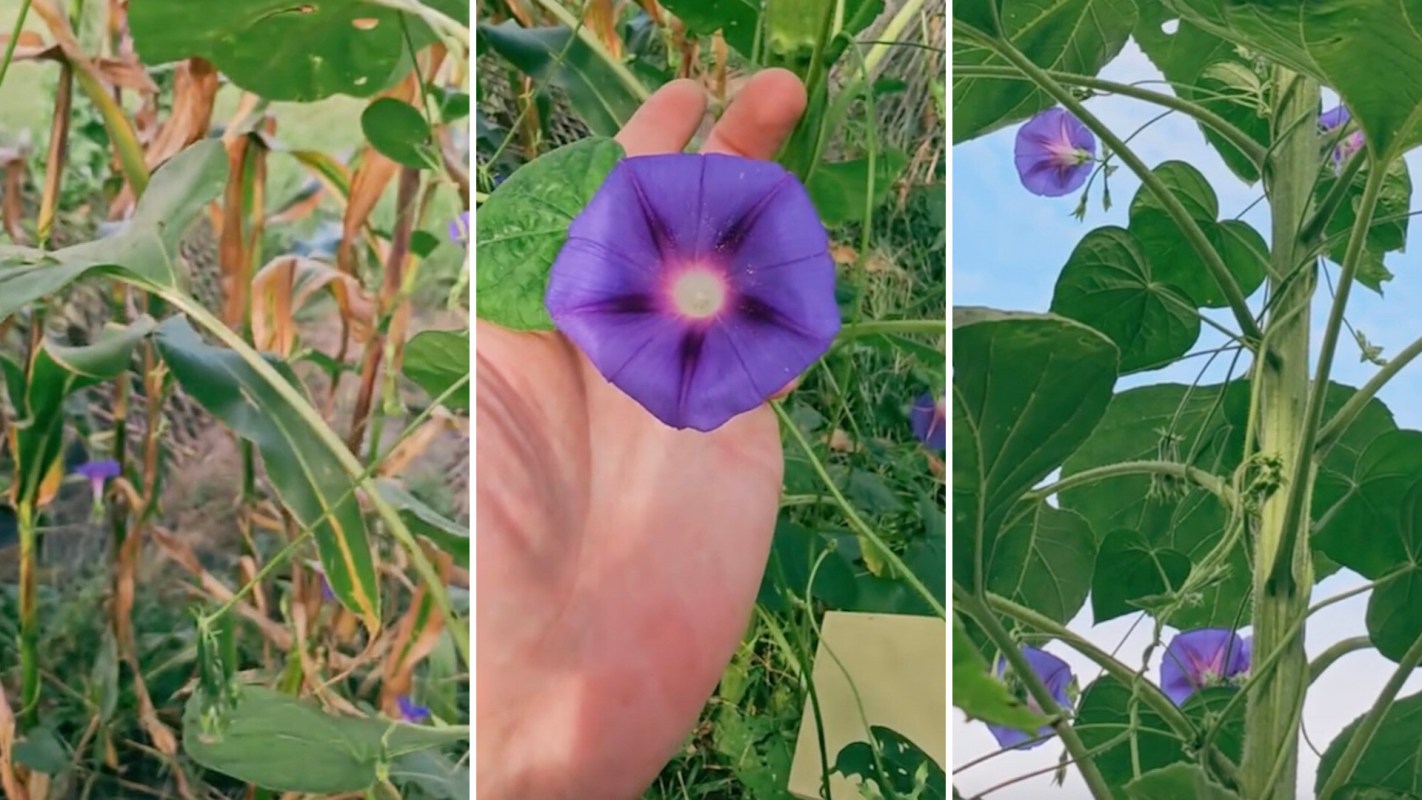
Not all beautiful flowers in nature belong where they appear.
One gardener on TikTok, known as Gaia's Garden and Laser Gems (@gaiasgardenandlasergems), shared a video explaining how to identify a common garden flower, morning glory, which is actually an invasive plant species.
@gaiasgardenandlasergems This morning glory may be beautiful with its purple flowers, but it is an invasive species which has a negative impact on native plants and I need to get it out of my garden because it just keeps climbing my mammoth sunflower. what is an invasive species? what are the effects of invasive species? how are invasive species spread? what are some examples of invasive species? #invasivespecies #invasiveplants #plantnativeplants #nativeplants #gardeningtips #organicgarden #gardeningforbeginners ♬ original sound - Gaia's Garden & Laser Gems
"Don't be distracted by its beauty," the video's text overlay reads, showing a visual depiction of a rich purple morning glory flower. "Even though it is beautiful, it is invasive," the TikTok creator affirms.
In the TikTok video, the camera pans up the length of a sunflower stalk, showing how a morning glory plant tightly wrapped its way up around the sunflower's stem, with beautiful purple flowers decorating the plant's stem.
"It is pretty but it is on the invasive species list so this thing needs to go," the TikTok creator says.
Invasive plant species, or plants that are not originally from where they are found, are detrimental to native habitats and local ecosystems. Lacking few natural predators, these plants grow and reproduce abundantly without restraints, which allows them to outcompete native plant species for nutrients and resources.
TCD Picks » Quince Spotlight
💡These best-sellers from Quince deliver affordable, sustainable luxury for all




Many homeowners already grapple with invasive species as most traditional American lawns consist of invasive grass, such as the Kentucky bluegrass. Its fast growth and high water demand force homeowners to frequently water and mow their lawns to keep up with maintenance.
Replacing an invasive lawn with a natural lawn using options such as native buffalo grass or clover — water-saving and lower-maintenance lawn replacement options — can save homeowners up to $225 per year on water and hours of time on lawn maintenance.
Native plant species also feed and provide shelter for local wildlife — including pollinators — creating healthier environments for wildlife species to thrive. Pollinators support the reproduction of native vegetation, including human food crops, which ultimately protects the human food supply.
"So beautiful, I didn't know there were that invasive," one commenter wrote under the TikTok video.
|
Would you take a gardening class if it were free?
Click your choice to see results and speak your mind. |
 Heck yes! 💯
 "I made a mistake of planting them 2 years ago," another user commented.
"They took over 2 beds this year!" a third commenter attested.

Get TCD's free newsletters for easy tips to save more, waste less, and make smarter choices — and earn up to $5,000 toward clean upgrades in TCD's exclusive Rewards Club.






