


While many home gardeners know that leaving dead leaves on a lawn can damage or even kill the grass, a growing number of people are using this method to intentionally get rid of their time- and resource-intensive monoculture lawns.
One such person turned to the internet for advice on how they could best use this method to clear out the grass around their trees.
"I have a large lawn I am working on reducing over time with larger and larger native plant beds," the original poster wrote on the r/NativePlantGardening subreddit.
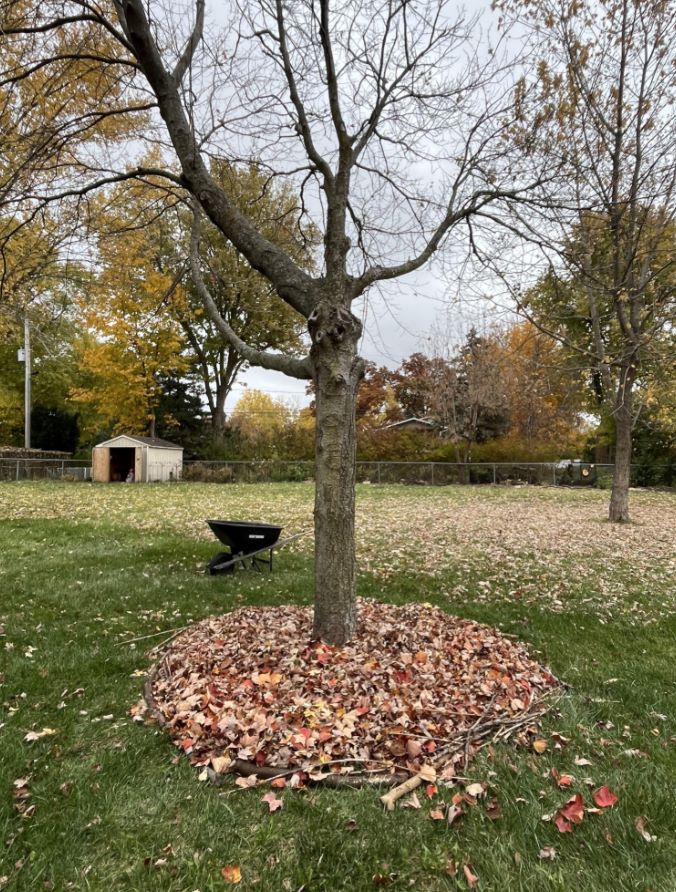
"I want to start beds under my trees," they continued. "I also want to keep my leaves for habitat. Do you think piling them at the base of the trees like this will work to kill the lawn and create a space for planting this spring?"
Fellow Redditors rushed to the comments to give their takes. While many praised the OP's methods, some warned the OP about the risks of leaving leaves too close to the tree trunks.
"This is actually genius," praised one commenter.
TCD Picks » Quince Spotlight
💡These best-sellers from Quince deliver affordable, sustainable luxury for all




"Whatever you do, don't pile leaves, mulch, dirt or really anything up against the base of the tree," cautioned another. "Doing so can cause trunk rot and kill the tree. The root flare needs to be exposed."
"I'd also be careful not to add too much soil and mulch under the tree," the same commenter continued. "You risk burying the roots too deep, cutting off oxygen and stressing the tree."
Using natural, chemical-free methods to remove monoculture lawns and replace them with native plants can benefit both the environment and your wallet. Native plants require less watering and maintenance than grass lawns, saving time, resources, and money.
Additionally, native plants can benefit the local ecosystem, helping pollinators while providing food and shelter for birds and small mammals.
|
If you were to switch from a grass lawn to a more natural option, which of these factors would be your primary motivation?
Click your choice to see results and speak your mind. |
 Making it look better 🌱
 Avoiding the use of harsh chemicals such as herbicides to eradicate unwanted vegetation can also prevent environmental contamination and other unintended consequences.
Whether you're creating a bed of native plants or going all-out and rewilding your entire yard, you'll be giving the environment an assist while potentially saving time and money in the process.

Get TCD's free newsletters for easy tips to save more, waste less, and make smarter choices — and earn up to $5,000 toward clean upgrades in TCD's exclusive Rewards Club.







