


Two weather patterns played out in 2025 that had huge implications for our country's weather.
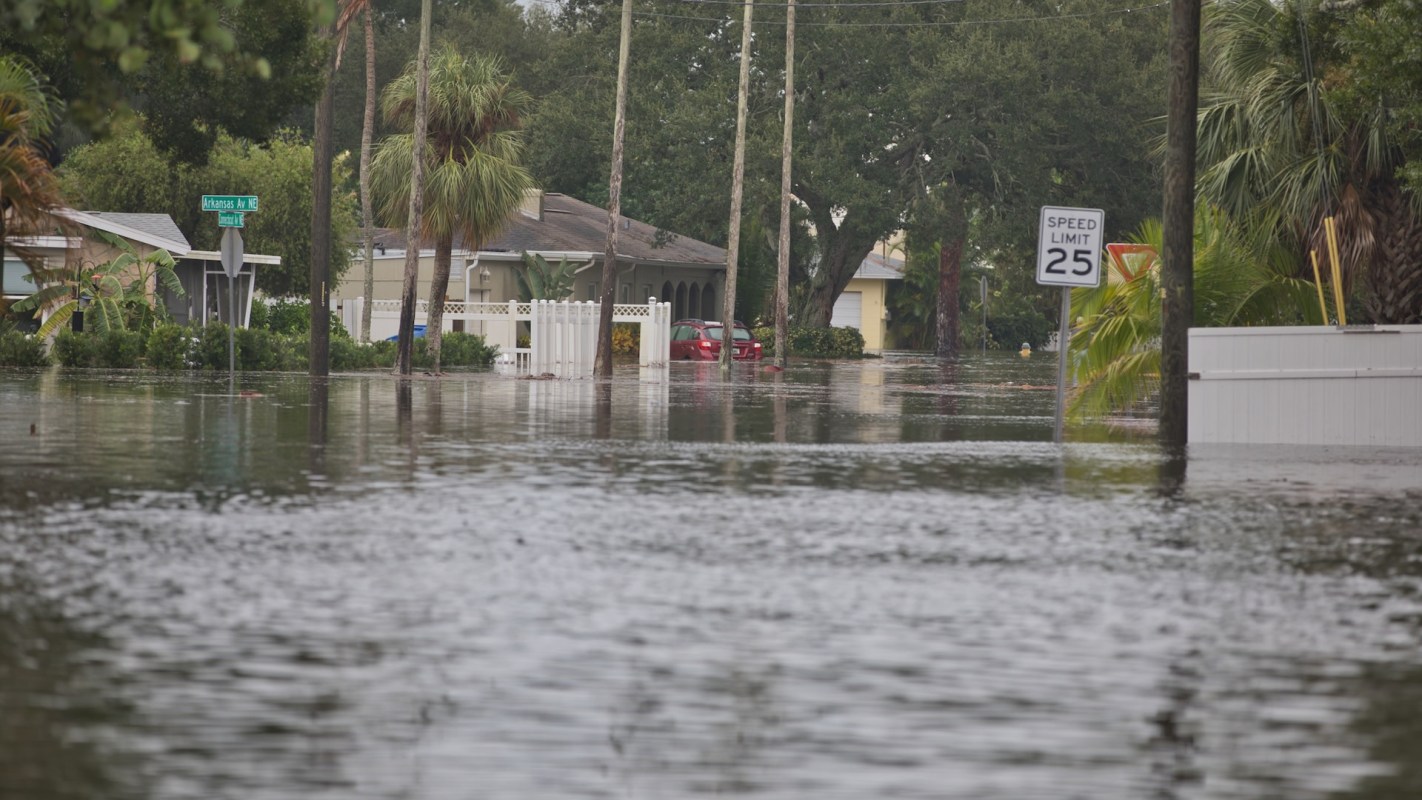
One of them helped spare the U.S. mainland from a landfalling hurricane, while the other helped produce prolific rainfall and flash flooding in the central and eastern U.S.
The polar jet stream was the key contributor to both scenarios.
Currents of strong winds up high play a crucial role in the weather that we experience at the surface.
"Jet streams are relatively narrow bands of strong wind in the upper levels of the atmosphere, typically occurring around 30,000 feet (9,100 meters) in elevation," explains the National Oceanic and Atmospheric Administration. "Within jet streams, the winds blow from west to east, but the band often shifts north and south because jet streams follow the boundaries between hot and cold air."
The greater the change in temperature between the equatorial and polar regions, the stronger the polar jet stream flows, which is normally found somewhere between 50 and 60 degrees latitude.
TCD Picks » Quince Spotlight
💡These best-sellers from Quince deliver affordable, sustainable luxury for all




The typically weaker subtropical jet stream is found further south. This branch of stronger winds is usually located around 30 degrees latitude, often crossing Florida. Both of these jet streams help steer storm systems in the Northern Hemisphere.
This summer, the polar jet stream surged farther south than usual, frequently sweeping larger storms into the midlatitudes of the country. A weakened polar jet stream also slowed down these systems, stalling storms and allowing for torrential rainfall.
Weaker jet streams tend to be wavier, and these undulations can draw abundant moisture from the Gulf, fueling storms that can squeeze out prolific rainfall.
This resulted in Kentucky having its eighth-wettest January-through-November period on record. Flooding that struck the state in April led a restaurant owner to flood his riverfront business with clean water in an attempt to keep the dirty, rising river water out.
|
How worried are you about rising ocean levels? Click your choice to see results and speak your mind. |
 Very 😰
 The jet stream worked in the United States' favor this year, helping to prevent a single hurricane from making landfall. The southward shift in the jet stream, combined with high pressure settling over the Atlantic, steered all five hurricanes that formed this year, three of which reached Category 5 strength, away from the East Coast.
Where you are in relation to the troughs and ridges that make up the jet stream patterns we see during the course of a year determines what type of weather you'll see. Depending on where it sets up, a wavy jet stream pattern that moves sluggishly can mean prolonged wet or dry periods. For most of this year, the Pacific Northwest was relatively warm and dry.
"I would like to see some input from a meteorologist, and a look into the crystal ball for 2026. We had a semi bad wildfire season in 2025, not as bad as some over the last few years," commented a resident of the Pacific Northwest in response to an article from The Conversation that explained the role the jet stream had on this year's weather, which was shared by The Weather Channel. "We worry about rain and wildfire!"
Through November, the Pacific Northwest has had a particularly warm and dry year. Washington had its seventh-warmest and 20th-driest January-through-November period, while Oregon had its fifth-warmest and 25th-driest first 11 months of the year.
Scientists say our overheating planet is contributing to wavier, more erratic jet streams.
"Because polar regions of the planet are warming faster than the mid-latitudes, the typical north-south temperature difference is lower," John Wettlaufer, a co-author of a study on how our warming world is increasing the waviness of the jet stream, told Yale News.
"As this temperature difference decreases, it causes a slight drop in zonal winds in the jet stream — which, in turn, leads to more meandering of the jet stream," Wettlaufer added. "This means that the cyclones and anticyclones associated with the meanders are more stationary — there are weather systems 'parked' over some place on the planet."

Get TCD's free newsletters for easy tips to save more, waste less, and make smarter choices — and earn up to $5,000 toward clean upgrades in TCD's exclusive Rewards Club.







