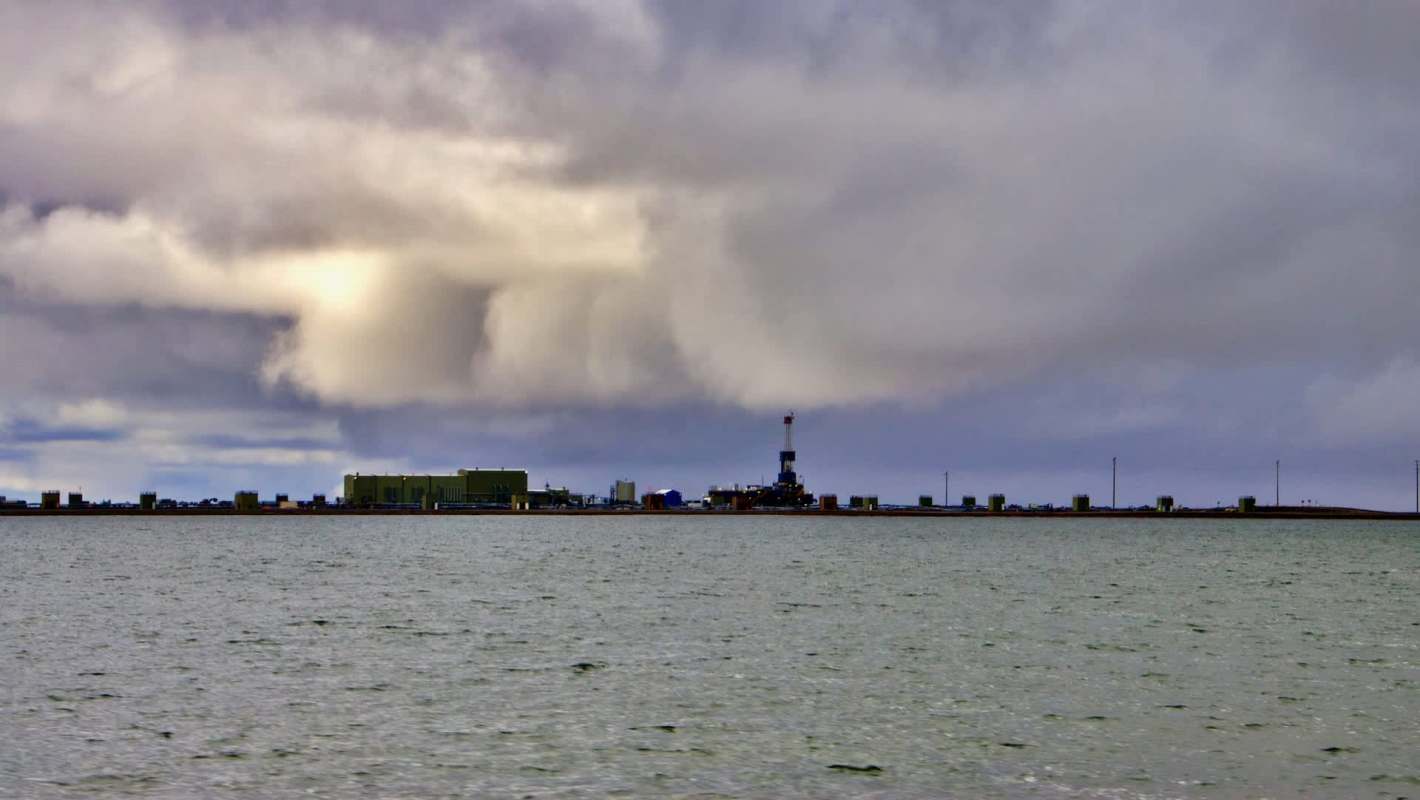
Researchers discovered that pollution from North America's largest oil field has created multiple feedback loops accelerating Arctic warming and sea-ice loss, per a new study.
What's happening?
Penn State scientists conducted a two-month field campaign in Alaska's Arctic using instrumented aircraft and ground measurements. The study examined chemical processes near Prudhoe Bay oil fields between February and April 2022.
The team identified three critical findings.
Cracks in sea ice — known as leads — altered how chemicals interacted in the air and shaped cloud development. Pollution from oil extraction changed the makeup of the regional atmosphere. These two factors then combined to create self-reinforcing cycles that sped up ice loss and intensified warming across the Arctic.
"This field campaign is an unprecedented opportunity … to understand how human influence is altering the climate in this important region," Jose D. Fuentes, professor of meteorology at Penn State, said, per Phys.org.
"The resulting datasets are producing an improved understanding of the interactions between sea-spray aerosols, surface-coupled clouds, oil field emissions and multiphase halogen chemistry in the new Arctic."
TCD Picks » Quince Spotlight
💡These best-sellers from Quince deliver affordable, sustainable luxury for all




Nitrogen dioxide levels near the oil fields reached 60 to 70 parts per billion — comparable to pollution in major cities, despite the otherwise pristine environment.
Why is this feedback loop important?
As a result of this pollution, cracks in sea ice released water vapor and particles into the air, which rose hundreds of feet to form clouds. The clouds trapped heat and added moisture, melting more ice and opening additional cracks in an ongoing pattern.
Furthermore, salt in coastal snow combined with oil field pollution generates bromine, which destroys ozone in the lower atmosphere, allowing extra sunlight to warm the snow and release even more bromine.
The team's findings demonstrated how industrial activity in polar regions can trigger chemical reactions that increase changes in the Arctic. Ice melt causes ocean levels to rise, intensifying storm flooding and pushing saltwater into agricultural lands.
|
How worried are you about rising ocean levels? Click your choice to see results and speak your mind. |
 Very 😰
 Warming temperatures also make weather extremes even more intense, creating larger swings between conditions. Arctic warming has been linked to more frequent droughts and flooding in regions where food production occurs. Disease-carrying insects are also able to expand their ranges as temperatures rise, threatening populations with no previous exposure.
What's being done about Arctic warming?
According to the research team, they will continue studying how oil field pollution interacts with Arctic ice and atmosphere. The information gathered will help to inform computer models that can predict future temperature and weather shifts beyond the polar regions.
You can also explore how personal choices affect critical climate issues like Arctic warming and sea-level rise. Arctic changes affect everyone, regardless of their location — so your local choices can be part of the global solution.

Get TCD's free newsletters for easy tips to save more, waste less, and make smarter choices — and earn up to $5,000 toward clean upgrades in TCD's exclusive Rewards Club.