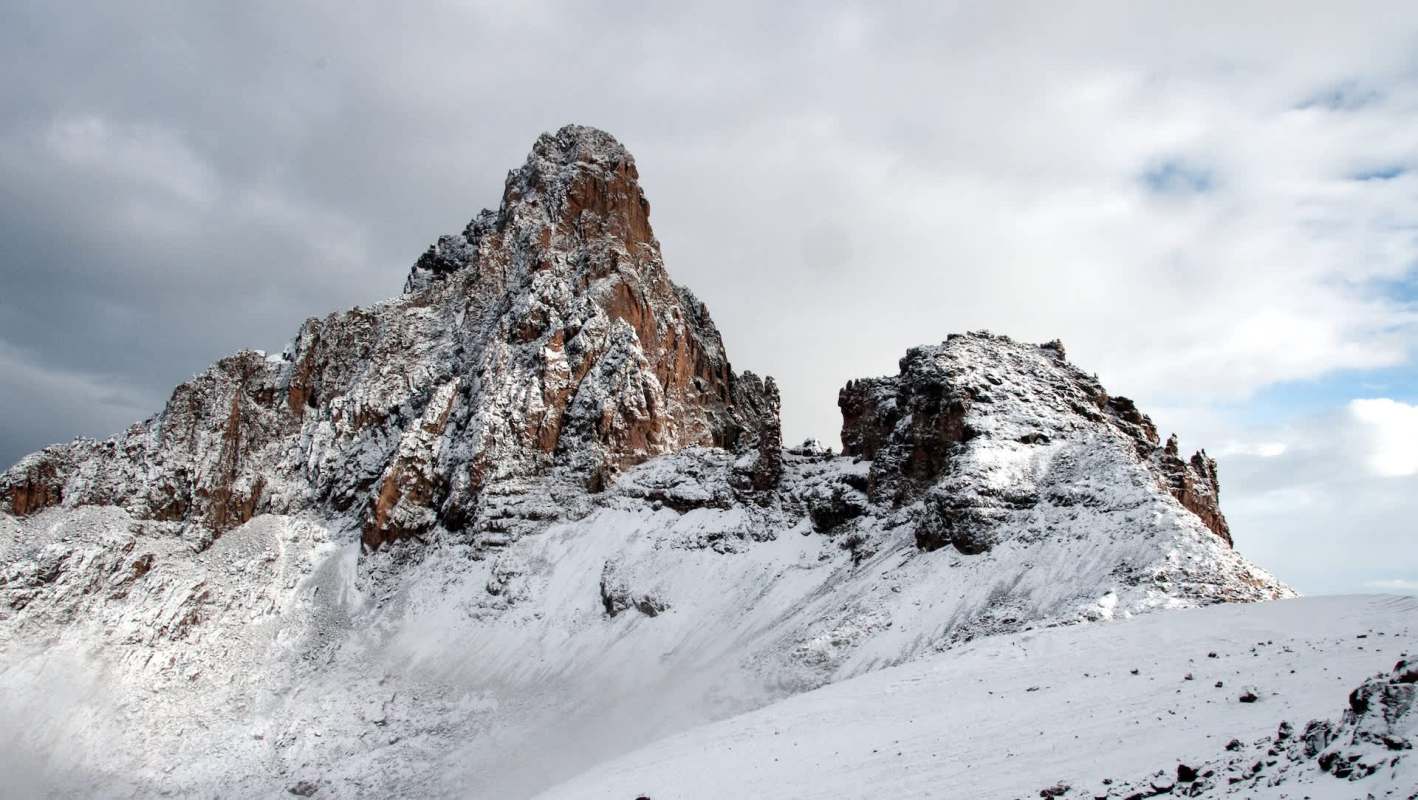
Glaciers tend to feel eternal — immune to human timelines. But scientists say that illusion is cracking.
What's happening?
On Mount Kenya, one of Africa's most iconic natural landmarks, ancient glaciers are shrinking so fast that experts have warned they can vanish entirely within just a few years.
Lewis Pugh, a United Nations Environment Program goodwill ambassador, climbed Mount Kenya's highest peak in December to visit the Lewis Glacier. What he saw wasn't a frozen fortress — it was a remnant.
According to Context, scientists estimate that Africa's remaining glaciers could disappear by 2030. On Mount Kenya, the timeline may be even shorter.
"Scientists predict that in the next three to five years, it will disappear completely," Pugh told the publication. "We cannot be quiet on the disappearance of Africa's last glaciers."
These glaciers once helped regulate temperatures and steadily release freshwater used for drinking, farming, and energy production.
TCD Picks » Quince Spotlight
💡These best-sellers from Quince deliver affordable, sustainable luxury for all




Now, rising average temperatures pull moisture from the ice faster than snowfall can replace it — part of a long-term warming pattern driven by human activity, not an isolated weather event.
Why is this concerning?
What happens on Mount Kenya doesn't stay on Mount Kenya.
Kenya's Lewis Glacier isn't an outlier — it's part of a global pattern. In Italy, scientists warn that the iconic Marmolada Glacier could disappear by 2040. Farther south, glaciers in the Andes are predicted to shrink by as much as 55% to 78% by the end of the century.
The impacts of rising temperatures aren't limited to ice, either: warmer ocean waters near the Great Barrier Reef have already triggered repeated mass bleaching events, threatening one of the world's most diverse marine ecosystems.
|
Do you think America does a good job of protecting its natural beauty? Click your choice to see results and speak your mind. |
 Definitely 👍
 As ice disappears around the world — including in the Arctic — sea levels rise, pushing higher tides into coastal neighborhoods during storms. That flooding damages homes, disrupts ports, and threatens food systems that depend on stable shipping and fertile land.
Extreme weather has always existed, but scientists agree that human-caused warming acts like steroids for storms, floods, and heat waves — making them stronger, longer-lasting, and more destructive.
What's being done about it?
Globally, researchers and advocates are pushing for faster reductions in pollution that trap heat in the atmosphere. Some governments are expanding clean energy and protecting water sources tied to melting ice.
There are also many ways to help on an individual level. Using less energy at home, supporting clean transportation, cutting food waste, and staying informed about critical environmental issues all reduce the pressure driving ice loss worldwide.
The glaciers on Mount Kenya may be small, but their message is loud: the systems that keep communities stable are more fragile than they look — and they need attention now, not later.

Get TCD's free newsletters for easy tips to save more, waste less, and make smarter choices — and earn up to $5,000 toward clean upgrades in TCD's exclusive Rewards Club.