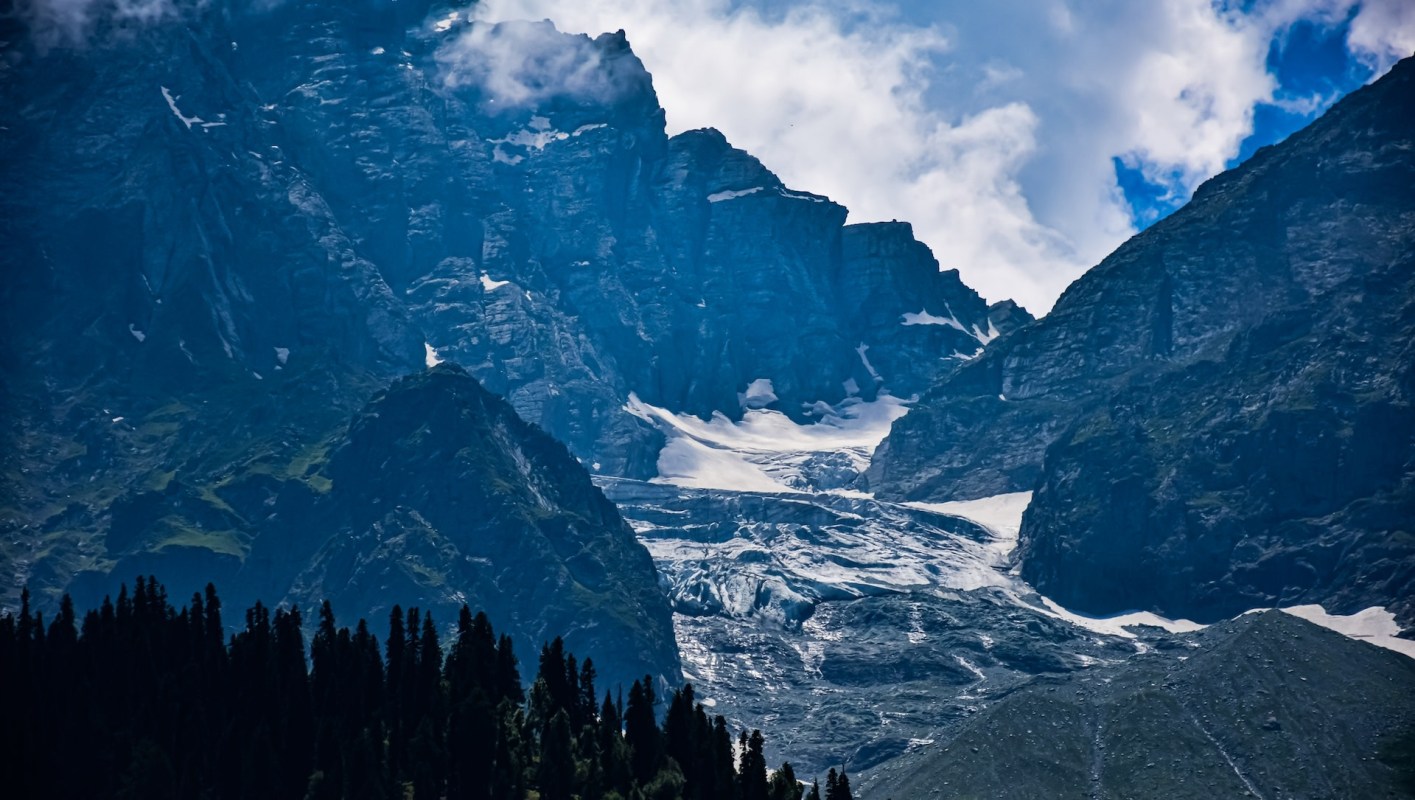
Glacial ice melt is doing more than contributing to rising sea levels. It's disrupting the balance of ecosystems, affecting water, wildlife, agriculture, and local livelihoods.
What's happening?
The Kolahoi glacier is rapidly shrinking, with its snout retreating nearly 900 meters (over half a mile) and about 25% of its total area already lost, according to The Guardian. Streams and canals are drying up even before summer begins, affecting fields, forests, and pastures in the region.
This has significantly impacted the local ecosystem. Wild animals are losing their habitats and moving further up the mountains or down to the villages. Shrinking grasslands and shifting streams have also been affecting livestock.
"Even the animals seem confused by the changing landscape," said Mohammad Siraj Khan, a local shepherd.
Why is this issue concerning?
The glacier retreat in Kashmir is already impacting life in the region, affecting water access, farming cycles, and hydropower supply.
Glaciers act as natural reservoirs, slowly releasing water that sustains communities. When they retreat, water arrives earlier — and disappears faster — disrupting water supplies, degrading habitats, and threatening species.
TCD Picks » Quince Spotlight
💡These best-sellers from Quince deliver affordable, sustainable luxury for all




Monitoring bodies have already warned that the world's glaciers may not survive the 21st century. The World Glacier Monitoring Service shared that glaciers have been losing an average of 0.75 meters (about 2.5 feet) of ice annually in the past few years, double the loss rate compared to the 1990s.
Glacier melts, including rapid Arctic ice loss, reflect a larger global trend that threatens water and food security, biodiversity, and livelihoods worldwide. They signal rising air temperatures, which also trigger more extreme weather events, including storms and heatwaves.
The World Meteorological Organization stressed that preserving these glaciers is a matter of survival, not just an environmental, economic, and societal concern.
What's being done about the issue?
To sound the alarm on the risks that accelerating glacier melt brings, the United Nations designated 2025 as the International Year of Glaciers' Preservation. This may raise more awareness on the human stakes of ice loss and what people can do to slow ice melt.
|
Do you worry about the longevity of EV batteries? Click your choice to see results and speak your mind. |
 For sure 💯
 Slowing glacier retreat requires reducing air pollution caused by human activity. Ongoing research, public awareness efforts, and increasing discourse about environmental issues can foster a better understanding of the risks posed by glacier retreat.
They can also help communities take individual and collective actions like plastic use reduction, adoption of solar power, and clean energy initiatives to help reduce the effects of air pollution.

Get TCD's free newsletters for easy tips to save more, waste less, and make smarter choices — and earn up to $5,000 toward clean upgrades in TCD's exclusive Rewards Club.