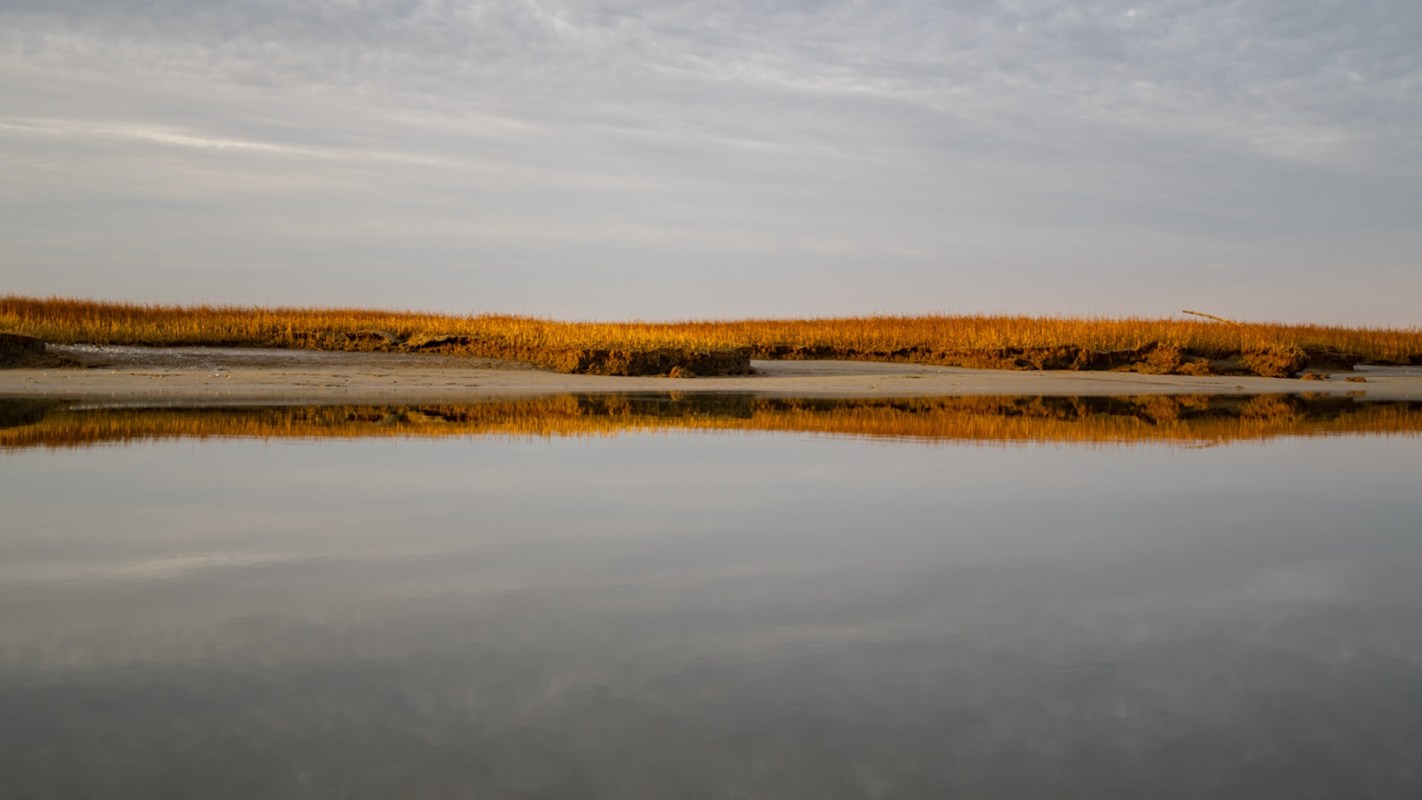
Georgia's iconic salt marshes may look healthy, but a new long-running scientific assessment shows that the foundation holding together one of the largest marsh systems in the United States is quietly eroding beneath the surface.
What's happening?
As Savannah Now detailed, researchers from the University of Georgia have spent more than a decade extracting and analyzing 1,100 soil cores from coastal marshes dominated by a grass called "Spartina alterniflora" that defines Georgia's shoreline.
Their findings, published in the Proceedings of the National Academy of Sciences journal, show that nearly three-quarters of the studied marsh area has experienced a decline in below-ground biomass, which is a dense network of roots and rhizomes that stabilizes soil and helps marshes keep pace with rising sea levels.
More than a quarter of the marshland has already crossed into a vulnerable state, according to the research.
The National Oceanic and Atmospheric Administration's salt marsh monitoring noted that "intact below-ground biomass at the marsh edge is the key plant trait that suppresses erosion and generates the shoreline protection function of marshes."
The researchers linked much of the decline to marsh areas spending more time underwater, which limits the amount of oxygen reaching the plants' roots.
Sea level rise along the Southeast coast has accelerated in recent decades, and the NOAA has documented faster-than-average increases in parts of Georgia.
University of Georgia Professor of Marine Sciences Merryl Alber, who is one of the study's authors, told Savannah Now, "There are reasons to believe it might be intensifying even more in the next few years."
TCD Picks » Quince Spotlight
💡These best-sellers from Quince deliver affordable, sustainable luxury for all




Why are salt marshes important?
Salt marshes protect coastal communities by buffering storm surge, storing carbon, and supporting fisheries.
While floods and storms have always occurred, scientists agree that increasing global temperatures driven by the burning of coal, oil, and gas are raising sea levels and intensifying coastal flooding, which in turn puts marshes under prolonged stress.
|
Do you worry about having toxic forever chemicals in your home?
Click your choice to see results and speak your mind. |
 Majorly 😥
 When biomass declines due to prolonged submersion, marshes lose their ability to build elevation, and their collapse becomes more likely.
What's being done to protect salt marshes?
People can help protect salt marshes by supporting local coastal conservation organizations, backing policies that reduce pollution from fossil fuels, and volunteering with habitat restoration projects.
The study serves as an early warning that could catalyze action before large-scale die-offs occur.
The authors suggest broad potential solutions: adding sediment to boost marsh elevation, restoring natural tidal flow, and protecting inland corridors so marshes can migrate as seas rise.
Researchers across the country say that Georgia's data is already influencing them to look below the surface and collect their own data, which could inform action to protect important, delicate ecosystems in other states.

Get TCD's free newsletters for easy tips to save more, waste less, and make smarter choices — and earn up to $5,000 toward clean upgrades in TCD's exclusive Rewards Club.