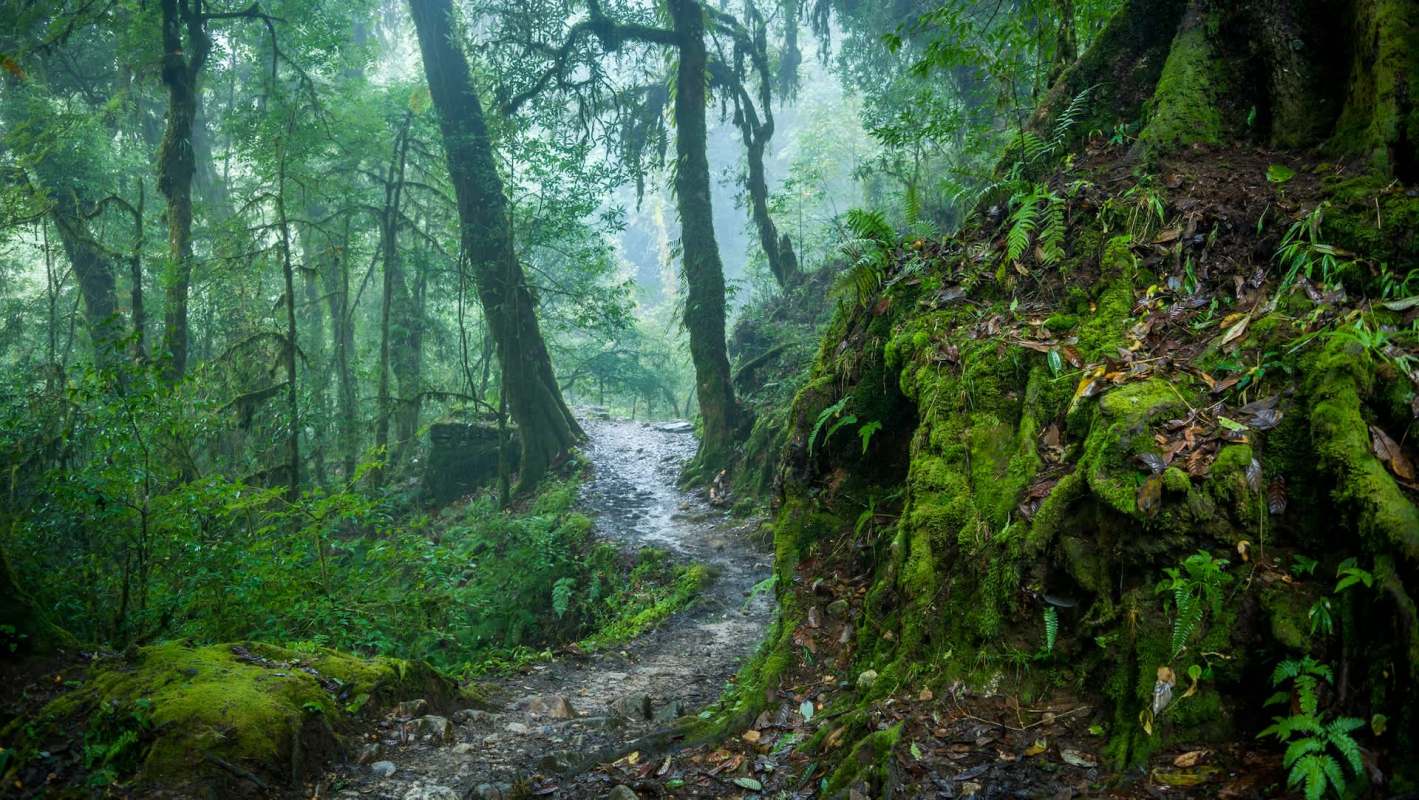
The Eastern Himalayas are what the World Wildlife Fund referred to as a "biodiversity hot spot."
However, changes to microclimates throughout the 1,500-mile region have threatened many species.
What's happening?
When many think of the Himalayas, they think of the highest mountain range in the world. This is true. However, the Eastern Himalayas, which extend from eastern Nepal into neighboring countries, have a more tropical, mountainous climate influenced by monsoon seasons.
A new study published in the Journal of Applied Ecology described the dual risk of habitat degradation and a changing climate for many species in the region. Human activity, such as logging, can have an impact on particular microclimates.
For example, the study explained that the logged forest in the region was both hotter and drier than an undisturbed forest. These changes were tracked in insectivorous birds, and the authors found that their survival rates were lower in logged forests than in undisturbed environments.
"Species that can still find microclimates in logged forests similar to their original forest homes are surviving after selective logging," said Akshay Bharadwaj, a lead author of the study, per Phys.org. "It is those which can't match their old conditions that face steep declines."
TCD Picks » Quince Spotlight
💡These best-sellers from Quince deliver affordable, sustainable luxury for all




Why is habitat conservation important?
Habitat changes like those explored in the study can have both local, wide-reaching impacts.
On a larger scale, these changes can have ripple effects that ultimately detract from regional and even global food supply.
As Bharadwaj explained, "the impacts of forest degradation will impact food chains that are part of larger ecosystem processes."
When a region's native biodiversity suffers, pollination often declines, meaning lower yields of fruits, vegetables, and other crops. According to the U.S. Department of Agriculture, we rely on pollinators for about 35% of all food crops.
|
Do you think America does a good job of protecting its natural beauty? Click your choice to see results and speak your mind. |
 Definitely 👍
 A decline in any species also impacts other species. Fewer insectivorous birds could lead to an increase in insect populations, which could, in turn, eat through crops or other vegetation, with cascading consequences.
What's being done about habitat conservation?
Organizations like Conservation International have taken on initiatives such as the Mountains to Mangroves project that focus on conservation efforts in the Himalayas.
Local communities are also doing their part to protect the region.
Data gathered from studies like Bharadwaj and his team's also provide important insight into how human activity can influence a region's environment. As scientists uncover quantifiable data, this can inform policy aimed at protecting these environments.
"Long-term datasets are crucial for this, and we are continuing to collect these data to try and plan effective conservation measures for these bird species," co-author Umesh Srinivasan said, per Phys.org.

Get TCD's free newsletters for easy tips to save more, waste less, and make smarter choices — and earn up to $5,000 toward clean upgrades in TCD's exclusive Rewards Club.