


Attempting to assuage the fears that many feel regarding the doom and gloom of current climate issues, a former climate activist, Lucy Biggers (@lucybiggers), shared a few climate charts on TikTok, explaining why atmospheric carbon dioxide is not the evil we understand it to be.
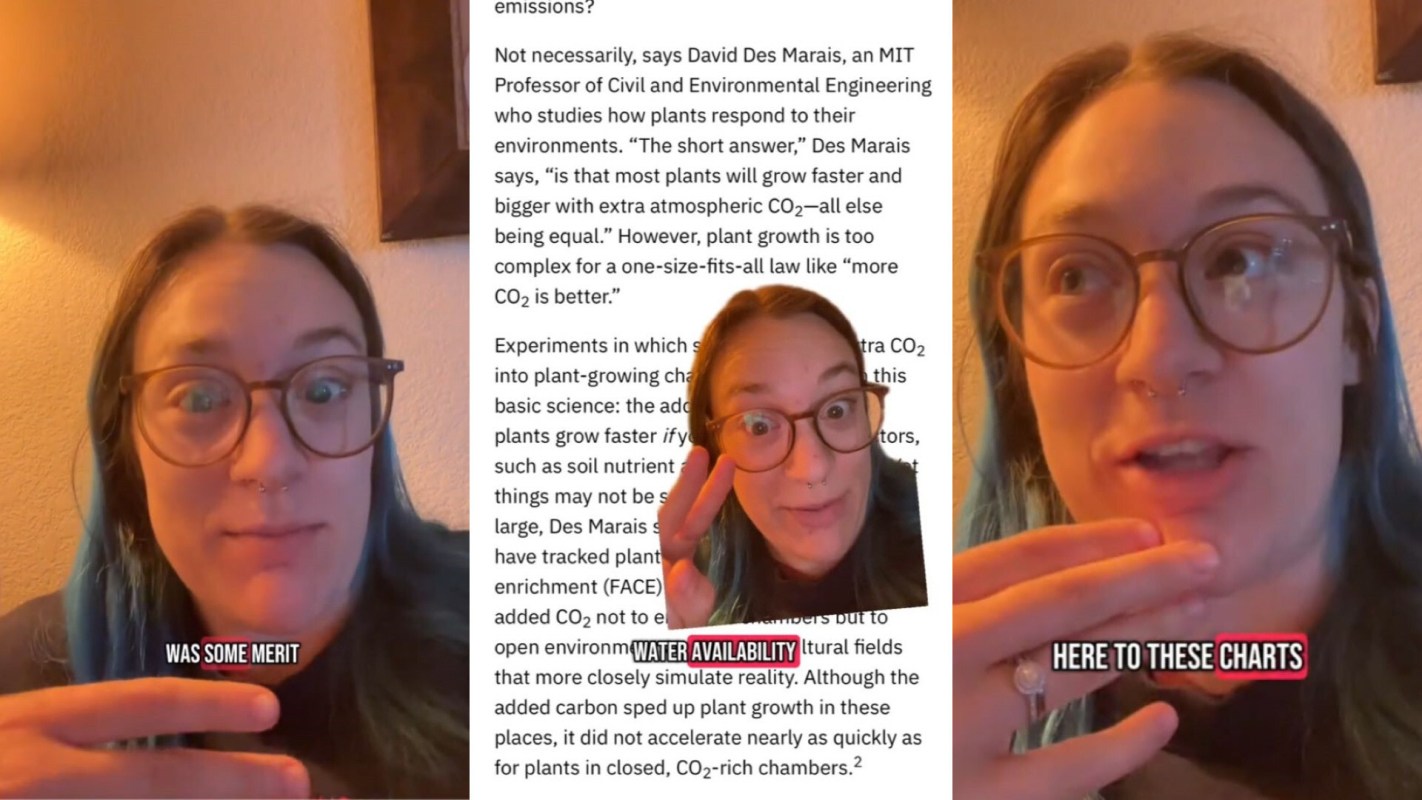
Emma, another TikTok creator (@simpleenvironmentalist), created a response TikTok video to fact-check the original creator, warning that the findings from the studies Lucy had referenced were taken out of context.
@simpleenvironmentalist Lucy: these charts have *some* merit. But girl, you NEED to include the nuance and info from the actual studies and not just pick and choose what fits your narrative. #climatedenial #climatechange #botany #evolution #zerowaste ♬ original sound - Emma ♻️🥾📚
In her video, Lucy shared a global greening chart from a carbon dioxide fertilization NASA study. This chart showed areas of the world where "greening," or increased photosynthesis and greater leaf production, has occurred. The second diagram shows a conceptual model of "greening" rates, compared to the concentration of atmospheric carbon dioxide at different points in history — including the glacial period, pre-industry period, and current and future periods.
It's true; carbon dioxide facilitates the photosynthesis process. Plants need a combination of carbon dioxide, water, and sunlight to produce oxygen and sugar for energy, which supports growth and development.
As atmospheric levels of carbon dioxide grow, plant photosynthesis also increases, which can raise plant productivity — an effect known as the carbon fertilization effect. Plants may produce more leaves above ground or expand root systems below the ground. However, these increased leaves may contain a lower nutritional value, diluting the quality of food and crops for humans and local wildlife.
However, as Emma points out in her response video, the study where Lucy's second greening rate visual came from had more to elaborate on greening rates.
TCD Picks » Quince Spotlight
💡These best-sellers from Quince deliver affordable, sustainable luxury for all




"Most studies … report much greater physiological and growth enhancements in response to increases in [CO2] below modern concentrations than to increases above modern concentrations. Thus, plants may have already exhausted much of their potential to respond to rising [CO2]," the study's language read, per the video's screenshot.
The study suggested that atmospheric carbon may have benefited plants more in the past when atmospheric carbon dioxide levels were lower, but perhaps not as much now, as plants may have become used to the potential growth effects of carbon dioxide.
Carbon dioxide is only one of many factors that contribute to plant growth and health, and an increase in atmospheric carbon may benefit plants if these other factors — including global temperatures, water availability, soil nutrition, etc. — are also adjusted for.
"Plant growth is too complex for a one-size-fits-all law," said David Des Marais, MIT professor of civil and environmental engineering, per Climate Fact Checks.
|
How would you rate your gardening skills? Click your choice to see results and speak your mind. |
 Ultimate green thumb 🧑🌾
 Burning dirty fuels releases excess heat-trapping carbon dioxide, contributing to rising global temperatures. Warmer planet temperatures destabilize global weather patterns, increasing the likelihood of extreme weather events that create more environmental stress for plants and crops.
Farmers in Bangladesh lost thousands of hectares of crops due to unusually heavy rainfall. Farmers in Illinois have been at the mercy of an ongoing drought, which has left livestock with barren pastures to feed on.
This TikTok debate shows that even charts from reputable studies, taken out of context, can create a misleading impression of climate issues and climate progress.
"Thankfully that other person does not show up on my FYP," said one commenter under Emma's TikTok video. "It was so you could see her videos and debunk them."

Get TCD's free newsletters for easy tips to save more, waste less, and make smarter choices — and earn up to $5,000 toward clean upgrades in TCD's exclusive Rewards Club.






