


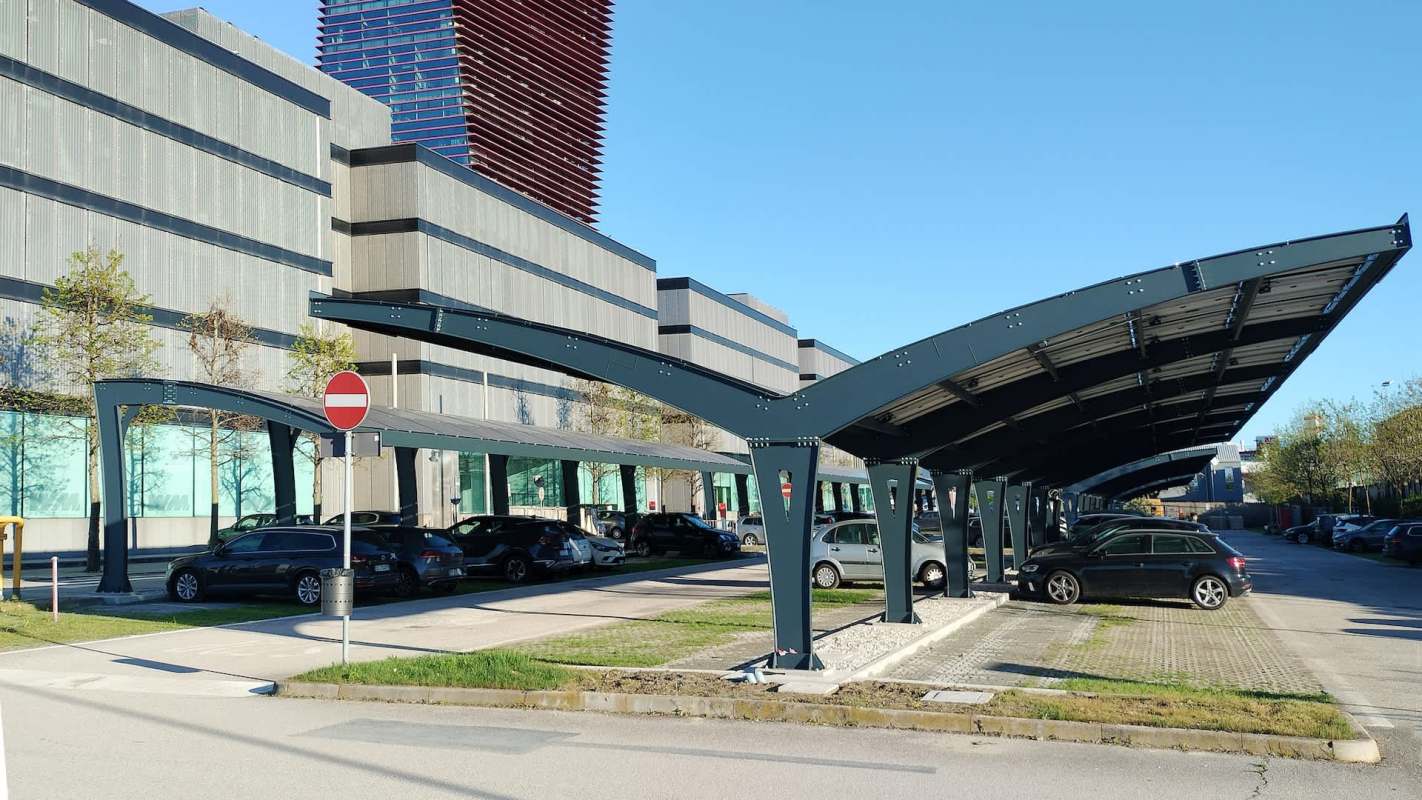
A new law in South Korea will require parking lots with more than 80 spaces to install solar canopies and carports. Notably, the policy will apply to both new construction and existing lots, according to Electrek.
Approved by the Ministry of Trade, Industry, and Energy in September, the law was scheduled to go into effect by the end of November.
It's a logical move that will benefit both energy customers and drivers in numerous ways, much like agrivoltaic installations that make dual use of farms as sites for solar arrays. The addition of solar panels in the lots is set to increase the country's renewable energy infrastructure and create jobs across both the construction and solar industries.
Drivers who use the lots will get the benefit of protective canopies that reduce the impact of precipitation and blistering summer heat. They may even lower the need for drivers to blast the air conditioning upon return to a long-parked car.
Adding solar panels over large parking areas should also help cut back on the heat island effect, in which dark surfaces fail to reflect much of the sun's heat, while also absorbing and emitting that heat even as the sun goes down. Solar panels can instead harness that energy, generating electricity without the need for dirty fossil fuels, while also cooling the surrounding area.
Large parking lots are frequently located near office buildings, shopping centers, and tourist attractions, where solar-generated power could be used to offset less sustainable energy operations. Panels in these locations might also complement any existing solar arrays on nearby commercial rooftops.
TCD Picks » Quince Spotlight
💡These best-sellers from Quince deliver affordable, sustainable luxury for all




In a separate but related innovation, engineers at Dartmouth College have developed a solar-powered vehicle charger at one of the institution's parking areas. Combining that tech with a law like South Korea's could take the synergy even farther.
To reach a cleaner future, we'll need to continue to expand sustainable energy infrastructure, powering homes, offices, energy-hungry data centers, and next-gen transportation more efficiently and with far less heat-trapping pollution.
Council Member Justin Brannan spoke to this during a 2024 New York City Council meeting focused on installing solar canopies in city-controlled parking lots, saying that infrastructure needs to exist to incentivize this kind of change.
"Electric cars will drive us to a sustainable future, but we can't expect drivers to make the switch from fossil fuel-powered to electric vehicles if our city is not built out to support them," Brannan explained.
Maybe more solar-canopied lots, built in more countries, can help.
|
Should the government offer tax incentives for energy-saving home upgrades? Click your choice to see results and speak your mind. |
 Absolutely 👍
💰Get TCD's free newsletters for easy tips to save more, waste less, and make smarter choices — and earn up to $5,000 toward clean upgrades in TCD's exclusive Rewards Club.






