


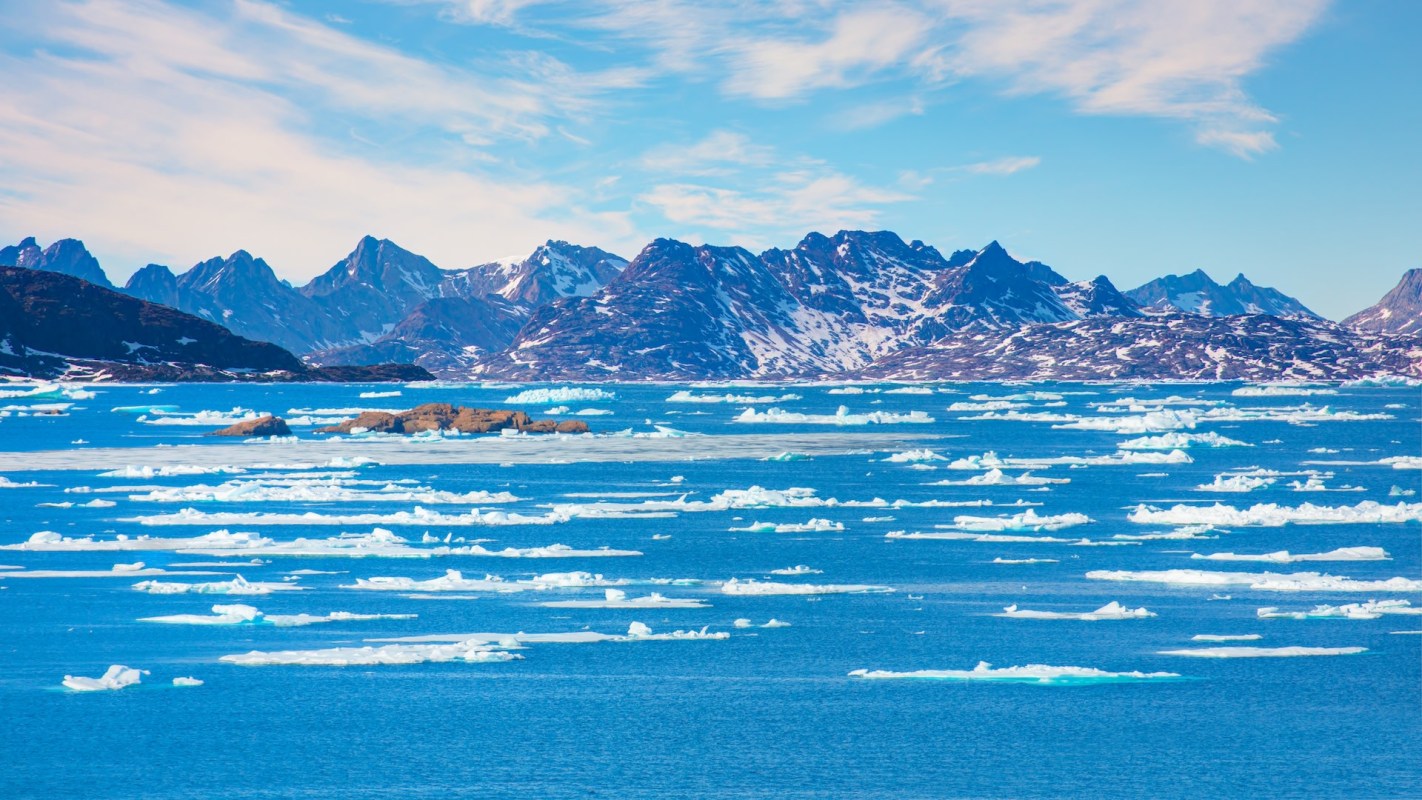
Scientists are raising concerns about a surprising and significant barrier to accurate ocean modeling: the rapid buildup of Arctic meltwater around Greenland. A new study by the Max Planck Institute for Meteorology highlights how this freshwater accumulation is disrupting essential ocean processes — and potentially weakening systems that help regulate weather patterns across the Northern Hemisphere.
Researcher Fraser William Goldsworth said the findings revealed a "big surprise": how these conditions change by season and region, which could make it much harder to predict the impacts of increasing global temperatures on communities.
What's happening?
The oceanographer analyzed high-resolution model data to understand how freshwater from melting Arctic and Greenland ice is pooling in four regions around Greenland. Instead of using traditional freshwater budgets — which he said had major flaws — Goldsworth applied a new freshwater transformation framework to track how surface melt, sea ice formation, and mixing shape these expanding freshwater layers.
The results showed that boundary currents around Greenland become increasingly salty as they move from the Fram Strait toward the Labrador Sea, a signal of strong mixing between meltwater and deeper ocean layers. This mixing is especially intense in winter and much stronger in the waters off Southern Greenland than in the ice-covered north.
The accumulation of this freshwater can weaken the Atlantic Meridional Overturning Circulation, a major ocean conveyor belt that transports heat across the planet. A separate study recently warned that some models underestimate the vulnerability of the AMOC.
Why is this important?
A weaker AMOC could dramatically reshape conditions around the world. More meltwater in the North Atlantic Ocean can mean higher tides during intense storms, heavier rainfall in some regions, and persistent disruptions to global food systems.
TCD Picks » Quince Spotlight
💡These best-sellers from Quince deliver affordable, sustainable luxury for all




These shifts aren't isolated events. While extreme weather has always existed, scientists agree that human-driven warming is fueling more powerful and more dangerous storms as well as intensifying long-term risks to coastlines, farms, and neighborhoods.
What's being done about it?
Researchers are developing ocean models to track freshwater buildup and improve early-warning systems for major ocean changes. Communities are also adopting solutions that boost resilience during extreme weather, such as restoring coastal wetlands, upgrading stormwater systems, and supporting disaster-ready microgrids.
Everyday actions — including electrifying homes, improving energy efficiency, reducing food waste, and supporting local policies that scale clean energy and resilient infrastructure — can also reduce long-term risks.
|
Do you think we should be trying to pull pollution out of the atmosphere? Click your choice to see results and speak your mind. |
 Absolutely 👍
💰Get TCD's free newsletters for easy tips to save more, waste less, and make smarter choices — and earn up to $5,000 toward clean upgrades in TCD's exclusive Rewards Club.






