


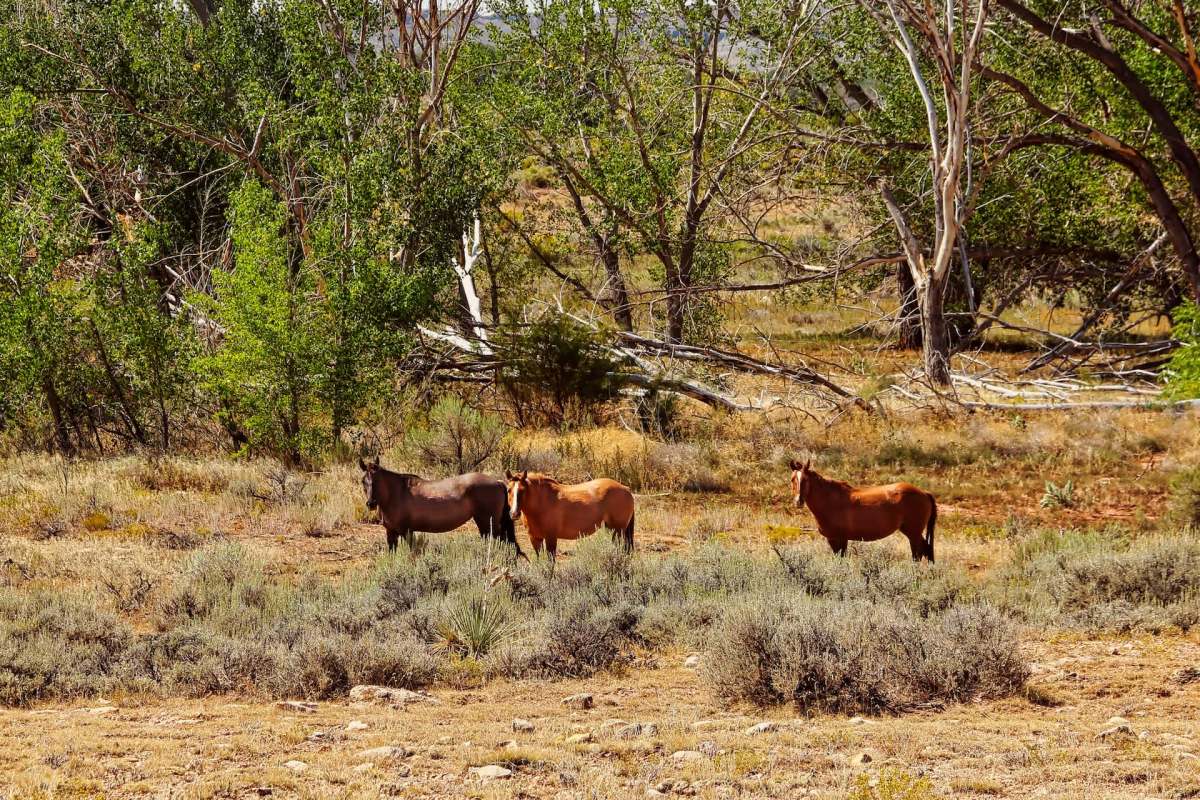
Wild horses are an iconic symbol of the American West, and they just scored a legal win against the federal government thanks to the efforts of several groups of conservationists determined to preserve their habitat.
The Bureau of Land Management (BLM) attempted to implement a plan to remove the Salt Wells Creek and Great Divide Basin wild horse herds off of 2 million acres of public land in southwest Wyoming, according to Happy Eco News.
The U.S. Court of Appeals for the Tenth Circuit blocked its plan, saying it is in violation of federal law, specifically the 1971 Wild Free-Roaming Horses and Burros Act. According to the outlet, the court said the agency failed to consider if its decision to remove the horses would achieve a "thriving natural ecological balance on the public lands."
The BLM was sued by Return to Freedom Wild Horse Conservation, Front Range Equine Rescue, and individual advocates Angelique Rea and Meg Frederick, all of whom have been fighting to protect these horses and their habitats for more than a decade.
The agency's plan to start helicopter roundups to capture and remove the horses is on hold while a lower court determines what they must do to comply with federal law.
Wild horses have been part of the American West for hundreds of years, with the current population ranging across 10 states. Those populations are threatened by cattle ranching, energy development, and other commercial uses of public land, as well as drought conditions that have been plaguing the region for years.
TCD Picks » Quince Spotlight
💡These best-sellers from Quince deliver affordable, sustainable luxury for all




The horses and burros do contribute to their habitats by way of grazing, which helps with fire reduction, carbon sequestering, and increasing biodiversity, according to American Wild Horse Conservation.
BLM argues that there is an overpopulation of wild horses also contributing to their own habitat degradation, but Return to Freedom and other conservation groups say that herds can be managed effectively with fertility control, instead of the more invasive and stressful helicopter herding that the agency frequently uses.
The legal win forces the BLM and the federal government to more thoughtfully consider their approach to wildlife and habitat management that will truly be beneficial for everyone. It's a temporary win, but a necessary one in the ongoing fight to preserve the wilderness that much of the American West prides itself on.
|
Do you think America does a good job of protecting its natural beauty? Click your choice to see results and speak your mind. |
 Definitely 👍
💰Get TCD's free newsletters for easy tips to save more, waste less, and make smarter choices — and earn up to $5,000 toward clean upgrades in TCD's exclusive Rewards Club.







