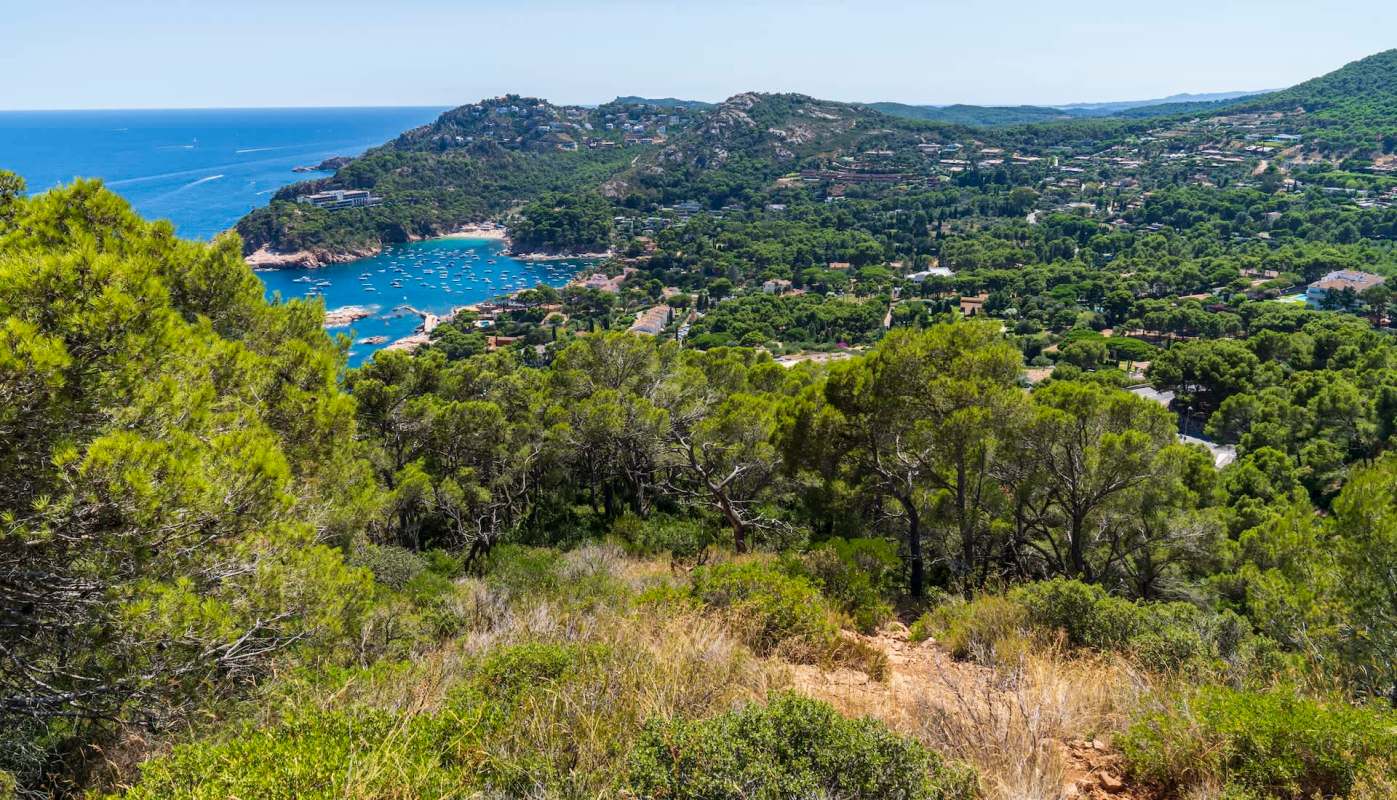
Several unique Mediterranean plant and animal species may soon be at risk due to an ancient belief that has recently been disproven.
What's happening?
People have believed since Plato lived that the Mediterranean was once home to a vast array of dense forests. This belief has informed action in the region from public policy to conservation efforts to major investments.
However, according to Phys.org, a new study conducted by entomologists from the University of South Bohemia and the Biology Center of the Czech Academy of Sciences illuminated new information. It found that the ancient Mediterranean landscape actually once consisted of wide open spaces.
Researchers came to this conclusion after studying 42,136 individual macro-moths belonging to 641 species over a period of two years. These macro-moths appeared in varying Mediterranean landscapes, including dense forests, grazed grasslands, and shrublands. It then took six years for the researchers to process the data they collected.
The team of scientists learned that all three areas were home to approximately the same number of moth species. However, the species varied by landscape: grasslands and shrublands housed Mediterranean-specific species. The dense forest areas tended to hold common moth species found throughout northern Europe.
These findings show that to maintain the Mediterranean's rich biodiversity, the region needs more grazed grasslands rather than increased forestation.
TCD Picks » Good Store Spotlight
Get 10% off your next purchase with code TCD10




Martin Konvička from the Institute of Entomology and one of the leaders of the study explained, "The current southern Europe is undergoing climatic cooling, as it is succumbing to woodlands and the unique southern species are being replaced by widely distributed species from more northern latitudes."
Why is this concerning?
The Mediterranean is a biodiversity hotspot. In total, the region is home to approximately 30,000 vascular plant species. Around 13,000 of them, in addition to numerous unique wildlife species, are endemic only to the Mediterranean.
If the region prioritizes forests and continues to build on top of open spaces, these species will suffer. They could either die off or be replaced with species more commonly found across Europe. Endemic species that die off would then be gone forever since they don't live anywhere else.
Plant species dying off could soon result in native wildlife species disappearing. The effects of the newly unbalanced ecosystem could trickle down to human populations.
TCD Picks » Quince Spotlight
💡These best-sellers from Quince deliver affordable, sustainable luxury for all




|
Do you think we still have a lot to learn from ancient peoples? Click your choice to see results and speak your mind. |
 Definitely 👍
 What can be done to preserve the Mediterranean landscape?
The research team presented several ideas in their study for conserving the landscape. Targeted habitat management, intensified rewilding efforts, discouraging initiatives that threaten open landscapes, and enhancing public awareness and education are all potential solutions.
If you travel to the Mediterranean, you can do your part by learning how to vacation responsibly.

💰Get TCD's free newsletters for easy tips to save more, waste less, and make smarter choices — and earn up to $5,000 toward clean upgrades in TCD's exclusive Rewards Club.