


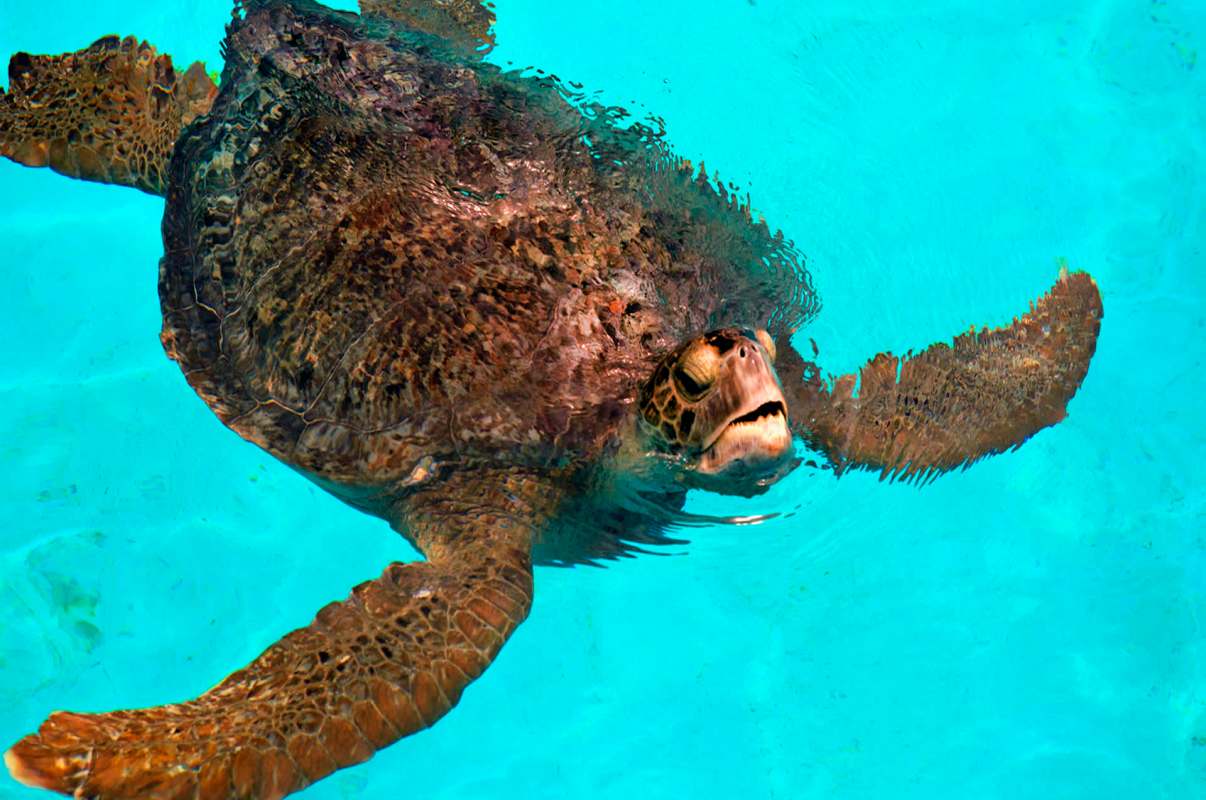
When rescuers found a young green sea turtle on the shores of North Carolina's Outer Banks this summer, they didn't know the full scope of its struggle.
What's happening?
As reported by The Coastland Times, the small turtle dubbed Lucky Duck was brought to the Sea Turtle Assistance and Rehabilitation Center at the North Carolina Aquarium on Roanoke Island in late June with visible shark bite wounds.
But a radiograph soon revealed an even bigger problem: Its stomach and intestines were packed with plastic.
The aquarium's team of veterinarians and aquarists carefully treated both the external injuries and the internal damage caused by microplastics or small, plastic fragments that the turtle had likely mistaken for food.
According to Public Radio East, the amount of debris expelled by Lucky Duck was shocking enough that the aquarium displayed it publicly to raise awareness about the dangers of ocean plastics.
After months of rehabilitation, Lucky Duck fully recovered and was recently released back into the sea, according to a follow-up report.
TCD Picks » Quince Spotlight
💡These best-sellers from Quince deliver affordable, sustainable luxury for all




Why is plastic pollution concerning?
Lucky Duck's story represents a much larger environmental crisis. Scientists have found that plastic pollution now reaches even the most remote parts of the ocean and infiltrates the bodies of marine animals worldwide.
Turtles often mistake plastic bags for jellyfish, while bottle caps and straws look like small crustaceans. One study found fragments inside loggerhead turtles that "resembled crab claws."
The problem isn't limited only to sea turtles. In a related study, researchers discovered similar plastic fragments in seabirds.
Plastic can take centuries to decompose; for example, a single straw can linger for about 200 years, according to the World Wildlife Fund. During that time, it continues to break down into microplastics that make their way through the food chain, eventually into human bodies, too.
|
Should taxpayers help pay to clean up the Great Pacific Garbage Patch?
Click your choice to see results and speak your mind. |
 We should pay for all of it 👍
 What's being done about plastic pollution?
Stories like Lucky Duck's are leading to global action. The North Carolina Aquarium's S.T.A.R. Center, which has rehabilitated hundreds of turtles since 2014, uses each patient's recovery to educate visitors about the link between single-use plastics and marine life injuries.
Individuals can make a tangible difference, too. Swapping single-use plastics for reusable alternatives, refusing unnecessary packaging, and supporting legislation that limits plastic production all help chip away at the problem.
With collective action from large organizations down to the individual, Lucky Duck won't be the only lucky survivor in our oceans.

💰Get TCD's free newsletters for easy tips to save more, waste less, and make smarter choices — and earn up to $5,000 toward clean upgrades in TCD's exclusive Rewards Club.







