


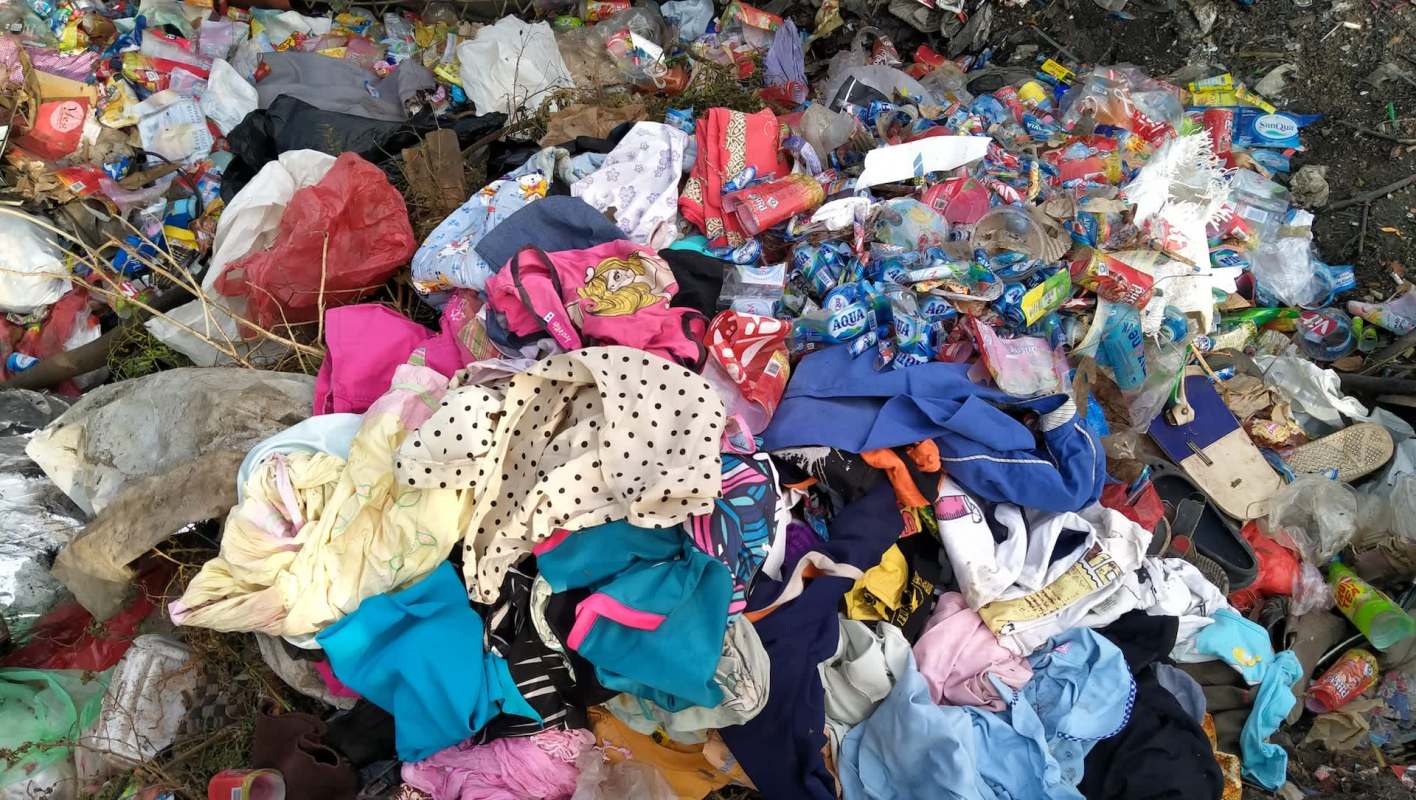
Hundreds of young people gathered across Nigeria to highlight the country's growing textile waste crisis.
SustyVibes, a youth-led, sustainability-focused nonprofit, organized gatherings across Nigeria for its 2025 Street Conference. As BusinessDay reported, the event took place on Sept. 19, World Cleanup Day, with youth cleaning up areas across 10 Nigerian cities.
In an Instagram post, the organization said it collected roughly three tons of waste during the Street Conference.
In particular, the Street Conference highlighted Nigeria's textile waste problem. SustyVibes volunteers spoke with residents and businesses about ways to reuse waste, such as textile offcuts, rather than just throwing it away.
"These can be easily transformed into valuable products like jewelry, bags, or flower pots," SustyVibes Projects and Partnerships Director Aniebiet Obot told BusinessDay.
Fashion manufacturing processes generate enormous amounts of emissions and waste worldwide. According to the United Nations, more than 100 million tons of textile waste are produced each year, and the textile sector is responsible for an estimated 6-8% of the world's planet-warming emissions.
TCD Picks » Quince Spotlight
💡These best-sellers from Quince deliver affordable, sustainable luxury for all




The problem is especially severe in Nigeria. In Lagos, the African nation's largest city, the Office of the Special Adviser on Climate Change and Circular Economy reported that more than 2,000 tons of textile waste are produced each day, with the vast majority ending up in landfills.
Fast fashion's growing popularity has only made this problem worse. Capitalizing on trends, fast-fashion companies churn out massive amounts of clothes as quickly as possible, and the items typically have short shelf lives, making them even more likely to end up in landfills.
Largely due to fast fashion, textile manufacturing emissions are projected to increase by 60% by 2030.
The theme of this year's SustyVibes Street Conference was "Strive for Five," with the organization saying that if 5% of people in a community commit to an action, such as reducing textile waste, it can spur the other 95% to join in, creating a cultural shift.
|
Which of these factors would most effectively motivate you to recycle old clothes and electronics?
Click your choice to see results and speak your mind. |
 Giving me money back 💰
💰Join TCD's exclusive Rewards Club to earn up to $5,000 toward clean upgrades that will help you slash your bills and future-proof your home.






