


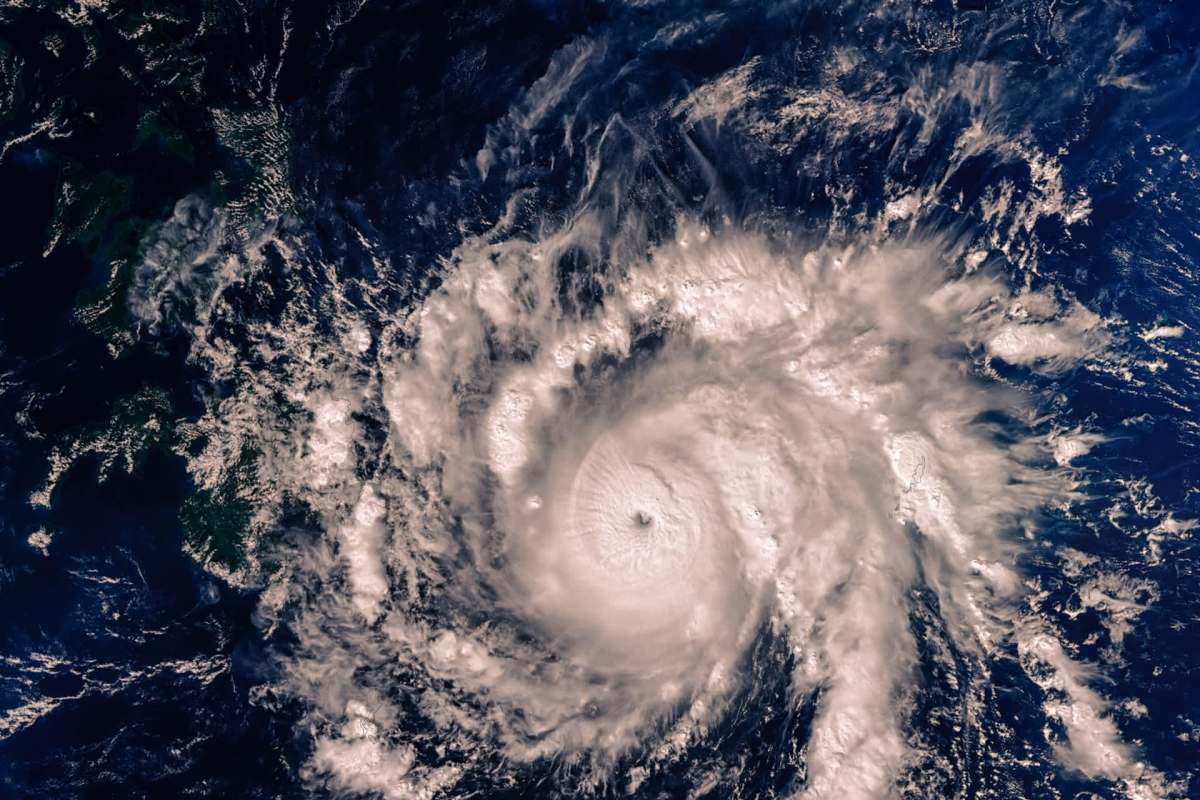
Another tropical cyclone has the potential to become a super typhoon before striking the northern Philippines by the end of this weekend. This comes just after the central area of the country was slammed by a deadly typhoon earlier this week.
Typhoon Kalmaegi killed at least 114 people as it swept through the Philippines on Wednesday, Nov. 5. Now, the country is preparing for a tropical storm that forecasters expect to intensify into a major typhoon. It's projected to reach the northern end of the island chain as early as Sunday morning.
Tropical Storm Fung-wong was packing maximum sustained winds of 46 mph with gusts of up to 50 mph near Yap, Micronesia. It moved to the west-northwest around 13 mph in the western Pacific Ocean as of early Thursday, Nov. 6.
Forecasters expect the storm's maximum sustained winds to increase to near 132 mph and gusts to reach as high as 161 mph by Saturday morning.
Computer models suggest it's possible the storm could reach super typhoon status before it strikes the Philippines. A super typhoon is a tropical cyclone in the Pacific with sustained winds of at least 150 mph. That's the equivalent of a high-end Category 4 hurricane.
Tropical Storm Fung-wong has the appearance of a storm that is poised to rapidly strengthen. Looking down at the storm from a satellite 22,000 miles above the Earth, it seems to have all the visual signs of a well-organized tropical cyclone.
TCD Picks » Quince Spotlight
💡These best-sellers from Quince deliver affordable, sustainable luxury for all




"Satellite imagery can help determine the strength, size and cohesion of a storm," noted the New York Times. "The stronger a storm becomes, the more likely an eye will form in the center. When the eye looks symmetrical, that often means the storm is not encountering anything to weaken it."
The Philippines is still reeling from the catastrophic devastation wrought by Typhoon Kalmaegi less than two days ago.
President Ferdinand R. Marcos Jr. declared a state of national calamity to speed up relief and recovery efforts in regions hit by the typhoon. Cebu was hit the hardest with at least 49 deaths reported there. Flooding washed away large parts of the central island.
The forecast track from the Joint Typhoon Warning Center has Tropical Storm Fung-wong targeting Luzon. It's the largest and most populous island in the Philippines, and the storm will reach it sometime early Sunday. If the storm strikes as a super typhoon, it will be the second major typhoon to hit the Philippines in under a week, following Typhoon Kalmaegi.
|
Do you think America does a good job of protecting its natural beauty? Click your choice to see results and speak your mind. |
 Definitely 👍
 The overheating of our planet is warming the world's oceans and supercharging tropical cyclones. World Weather Attribution scientists reported in 2024 that a warming planet intensified the late 2024 typhoon season. Half of the six major storms striking the Philippines between late October and mid-November were major typhoons.
WWA researchers have said that our changing climate has increased the probability of such events.

Join our free newsletter for good news and useful tips, and don't miss this cool list of easy ways to help yourself while helping the planet.







