


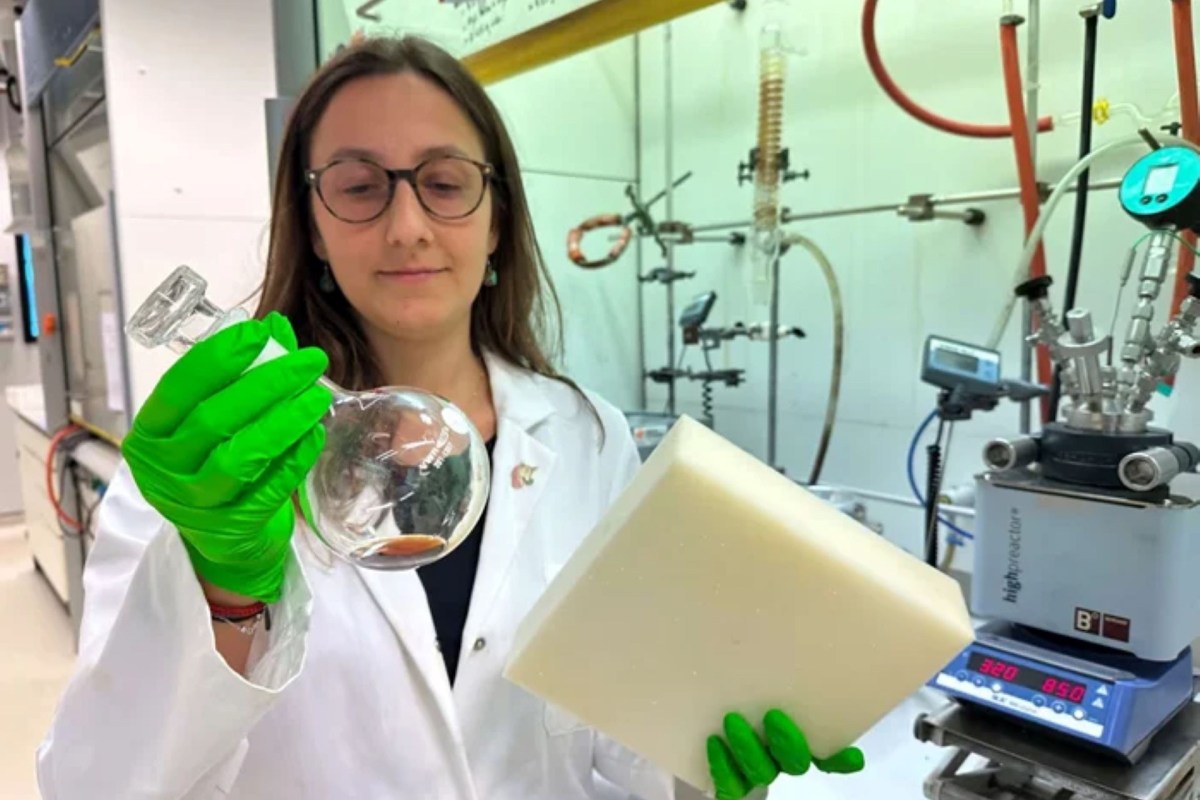
A team of scientists at the University of Twente in the Netherlands has discovered a safer, cleaner way to recycle polyurethane foam — one of the world's most common and most problematic plastics.
Found in everything from mattresses and furniture to shoes and sponges, PUR foam has long been a recycling challenge, AZoCleanTech reports. But this new process could finally close the loop on one of modern life's most persistent waste streams.
Breaking down PUR foam has always been a nightmare.
"For a long time, the use of phosgene, a lethal substance, was the only way to break apart this foam," project leader Jurriaan Huskens said. "That is simply unacceptable if you really want to use recycling on a large scale." As a result, millions of tons of foam waste are landfilled or incinerated each year, releasing harmful pollution into the atmosphere and wasting valuable materials.
The researchers' new method replaces hazardous ingredients with a nontoxic, environmentally friendly compound that can safely separate the foam back into its original chemical building blocks.
"We show that you can recover both the soft part and the hard part of the foam," study co-author Jean-Paul Lange said. "This makes it possible for the first time to make PUR truly circular."
TCD Picks » Quince Spotlight
💡These best-sellers from Quince deliver affordable, sustainable luxury for all




This innovation could revolutionize how we handle polyurethane waste. Because the recovered materials can be reused to make new products — from mattresses to athletic gear — the process not only reduces the need for new raw materials but also keeps old foam out of landfills.
"The great thing is that this process is not only safer but also offers a real solution for the millions of tons of foam that are thrown away worldwide," Huskens said.
The breakthrough marks a leap toward a circular economy for plastics, wherein products can be reused indefinitely instead of discarded. If widely implemented, this could help massively cut planet-overheating pollution and lower manufacturing costs, meaning cheaper products for both businesses and consumers — from the mattresses we sleep on to the furniture in our homes. Individuals can help make a difference by choosing plastic-free options for products whenever possible.
Doctoral candidate and first author Ege Hosgor noted that the team tested the method on "foam as it is found in real-world products," proving its practical potential for large-scale industrial use.
The next step is scaling up production so manufacturers can adopt it at commercial levels. With cleaner chemistry and a path to circular recycling, this innovation may finally give new life to a material once thought impossible to reclaim.
|
Which of these factors would most effectively motivate you to recycle old clothes and electronics?
Click your choice to see results and speak your mind. |
 Giving me money back 💰
Join our free newsletter for weekly updates on the latest innovations improving our lives and shaping our future, and don't miss this cool list of easy ways to help yourself while helping the planet.






