


Keeping patients safe and healthy is paramount for the healthcare industry, and yet that often comes at the expense of huge amounts of waste, significant environmental costs, and a large price tag for both hospitals and patients.
That's where innovative founders like Luc Vallieres come in: He's currently running the largest medical bed and stretcher refurbishment company in the country, called iMedical, which rescues the rusted medical equipment from ending up in "hospital graveyards" and landfills — and transforms them into like-new units.
It's a win-win for hospitals and the environment: iMedical's solution prevents a massive safety issue (rust can increase the potential for infection) and saves hospitals up to 60% off the cost of buying a new bed. Plus, by effectively doubling the lifespan of each piece of equipment, the team keeps thousands of beds and stretchers out of landfills every year.
By Vallieres' calculations, there are nearly 900,000 hospital beds in the country and about 300,000 stretchers. By conventional standards, each one needs to be replaced every 10 years or so. And what typically happens to the old equipment?
"600 pounds, a ton of plastics, metals, electronics, and that all goes to wasteland just in the United States," Vallieres told The Cool Down. "It adds up pretty darn quick."
In an exclusive conversation with The Cool Down, Vallieres walked us through how iMedical helps solve that waste problem and save hospital systems thousands of dollars on each refreshed unit, funds that can then be spent on more technical equipment or to help lower hospital bills for patients.
Where are these "hospital graveyards" hidden? And how can they be cleaned up?
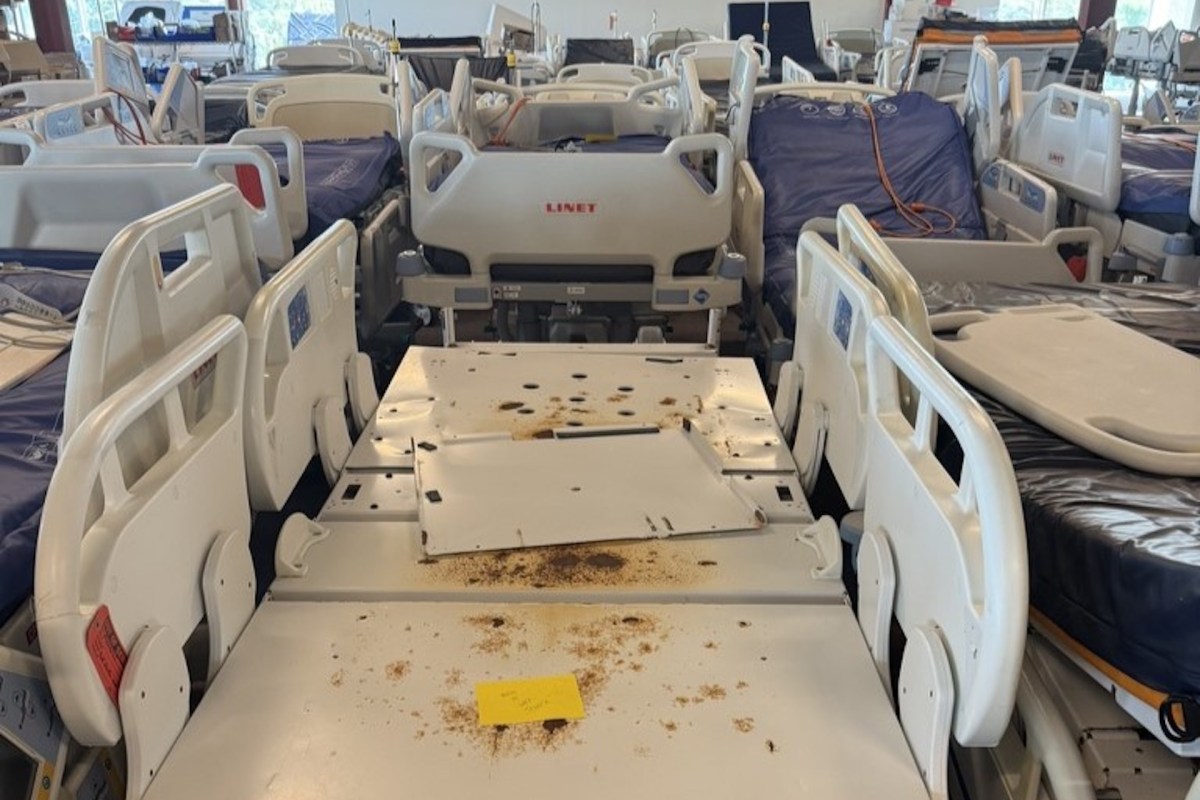
As you might imagine, hospitals run tight ships when it comes to cleaning protocols, and that became even more important and rigorous during the pandemic. Among other procedures, disinfecting beds went into overdrive, Vallieres explained. After medical professionals would wipe down beds, strong disinfectant cleaners would begin to ruin the paint underneath the mattresses.
From there, "rust would show up."
"It's pretty nasty, and that impacts patient safety," he continued. "If there's rust on a bed and a patient has an open wound, it's a massive potential health and safety issue."
Replacing rusty beds is the obvious solution, but on average, new hospital beds run around $10,000 each (or more, depending on specificity) and they don't show up via Prime overnight shipping. As a stopgap, hospitals may take these beds out of circulation until they can figure out a better long-term solution.
|
Would you be more likely to shop at a store that paid you for your old stuff? Click your choice to see results and speak your mind. |
 Absolutely 💯
 So when the Joint Commission (the governing body that evaluates and oversees hospitals) comes in for an inspection, some hospitals may "literally hide these beds," Vallieres said, "and I call it the 'hospital graveyards.'"
Vallieres showed The Cool Down a series of images taken at various hospitals that have a "graveyard" issue they're working to fix. Sometimes the broken or rusted beds are taken out of circulation and just lined up in hallways, waiting for a solution.
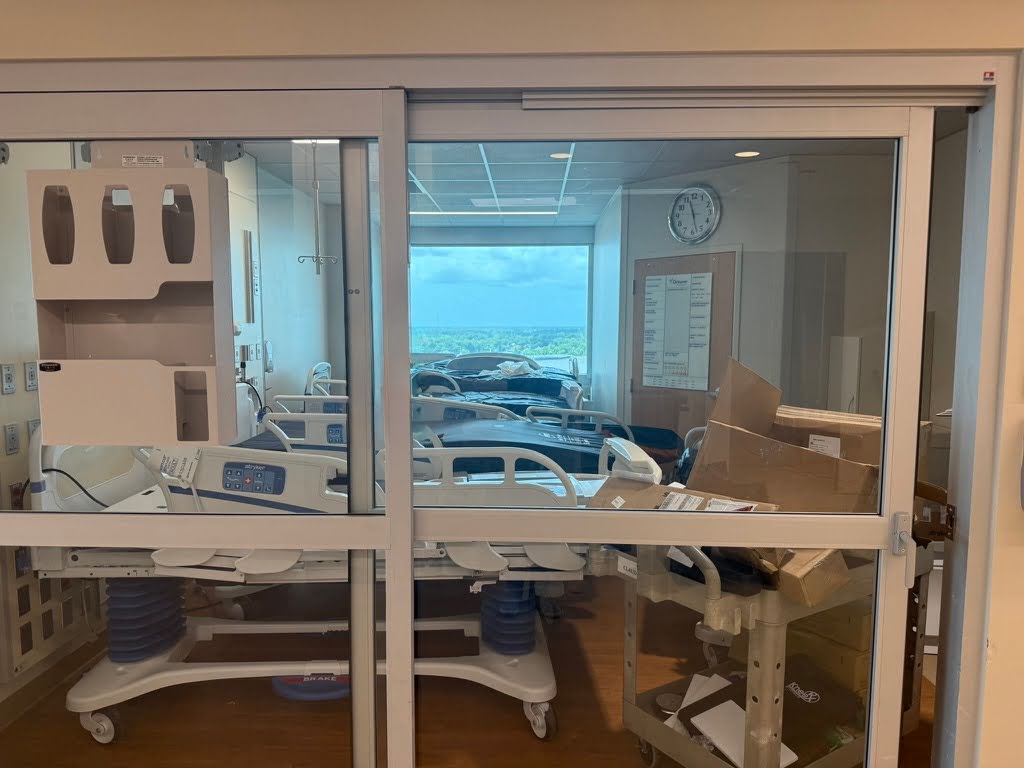
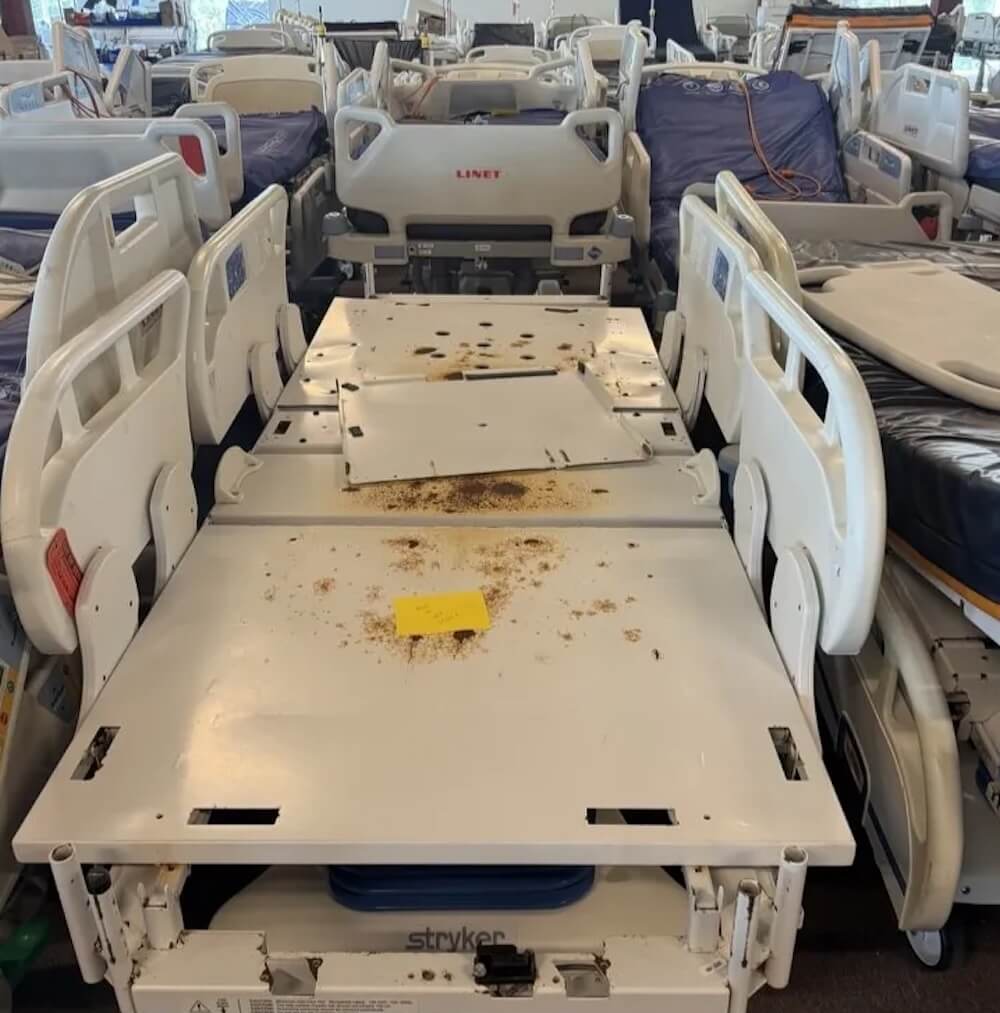

That's where iMedical jumps into action. While the company has been running since 1995, it recently shifted its focus to intensive equipment refurbishment, given just how many rusted beds and stretchers there are now, thanks to cleaning procedures that became necessary for COVID containment.
In the case of helping hospitals reduce their "equipment graveyards," the iMedical team takes away the damaged beds to give them new life.
What happens during this 'refurbishment' process?
iMedical is ISO-certified (a global benchmark for the medical community), and Vallieres explained that most of the company's refurbishment work serves whole hospital systems over many years rather than a la carte fixes (although they're not against throwing in the first refurbished bed for free).
iMedical works with some of the top hospital systems across the country, including Sentara Health and Alameda Health Systems, and in most cases the team helps these organizations work their way through an entire inventory, starting with the beds and stretchers in the worst shape.
"We have our own logistics, so we'll back up a semi truck" to take the unusable equipment back to iMedical's two operational centers across the country, he explained. "In many cases, we'll bring [the hospital] a rental fleet so they still have the number of beds they would have."
Once the damaged beds are back at iMedical's facilities in Indiana and Virginia, the real work begins.
On a typical hospital bed model like the Stryker S3, "we take [out] all the side rails," and then "we'll take all the [other] plastics out," Vallieres told us. Then, in the facility's sanding booths, "we sand everything down so there's no rust showing." From there, it's time to repaint.
"We have these big paint booths like you would drive a car in. So we repaint all the platforms, let it dry, and we rebuild the bed from the ground up," he said.
If the bed frames were particularly worn and had sharp edges, the iMedical team will replace all the plastic as well to ensure patient safety. This is also when they retest all the bed jacks and other mechanical elements.

While iMedical's refurbishment protocol is streamlined and thorough, it's not state-of-the-art technology like so many other aspects of medical equipment these days. "In the last 15 years, beds haven't changed that much," Vallieres said. "The button goes up, it goes down. There's a nurse call button. It's all the same system."
That's why he says there's no reason for hospitals to buy a brand-new hospital bed when they can refurbish current inventory at a fraction of the price.
"Basically, save your money. We'll give your bed another life, another 10 years, or seven years, whatever it might be, and [you can] save your money for stuff that actually has changed and can provide better patient care," he said.
How much can hospitals actually save instead of buying brand-new equipment?
According to a recent report by HANDLE Global, a healthcare analytics platform, over 25% of medical beds in a hospital's intensive care unit and 36% of beds in a hospital's medical and surgical circulation currently need to be replaced because they're at the end of their lifespan or have other factors indicating replacement is necessary. In fact, only 61% in ICUs and 56% of medical/surgical beds are considered to be in good enough quality to not need replacement for a few more years.
But recommendations for replacement are not the same thing as actually replacing them — hospitals are often dependent on strict fiscal year budgets and competing priorities, especially for the latest state-of-the-art equipment.
iMedical's refurbishment solution adds another option: "40% of the cost of replacement is what we look at," Vallieres said. So for example, a new Stryker model could cost up to $10,000, he explained, whereas refurbishing a rusted Stryker model would cost around $4,000. "And we offer the exact same one-year warranty as the OEM [original equipment manufacturer] or the manufacturer would give them," he added.
Bigger picture, Vallieres said he took over as CEO and went all in on iMedical's refurbishment, rental, and parts solutions because "there's a problem in the marketplace."
Recently, his son was in the hospital for two and a half days, which landed them a $12,000 bill. "When you start breaking this down, there's no reason it should be this expensive," he said. "The healthcare system in the US is one of the most expensive in the world because some people don't care, or just [think] 'oh, we'll buy something new and we'll pass it down to the consumer.'"
"We can make a massive impact, at least in the category that we can touch today, and we're 100% on a warpath to make that happen," he said.
How long does it take to transform a hospital bed?
Typically, it takes anywhere from eight to 12 weeks for a hospital to replace a medical bed with a brand-new one, Vallieres explained.
Refurbishment, however, cuts that time in half.
"Typically we do it by the semi-load, so call it 20 to 25 beds," he told us. "Within four weeks, we can bring their beds back."
What happens to medical beds that can't be refreshed?
iMedical works coast to coast to help hospitals deal with heavy-duty medical equipment, but sometimes the beds and stretchers are in too bad shape for a formal overhaul.
"There's some older hospital beds that people don't care for here [in the US] … so instead of sending them to landfill, we'll wholesale them to international customers."
And as a last-case scenario, "every bed that comes into our facility [where a] frame is bent or we can't do anything with the bed, we strip it down to the components," he said. "Copper goes in the basket, metal goes in the basket, plastic goes in the basket, and we send as much as we can to recycling, and we have pickups at least once a month by category."
That doesn't add up to "a whole lot of cost savings on our side, but at least it's just not a whole frame going to the wasteland."
What are the environmental benefits of refurbishing instead of buying new?
The U.S. healthcare industry is responsible for around 8.5% of U.S. carbon emissions. (By comparison, air travel accounts for 3%.) Hospital waste contributes to that massive amount of pollution with, for example, up to 124 billion exam gloves used once and then thrown away every year.
While research has yet to dive into the environmental impacts of constructing, maintaining, and eventually disposing of a single hospital bed, the study from the University of Waterloo does help reimagine just how much pollution and waste hospital systems create every year by quantifying a hospital's overall environmental impact in terms of running hospital beds. According to their research, the equivalent of running one hospital bed nets out to roughly the same carbon footprint of five Canadian households.
There's a lot more work to be done to tackle the healthcare industry's high emissions, and from iMedical's standpoint, helping hospitals effectively double the lifespan of each medical bed and stretcher (keeping them in circulation and out of landfills) is one solution to get there.

Join our free newsletter for good news and useful tips, and don't miss this cool list of easy ways to help yourself while helping the planet.






