


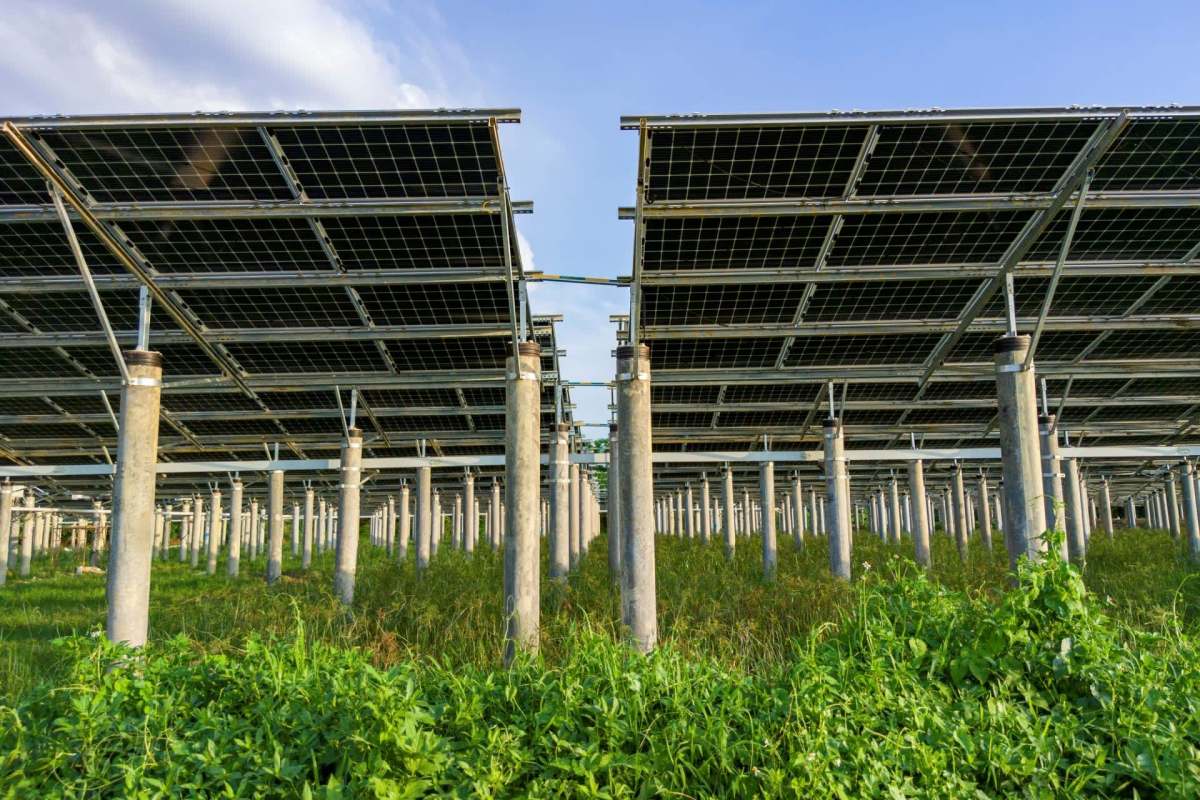
Researchers from Germany have developed an innovative tool to enhance crop selection for agrivoltaics projects in 25 countries, thereby improving food security and energy efficiency in agriculture.
As PV Magazine reported, the team from Technische Hochschule Ingolstadt developed a crop selection tool, which analyzes how 12 different staple crops respond to climatic changes, crop growth, and shading, along with their water and space requirements.
It pulls data from nearly 20 research studies to determine the conditions that will allow crops to thrive in agrivoltaic farming systems, which combine agriculture with solar energy to maximize yields and sustainability.
The 12 crop types studied included berries, fruit trees, leafy greens, legumes, cereals, root vegetables, brassicas, oilseed crops, herbs, medicinal plants, mushrooms, and pasture grasses.
The crop selection matrix relies on Global Horizontal Irradiance data to identify which crops will grow best in various solar energy zones, which are areas around the world selected for their high solar potential. The data measures the total amount of solar radiation that hits Earth's surface and is a crucial metric for analyzing the design and performance of solar energy systems.
Researchers discovered that vegetables, berries, and fruit trees benefited from the added protection of solar panels, as they shielded the crops from windy conditions and extreme heat while also reducing water evaporation.
TCD Picks » Quince Spotlight
💡These best-sellers from Quince deliver affordable, sustainable luxury for all




Because these crops don't need much space, they provide farmers with higher returns on their investments. In addition, farmers can make extra money by selling excess energy generated from solar panels back to the grid, which proves that agrivoltaics are not only profitable but also better for the planet.
The study showed that herbs, grasses, and legumes grew best in hot, dry climates where the shade from solar panels helps reduce water stress and soil temperature. Regarding cereals, fiber crops, and oilseed crops, scientists found that conventional agrivoltaic setups aren't as suitable since they need direct sunlight. However, inter-row configurations, where crops are grown between panel rows, could still produce successful yields as long as they have adequate space.
Using land for growing crops, raising livestock, and generating solar energy helps farmers conserve land and water and creates opportunities to generate extra income. As more agriculture operations seek to save money on electricity and optimize crop growth, agrivoltaics are rapidly gaining popularity worldwide and will likely revolutionize farming in the long run.
"Since low-space-requiring crops dominate agrivoltaics suitability, the installed PV capacity per hectare is lower compared to conventional large-scale PV farms, making agrivoltaics ideal for small-scale farming communities, decentralized renewable energy projects, and sustainable rural development," the authors said in the study published in Solar Compass.
"Future research should focus on AI-driven optimization techniques, real-world pilot studies, and advanced agronomic assessments to refine decision-making in Agri-PV deployment," they concluded.
|
What is the biggest reason you don't grow food at home? Click your choice to see results and speak your mind. |
 Not enough time ⏳
Join our free newsletter for weekly updates on the latest innovations improving our lives and shaping our future, and don't miss this cool list of easy ways to help yourself while helping the planet.






