



If you've been thinking about upgrading to energy-efficient appliances, now's the time to act.
While many federal tax credits for home upgrades are set to expire at the end of 2025, several major state rebates created by the Inflation Reduction Act are still in effect — and for many households, these incentives can cover nearly the entire cost of improvements.
Existing state-level rebates are designed to help Americans save money on projects such as insulation, air sealing, and replacing outdated appliances like gas stoves with induction models.
Incentives like these don't just reduce monthly utility bills; they also encourage the widespread adoption of clean energy and green technology, which helps cool the planet. Many households qualify for coverage of up to 100% of project costs, making these upgrades even more affordable for low- and moderate-income families.
TCD Picks » Induction Cooking
💡Discover the induction option that’s just right for your needs and your home



In the Southeast, rebate programs are already up and running in Georgia and North Carolina, with Florida, South Carolina, and Tennessee preparing to launch similar energy programs imminently, according to the Southern Alliance for Clean Energy.
Georgia's program, for example, offers households thousands of dollars in potential savings, while North Carolina's Energy Saver initiative has already begun helping disadvantaged communities lower their energy burden.
Moreover, some programs offer retroactive coverage for projects initiated after August 2022, meaning residents may be eligible to claim savings on upgrades they've already made.
One of the most attractive opportunities to upgrade and save is in the kitchen.
Save $10,000 on solar panels without even sharing your phone number Want to go solar but not sure who to trust? EnergySage has your back with free and transparent quotes from fully vetted providers in your area. To get started, just answer a few questions about your home — no phone number required. Within a day or two, EnergySage will email you the best options for your needs, and their expert advisers can help you compare quotes and pick a winner. Solar panels can save you more than $50k over their 25-year lifespan, and EnergySage can help you save as much as $10k on installation. Which begs the question — isn't that worth an email or two? |

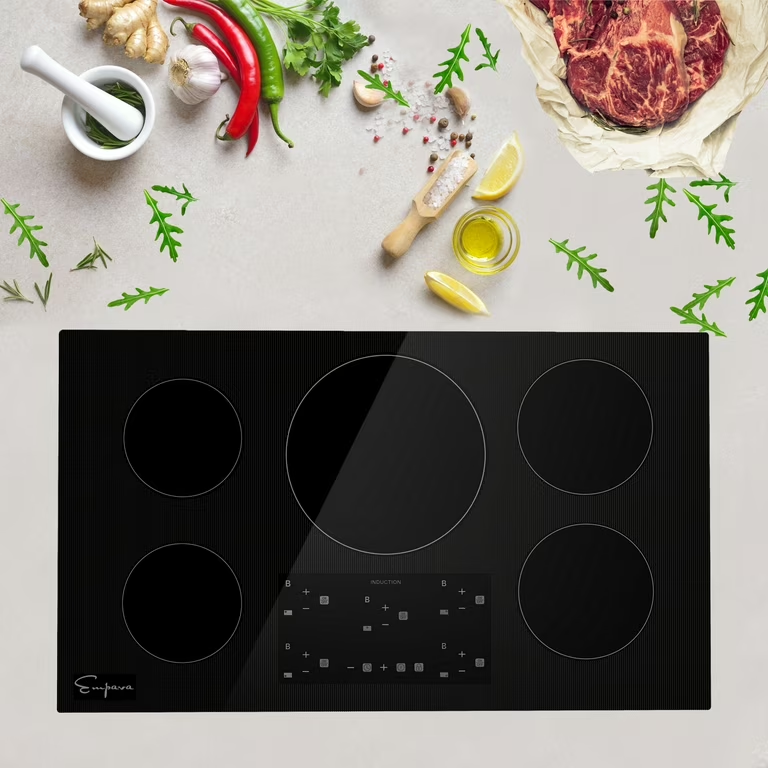
Gas stoves have been linked to harmful indoor air pollution, whereas induction stoves are a safer, faster, and more cost-effective alternative. Thanks to federal incentives, Americans can still claim up to $840 off the cost of an induction range.
Renters or homeowners who are not ready to replace their stoves can start with smaller options, such as plug-in induction burners, which cost as little as $50.
|
If you were going to buy an EV, which of these factors would be most important to you? Click your choice to see results and speak your mind. |
 Good driving range 🔋
 Ultimately, while some federal tax credits are set to expire, appliance rebates will continue through 2031 or until funds are exhausted.
Acting sooner rather than later could translate to thousands of dollars in savings — and a more comfortable, efficient, climate-friendly home.
Whether it's an induction stove or a simple plug-in burner, small changes in the kitchen can make a big difference for your health, your wallet, and the planet.

Join our free newsletter for easy tips to save more and waste less, and don't miss this cool list of easy ways to help yourself while helping the planet.






