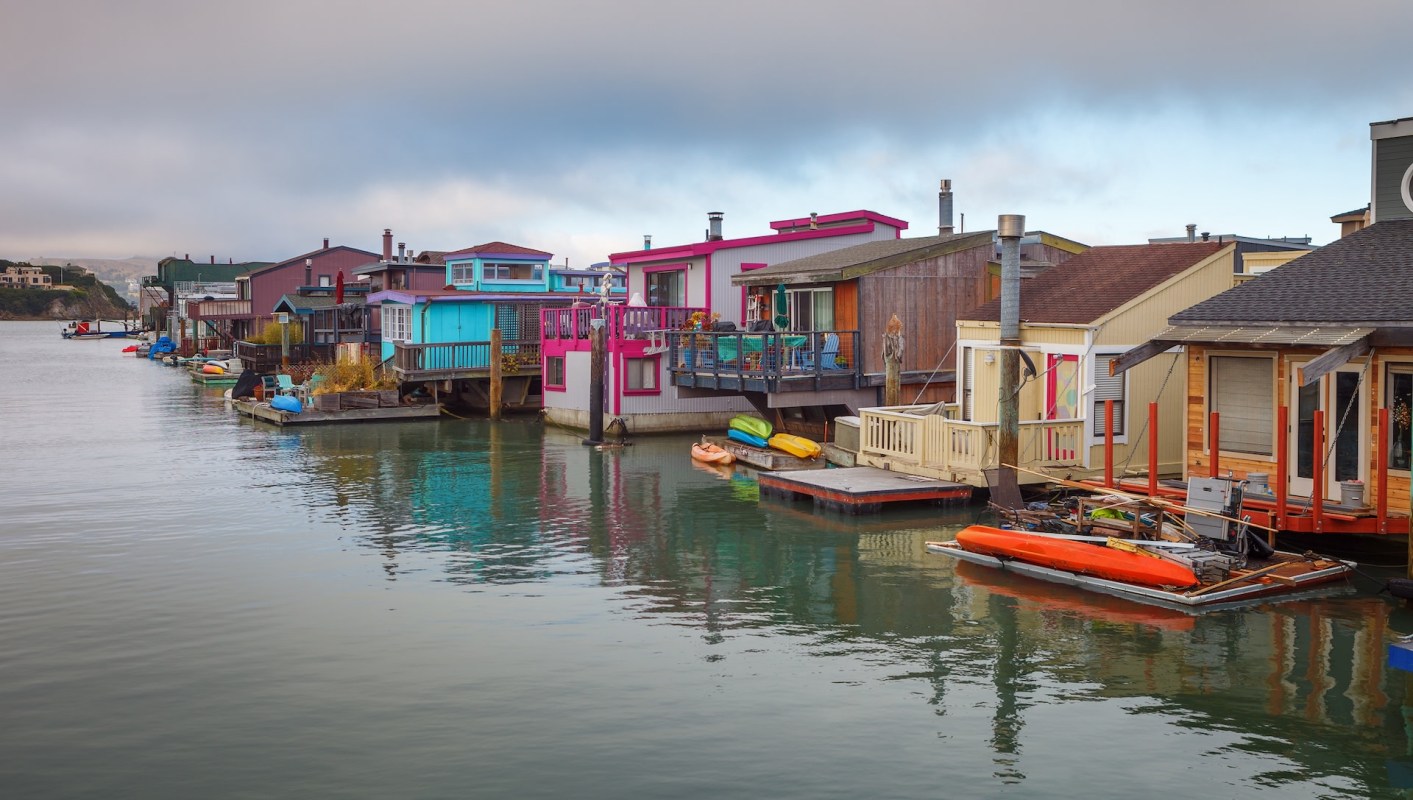
A dreamy bayside community is facing a tough reality as rising sea levels threaten to upend its waterfront culture and economy. Officials are asking the public to be part of the solution.
What's happening?
As the Marin Independent Journal detailed, city consultants delivered "dreary news" at a community meeting in Sausalito, California. John Gibbs, an urban designer with the firm WRT, explained that the waterfront community could experience disruptions due to 10 inches of sea level rise over the next 25 years, in addition to the 5 inches it has seen since 1975.
The consultants zeroed in on zones they identified as particularly vulnerable, including Swede Beach, where they expect waves to eventually break beyond a promenade and flood buildings; New Town, where the city's main waterfront thoroughfare of Bridgeway is only 12 feet above sea level on average; and Marinship, whose tourist attractions include World War II-era shipyards.
Why is this important?
Sea level rise is occurring as the climate warms because ice glaciers are melting and our oceans are absorbing more heat (a process called thermal expansion). Rising temperatures, driven higher primarily by heat-trapping pollution generated by dirty fuels, have also caused extreme weather events to become more deadly and dangerous.
For waterfront communities, this leads to more destructive storm surges. Gibbs explained that Sausalito's bay levels could be 3 feet higher by 2100, meaning surges could exceed 6 feet.
What's being done about this?
Sausalito revealed its Shoreline Adaptation Plan at the community meeting in September. Ultimately, while mitigation measures can be expensive, they can make the difference between disaster and preservation. The city's "toolkit" suggests a multifaceted approach that involves sea walls, flood barriers, elevated infrastructure, and floating structures.
TCD Picks » Quince Spotlight
💡These best-sellers from Quince deliver affordable, sustainable luxury for all




It also aims to reduce storm impacts through living shorelines, reforestation, and wetland restoration. Other communities have taken this approach as well. In Sarasota Bay, Florida, for example, a high school group partnered with biologists to help plant mangrove seedlings. The Netherlands, a third of which is located below sea level, has introduced floating buildings that move with the currents.
With weather-related grid outages on the rise, many households are also installing solar panels with battery storage to ensure they have electricity when they need it the most. EnergySage's trusted network of installers helps homeowners save up to $10,000 on installations on average.
Meanwhile, Sausalito is asking residents to review the draft and submit feedback by Oct. 7. Several marina owners expressed concerns that the adaptation plan would eliminate critical infrastructure and said that they have also taken steps to mitigate rising sea levels.
"We'd love to hear more from you and what you guys are doing," Gibbs said, per the Marin Independent Journal. "We're open and we're available to do that."
|
How often do you worry about your energy bills? Click your choice to see results and speak your mind. |
 Every day 😥
Join our free newsletter for good news and useful tips, and don't miss this cool list of easy ways to help yourself while helping the planet.