


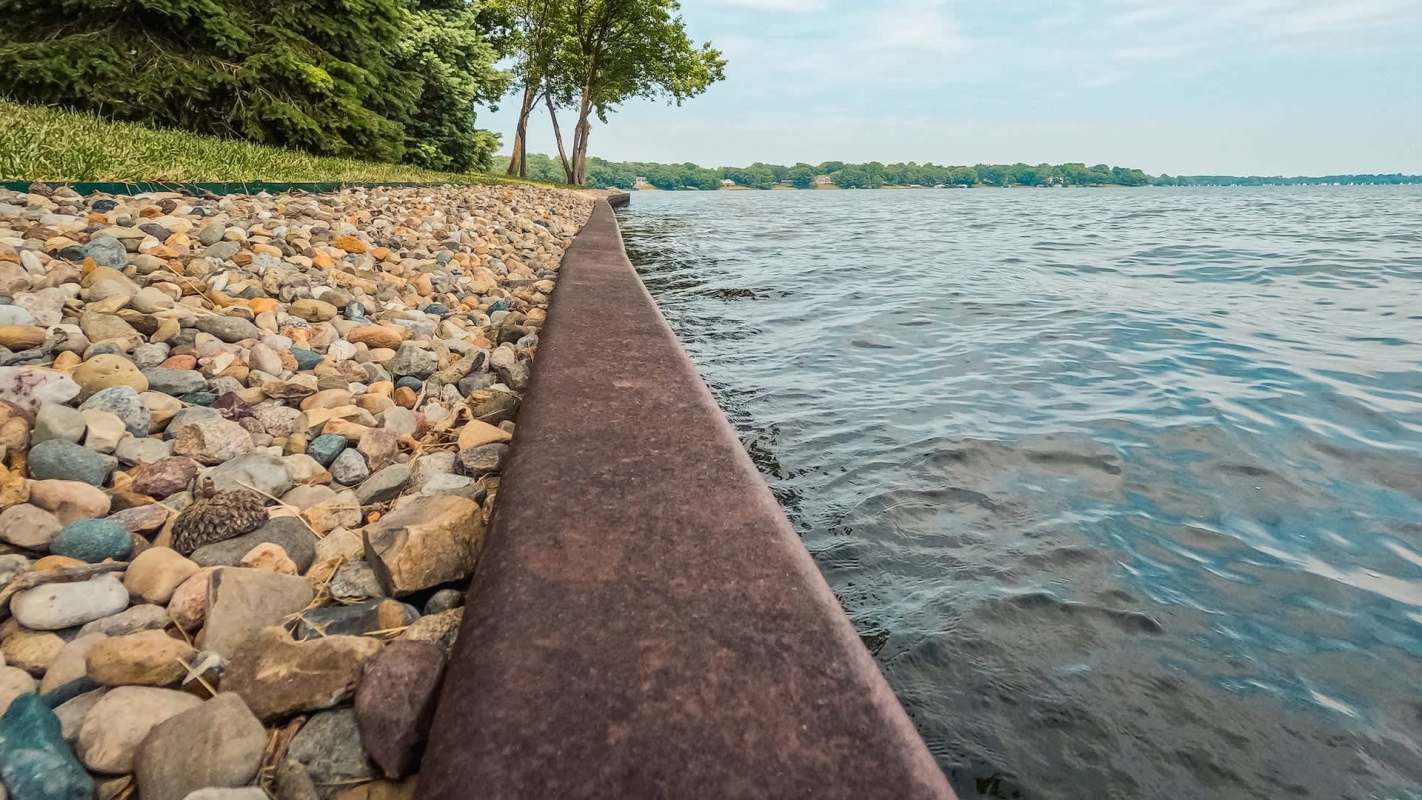
As water levels in the Great Lakes become more difficult to predict, the traditional safeguards against coastal erosion could be doing more harm than previously understood, according to a new study.
What's happening?
According to MSU Today, new research into Lake Michigan's shoreline has uncovered a massive increase in protective structures.
A survey of over 370 miles of the western coast of Michigan found that shoreline armoring is up fivefold since 2014. Shoreline armoring refers to defensive structures like bulkheads, revets, and seawalls that act as a barrier against rising water levels. While such structures help protect property against coastal erosion, they have some significant downsides for the environment.
Ethan Theuerkauf, the study's author, explained:
"Despite the protective intent, this widespread armoring raises concerns about its long-term effects on coastal ecosystems and geomorphology, highlighting the need for further research and informed policy decisions to balance protection needs with ecosystem function and integrity."
Why are more coastal defenses concerning?
Water levels in the Great Lakes naturally fluctuate, as the Environmental Protection Agency documented, but the swings in recent years have been more dramatic and less predictable.
TCD Picks » Quince Spotlight
💡These best-sellers from Quince deliver affordable, sustainable luxury for all




As global temperatures rise due to the planet-heating pollution caused by dirty energy, extreme weather events become more frequent and severe. This leads to a phenomenon where arid regions suffer worse droughts while other areas experience much higher levels of precipitation. In other words, the dry gets drier, the wet gets wetter.
The surge in shoreline armoring, explained here by the National Oceanic and Atmospheric Administration, along Lake Michigan comes at a cost. Each defensive structure contributes to habitat destruction for the lakes' marine wildlife. Those bulkheads also inhibit the natural flow of sediments and degrade water quality, according to NOAA.
What are the alternatives to coastal armoring?
As the study's author noted, more research is needed to raise awareness of the issue and to advise property owners and local officials. The better a problem is understood, the more effective the remedies can be.
There are alternative methods for protecting the coastline that work with nature instead of against it. Additionally, there's some interesting research that could help safeguard coasts with minimal disruption to wildlife.
|
Do you think America does a good job of protecting its natural beauty? Click your choice to see results and speak your mind. |
 Definitely 👍
Join our free newsletter for good news and useful tips, and don't miss this cool list of easy ways to help yourself while helping the planet.







