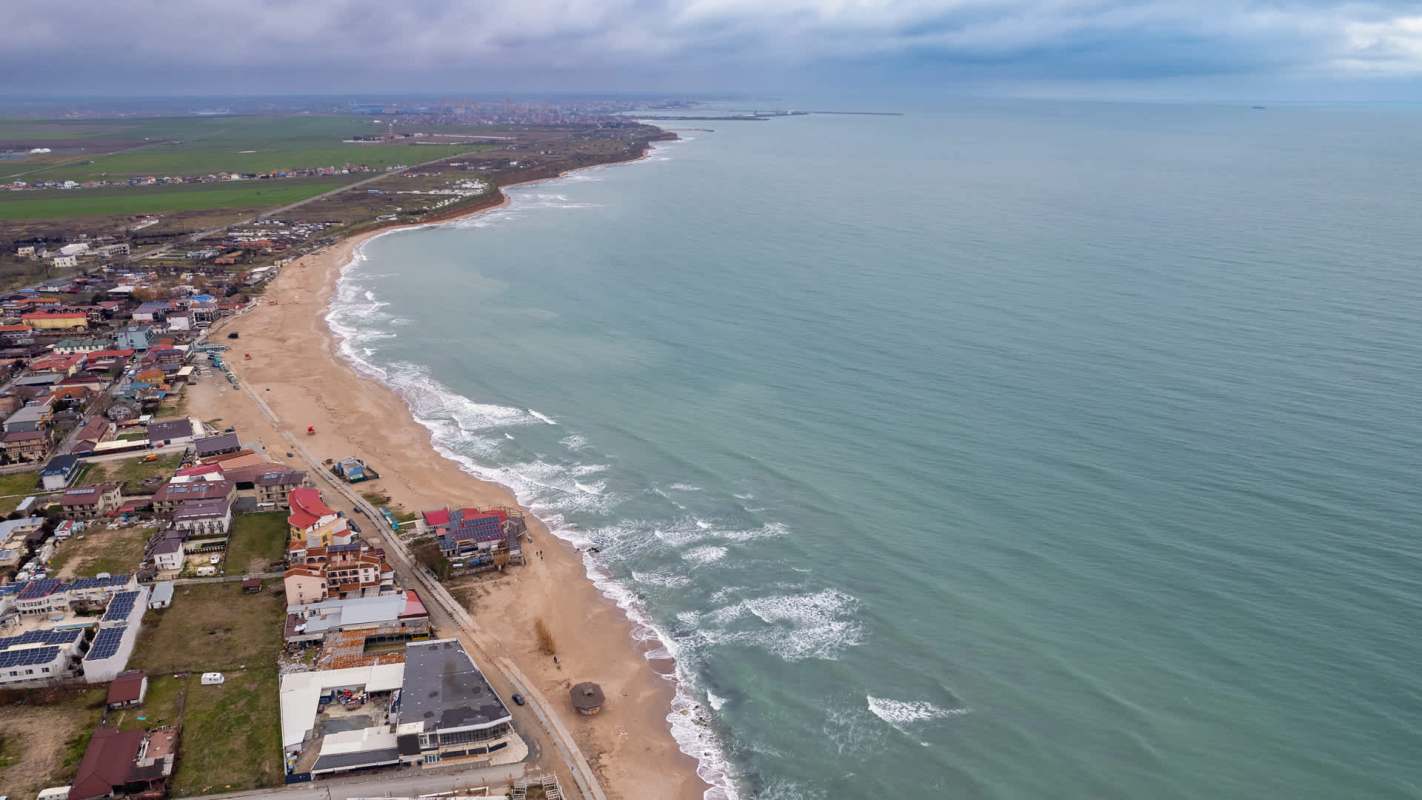
Romania's coast is a destination for tourists, nicknamed the "Romanian Riviera," but the disintegration of ongoing efforts to forestall severe erosion amounts to a "missed opportunity," a report from Osservatorio Balcani e Caucaso Transeuropa alleged.
What's happening?
Romania's Black Sea coast, which comprises roughly 245 kilometers (152 miles), has endured "severe erosion" since at least the 1970s.
According to Osservatorio Balcani e Caucaso Transeuropa, efforts to mitigate the "pressing problem" of coastal erosion began in the 1960s. Those early attempts entailed "heavy engineering," with solutions including seawalls, breakwaters, and artificial reefs.
By the 1990s, geopolitical instability and the fall of the Soviet Union hampered efforts to fortify Romania's Black Sea coast, while the tourism sector's beaches became "smaller every year."
Romania joined the European Union in January 2007, which led to a "paradigm shift" in addressing the country's coastal erosion problem, the outlet indicated. Cross-national efforts began, and in 2012, a "master plan" to address it was drafted.
In 2013, with support and funding from the EU, Romania initiated an ambitious project to protect its coast.
TCD Picks » Quince Spotlight
💡These best-sellers from Quince deliver affordable, sustainable luxury for all




Originally, the EU's standing focus on "nature-based solutions" — which the Union defines as cost-effective while providing "environmental, social, and economic benefits" — was part of the plan, and Romania secured €840 million ($990 million) in funding to execute it.
As recently as 2022, the European Investment Bank touted the project's focus on protecting biodiversity and restoring ecosystems.
However, in addition to pandemic-related delays and funding losses, efforts to restore the Romanian Black Sea coast in a nature-based way "took a sudden turn" toward outmoded, "concrete cure" solutions.
In 2024, unsightly concrete groynes, a type of seawall, were erected in an area that was not initially designated for such interventions. The outlet deemed them an "austere symbol," and Florin Tǎtui, a coastal dynamics expert and researcher at the University of Bucharest, agreed.
|
Do you think America does a good job of protecting its natural beauty? Click your choice to see results and speak your mind. |
 Definitely 👍
 Tǎtui criticized third-party contractors for using materials and processes long since abandoned in their home countries.
"They're repeating the same mistakes they made fifty years ago. By building all these barriers, they're interrupting the currents and trapping sediment," Tǎtui began.
"What's worse is that many of the companies involved, based in Western Europe, haven't used these practices in their home countries for years."
Why is Romania's vanishing coastline concerning?
As average temperatures climb and seas become hotter, sea levels are rising in tandem.
In March, NASA published data for 2024, noting that sea levels rose 0.23 inches, "compared to the expected rate of 0.17 inches."
Arctic ice melt is a significant contributor to the rise in sea levels.
Human activity is responsible for 70% of sea level rise, according to NASA.
Beaches and coastlines serve as a natural barrier, protecting areas inland from extreme weather events and storm surges, according to SeaLevelRise.org.
What's being done about it?
As the report indicated, gathering data and learning from Romania's stalled efforts to protect its Black Sea coast will hopefully bolster nature-based approaches in future coastline fortification efforts.
At an individual level, staying aware of key climate issues is critical to advocate for environmental bulwarks and protect coastal communities.

Join our free newsletter for good news and useful tips, and don't miss this cool list of easy ways to help yourself while helping the planet.