


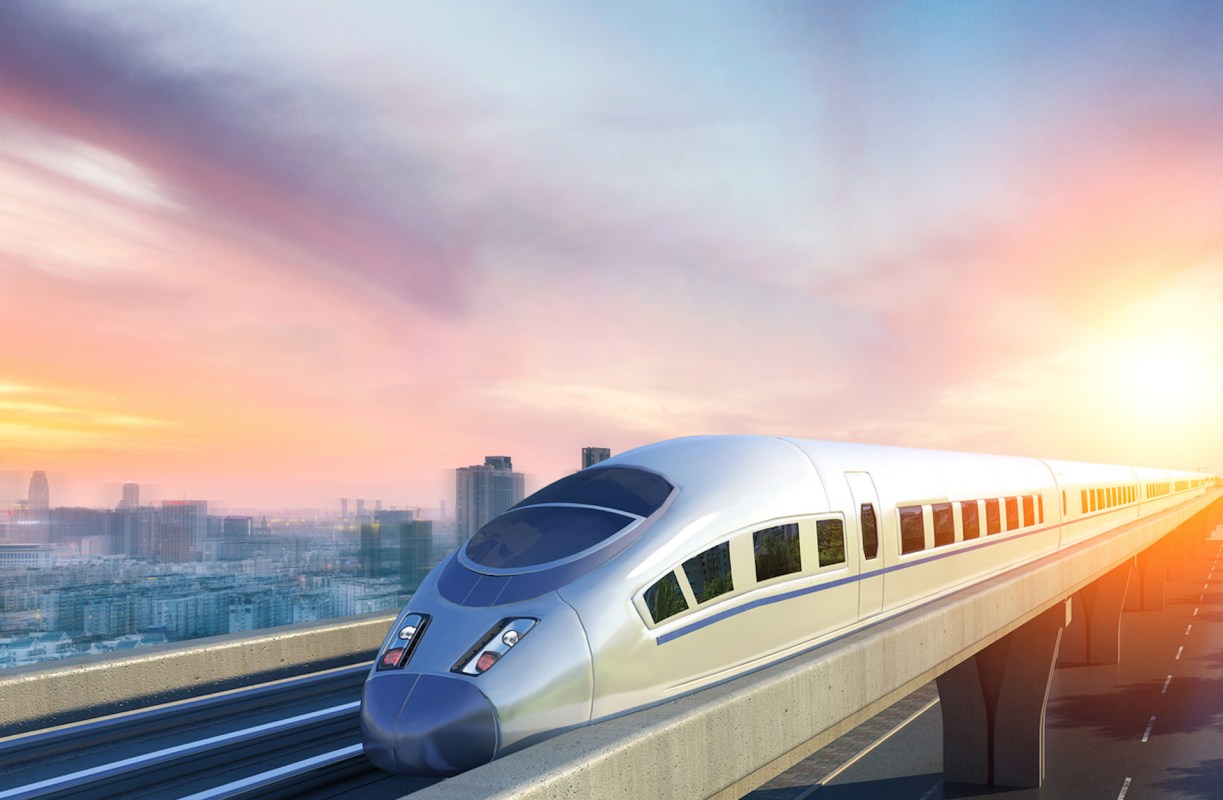
Imagine cutting hours off your commute while breathing cleaner air along the way. That's the promise behind a breakthrough in high-speed train design, one that scientists say could move us closer to 300 mph travel.
A team of researchers in China has announced that it has found a way to slash the aerodynamic drag on next-generation trains by more than 22%, according to Interesting Engineering.
Drag is one of the biggest hurdles to superfast rail, sucking up nearly a third of a train's energy at top speeds. Lower drag means faster trains that use less energy and cost less to operate, which is a win for travelers and the planet.
The team at Central South University used advanced simulations to test every inch of a train traveling at 248 mph.
"While conventional approaches often focus on optimizing individual elements in isolation, we've found that simultaneously enhancing the train's nose shape, pantograph design, and bogie fairings can deliver notable improvements," said professor Wang Tiantian, from Central South University's Key Laboratory of Traffic Safety on Track.
Today's fastest high-speed trains typically cruise around 217 mph, but drag increases sharply at higher speeds. Without smarter designs, future trains pushing 248 mph or beyond would consume far more electricity.
TCD Picks » Quince Spotlight
💡These best-sellers from Quince deliver affordable, sustainable luxury for all




By solving this problem, the research team's work could keep costs down, make tickets more affordable, and help governments expand clean rail travel instead of investing in more polluting infrastructure.
Cleaner, faster trains also mean fewer cars on the road and fewer planes in the sky, leading to better air quality and big public health benefits. For cities, that could mean less congestion, shorter travel times, and quieter neighborhoods.
High-speed rail is already reshaping travel worldwide. China has tested trains topping 280 mph, France's TGV once hit 357 mph in a trial, and Japan's Maglev has reached an eye-watering 375 mph.
While the United States remains slightly behind these nations, there are still developments happening within the domestic light-rail travel industry. With smarter aerodynamics, the dream of everyday 300 mph service edges closer to reality.
Efficient public transportation, from e-buses to advanced rail, is one of the clearest ways to reduce pollution and provide people with cleaner, more affordable options for getting around. This breakthrough shows that the future of travel could be not only faster, but healthier and greener, too.
|
Would having access to a high-speed train change how often you use public transit? Click your choice to see results and speak your mind. |
 Absolutely 💯
Join our free newsletter for weekly updates on the latest innovations improving our lives and shaping our future, and don't miss this cool list of easy ways to help yourself while helping the planet.






