


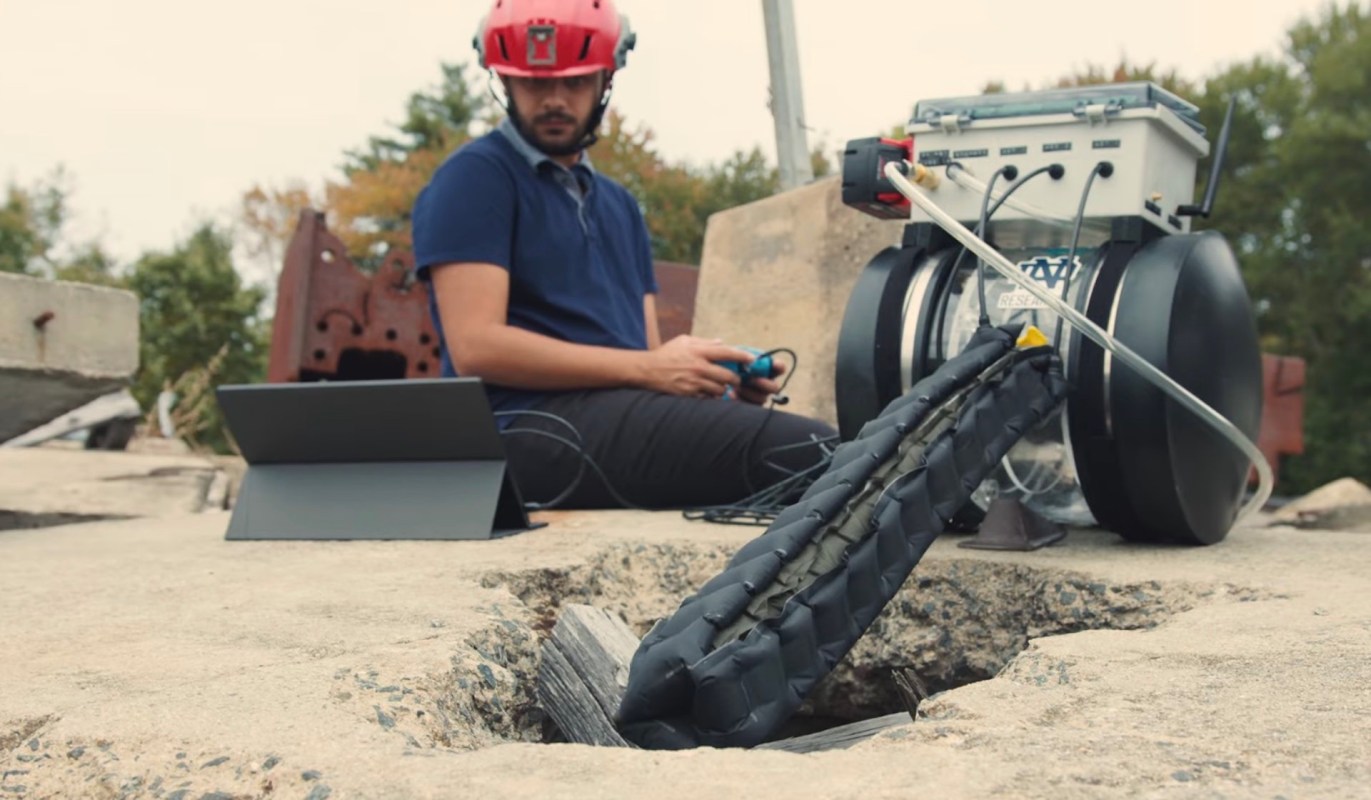
Massive structural damage in the wake of disasters like tornadoes, hurricanes, landslides, and wildfires can make recovering survivors extremely difficult. Now, a team of engineers has developed a robot to improve search and rescue efforts.
The Soft Pathfinding Robotic Observation Unit — or SPROUT — is a flexible, vine-like robot developed by researchers from Massachusetts Institute of Technology's Lincoln Laboratory and the University of Notre Dame.
The robot is geared toward locating and extracting survivors trapped under rubble. This could go a long way in reaching victims before they succumb to injuries.
SPROUT team member Chad Council spoke to the numerous obstacles that emergency workers face as disasters unfold in a Lincoln Laboratory news release.
"The urban search-and-rescue environment can be brutal and unforgiving, where even the most hardened technology struggles to operate," Council said. "The fundamental way a vine robot works mitigates a lot of the challenges that other platforms face."
With this in mind, the team behind the robot highlighted the need to make the technology easy to effectively deploy in various settings and situations. According to Interesting Engineering, SPROUT extends as an inflatable body made from airtight fabric to reach through debris and navigate tight, complex spaces where conventional robots might struggle.
TCD Picks » Quince Spotlight
💡These best-sellers from Quince deliver affordable, sustainable luxury for all




"Collapse events are rare but devastating events. In robotics, we would typically want ground truth measurements to validate our approaches," said Nathaniel Hanson, SPROUT team lead, "but those simply don't exist for collapsed structures."
As global temperatures continue to rise, major storms and related disasters are becoming more common and severe, increasing the risks of mass and repeated structural collapse. With the development of SPROUT, communities may have a better chance of limiting casualties.
Equipped with cameras and sensors, SPROUT is able to provide first responders with images and maps of otherwise inaccessible areas, helping rescue workers to identify the safest routes and locate trapped survivors more quickly. The robot is controlled by a joystick and can extend up to 10 feet, with plans to reach 25 feet going forward, making it a valuable tool for hazardous scenarios.
"The mechanical performance of the robots has an immediate effect, but the real goal is to rethink the way sensors are used to enhance situational awareness for rescue teams," added Hanson. "Ultimately, we want SPROUT to provide a complete operating picture to teams before anyone enters a rubble pile."
|
Should the government be allowed to control how restaurants run their business? Click your choice to see results and speak your mind. |
 Never 👎
Join our free newsletter for weekly updates on the latest innovations improving our lives and shaping our future, and don't miss this cool list of easy ways to help yourself while helping the planet.






