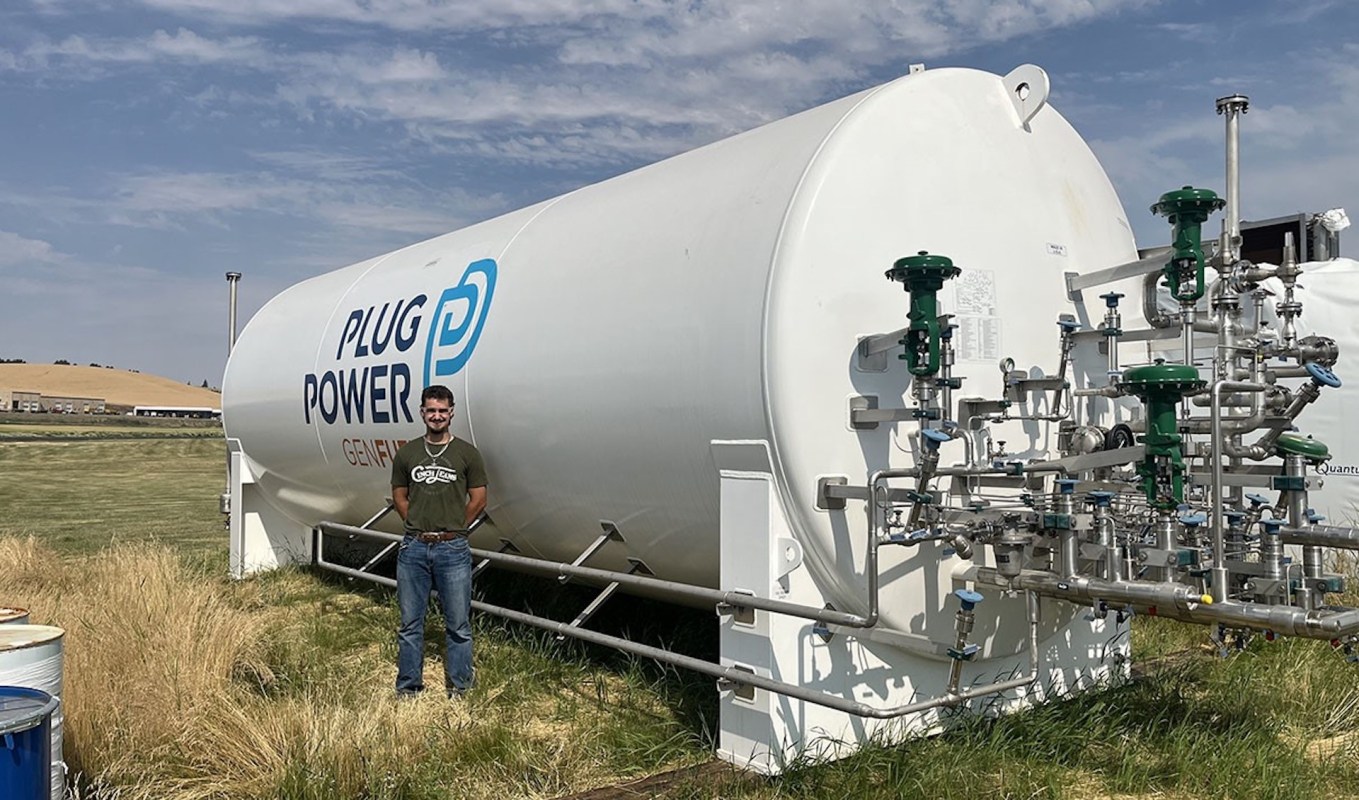
There may be a planet-friendly way of powering vehicles in the future after researchers developed a model to improve liquid hydrogen storage tank operations.
Washington State University researchers used real-world tank data for their published work, per the WSU Insider. The scientists described liquid hydrogen as an alternative to gasoline or diesel. It would be especially useful for heavy machinery, such as forklifts.
"Now we have a tool that can model important parts of the liquid hydrogen supply chain, and using that tool we can make this technology for the green economy more feasible," Konstantin Matveev, co-author and professor in the School of Mechanical and Materials Engineering, said.
Liquid hydrogen needs to stay at very low temperatures because it boils off quickly at regular air temperatures. There are many moving pieces to storing and transporting the substance.
"The transfer line has to be cooled down, and during that process, around 13% of hydrogen molecules stored in the liquid form are lost due to evaporation and can't be utilized as a liquid hydrogen fuel," first author Kyle Appel said.
The researchers found that changing tank operations using strategies such as modifying pressure limits when relief valves were activated could decrease hydrogen loss by more than a quarter.
TCD Picks » Quince Spotlight
💡These best-sellers from Quince deliver affordable, sustainable luxury for all




Using liquid hydrogen instead of dirty energy to power vehicles could lead to a significant reduction in planet-overheating pollution. A gas-powered passenger vehicle emits about 4.6 metric tons of carbon dioxide each year, according to the Environmental Protection Agency.
Electric vehicles have much smaller carbon footprints than gas-powered vehicles. They produce zero tailpipe emissions, but they may still create carbon pollution during charging, per the EPA. That's why the liquid hydrogen development could be a game-changer.
The researchers have also been studying the storage of liquid hydrogen at airports for the Federal Aviation Administration. In recent years, aerospace experts have been using liquid hydrogen-powered concepts with the goal of reducing aviation pollution.
|
Should the government be allowed to control how restaurants run their business? Click your choice to see results and speak your mind. |
 Never 👎
Join our free newsletter for weekly updates on the latest innovations improving our lives and shaping our future, and don't miss this cool list of easy ways to help yourself while helping the planet.