


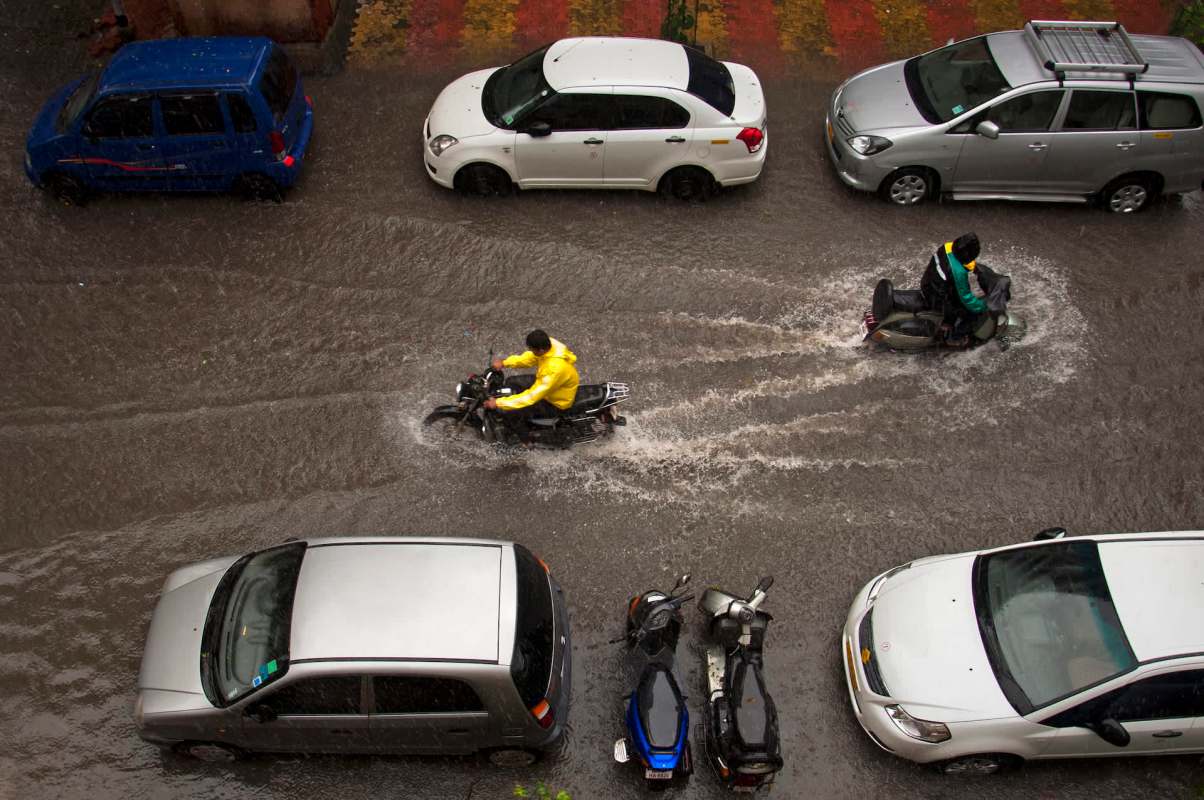
Two northwestern states of India, Punjab and Haryana, were hit hard by flooding that started in August and continued into September. Torrential rain inundated thousands of villages, forcing the evacuation of 2 million people. Scientists say our warming world made the extreme event worse.
Monsoon rains soaking South Asia during the summer are not unusual, but this monsoon season has been particularly devastating for parts of the region. Portions of Punjab, Haryana, and the Indian state of Rajasthan received over 1,000% of normal rainfall in just one day during late August, according to the Indian Meteorological Department, per the BBC. It was one of several days of heavy rains across northwest India.
A scientist has identified the pieces of the meteorological puzzle that caused this catastrophic flooding event. They include plenty of monsoonal moisture and a westerly disturbance carried eastward by a wavy jet stream.
"It's the result of a rare 'atmospheric tango' between the monsoon and the westerly disturbance," Akshay Deoras of the University of Reading explained to the BBC. "Think of the monsoon as a loaded water cannon and western disturbances as the trigger."
Deoras said that the interactions between the weather components that came together in August to produce incredible amounts of rain in Southeast Asia are not common. Western disturbances that carry cold air from the atmosphere's upper levels don't normally collide with moisture-laden, relatively warmer air brought into the region during the monsoon season because the disturbances usually retreat northward during the height of the monsoon season.
Scientists say jet stream patterns are being altered by an overheating planet. Jet streams, narrow corridors of relatively intense winds located at higher altitudes in the atmosphere, are becoming "wavier." These patterns can effectively lock in weather systems, letting them linger in place over longer periods. This can mean stubborn heat waves and droughts that last longer, or heavy rain events as an area is repeatedly soaked by torrential rainfall.
TCD Picks » Quince Spotlight
💡These best-sellers from Quince deliver affordable, sustainable luxury for all




Our overheating planet played another role in this extreme rainfall event. Research indicates that a warming planet intensifies the water cycle, as warmer air holds more moisture, causing heavier rainfall and greater flood hazards.
Before the recent flooding in Southeast Asia, World Weather Attribution had already linked our warming world to intense rainfall in Pakistan earlier in the monsoon season.
"Climate change intensified heavy monsoon rain in Pakistan, exacerbating urban floods that impacted highly exposed communities," a report from WWA concluded. By Aug. 3, there were 200 deaths across Pakistan as a result of flooding, according to the National Disaster Management Authority.
A Monsoon 2025 Daily Situation Report from the NDMA reveals that the number of fatalities has skyrocketed since then. The latest report said 929 people have been killed from June 26 through Sept. 10 in India and Pakistan. The vast majority, 750 of them, were from Punjab and Khyber Pakhtunkhwa, a Pakistani province, about 100 miles northwest of Islamabad, the capital.
|
Do you worry about companies drilling too deep into the ground? Click your choice to see results and speak your mind. |
 Definitely 💯
Join our free newsletter for good news and useful tips, and don't miss this cool list of easy ways to help yourself while helping the planet.







