


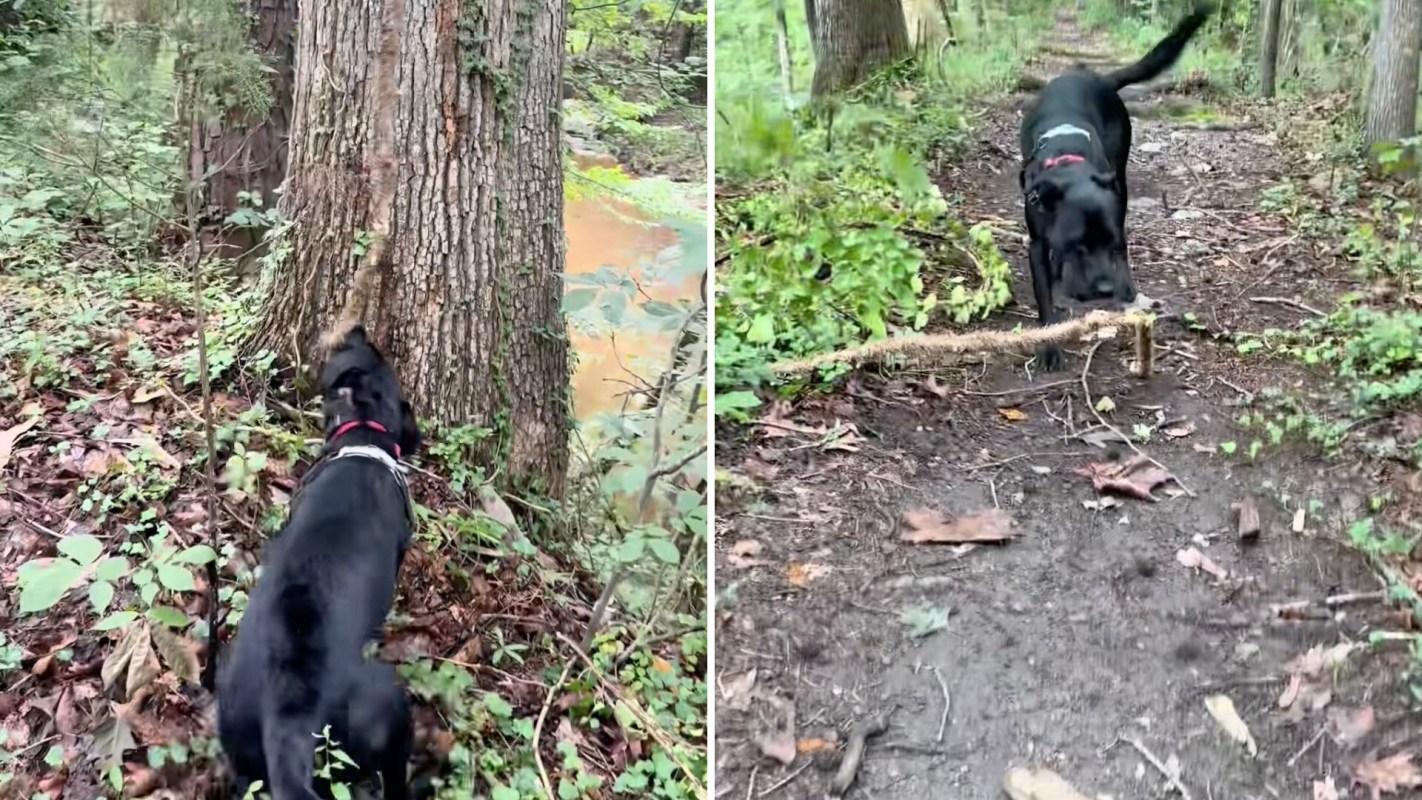
One dog owner is walking around with the equivalent of gardening shears, tackling invasive plant species with the help of her dog. Lauren Bell (@laurenbell616) shows TikTok how her dog, Eddy, effectively removes invasive plants while on their daily walks.
"Some say it's just a vine. I say — it's a menace," Bell captioned, as she places a part of an English ivy vine in Eddy's mouth. Eddy excitedly tugs at the rope-like vine until the vine successfully detaches from the root and falls to the ground. The vine has grown so long, wrapping around the victim tree, that it takes a second to finish falling.
@laurenbell616 Eddy helps to remove invasive English ivy. He's such a good boy. Next we'll remove the roots. #invasivespecies #englishivy ♬ Beautiful Land (Sape Dayak Borneo) - Helmy Trianggara
"Eddy helps to remove invasive English ivy. He's such a good boy. Next we'll remove the roots," Bell wrote in the video's caption.
Native to Europe and parts of West Asia, English ivy is an invasive plant in the United States. Home gardeners sometimes use this plant for ground cover to prevent weeds. However, this plant will also grow thick climbing vines on nearby walls or trees when given the chance, embedding itself into the tree's bark.
Some home gardeners believe it is safe to use English ivy responsibly in their home gardens. However, English ivy remains an invasive plant species, posing a risk to the native ecosystem by outcompeting native plants for essential nutrients and resources.
English ivy seeds are easily dispersed by birds, contributing to their rapid growth in non-native habitats.
TCD Picks » Quince Spotlight
💡These best-sellers from Quince deliver affordable, sustainable luxury for all




Invasive plant species often grow and spread without our realizing it. Homeowners may even see some in their lawn upon closer inspection.
One of the best ways to crowd out invasive plant species in your lawn is to plant native plants, which also helps support the balance of the local ecosystem. Native plants attract pollinators to your yard, which helps with plant reproduction and even secures the human food supply.
Native plants are also slower-growing and less water-dependent than invasive plant species, which can save you time on weekly yard work and help conserve water, saving you money on your water bills.
Even planting a few native plants in just a section of your lawn can yield savings. If you're up for the challenge, however, replacing your lawn with options like buffalo grass, clover, or xeriscape plants, which are plants that are typically drought-tolerant, could save you even more time and money in the long run, all the while leaving you with a beautiful and healthy lawn.
|
What's the hardest thing about taking care of your yard? Click your choice to see results and speak your mind. |
 Mowing the lawn 🏡
 Not everyone has an Eddy to help tackle invasive plants, but Bell and Eddy will continue doing the important work to help restore natural habitats.
"Be so careful doing this, your dog could become Captain Planet! Your dog is a tree saver!" one commenter teased.
"This new arborist is so cute!" another commenter said.
"What a good boy!" a third user agreed.

Join our free newsletter for good news and useful tips, and don't miss this cool list of easy ways to help yourself while helping the planet.







