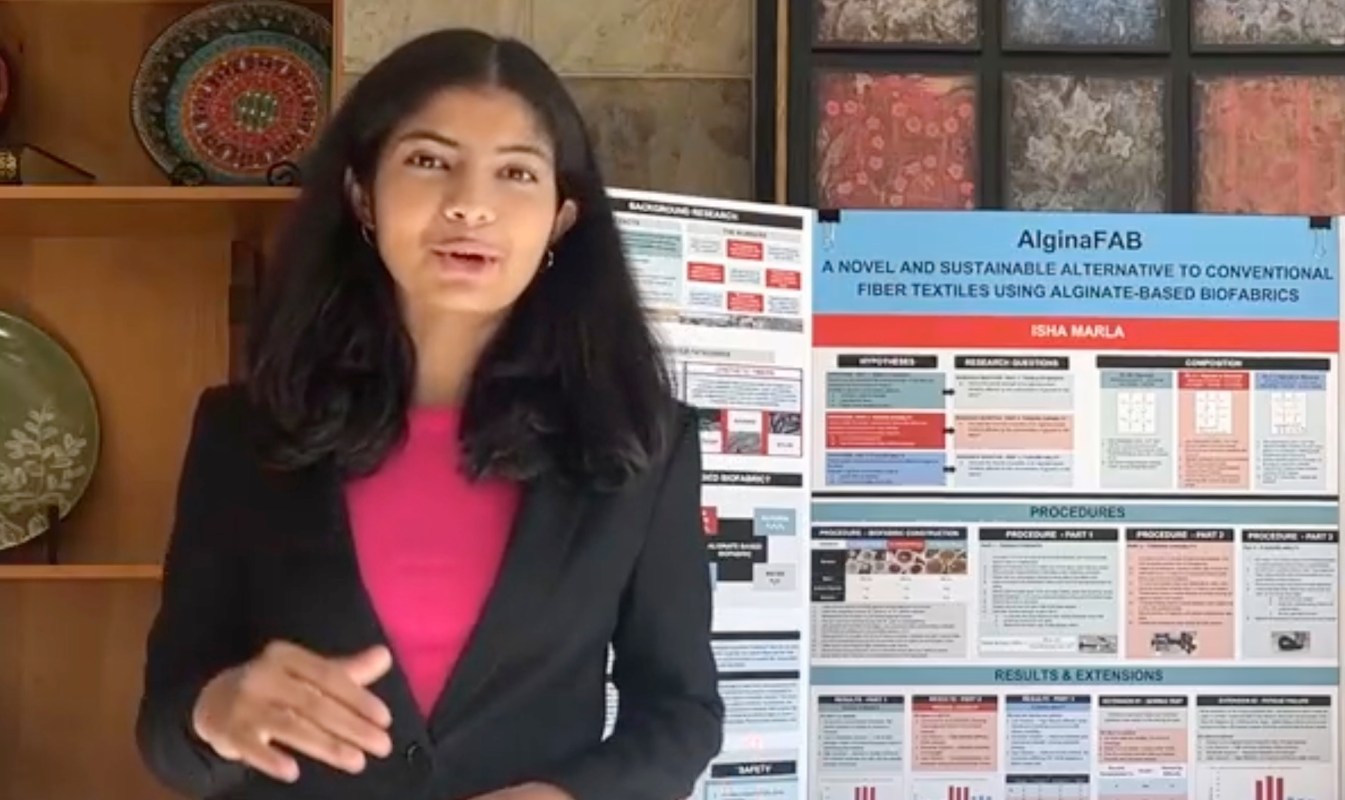
An Oregon teen is getting national recognition for her discovery of a fabric that could help the planet's textile-waste problem.
Isha Marla, a 14-year-old from Beaverton, Oregon, is one of 10 finalists in the 3M Young Scientist Challenge, with a chance to be named "America's Top Young Scientist."
As KGW reported, Marla has been recognized for her use of seaweed to make sustainable fabric.
By taking some of the key components of seaweed, Marla was able to create a material that's strong and flexible enough that it mimics synthetic fabrics but also will eventually break down naturally.
"From that seaweed, we can extract alginate, and that's where the seaweed part comes in," Marla told KGW. "Everyone knows that seaweed is slippery, and that's what we want in our fabrics."
Marla can cook, create, and dry her product within her family's kitchen, showing that local action can have a huge impact on the environment.
TCD Picks » Quince Spotlight
💡These best-sellers from Quince deliver affordable, sustainable luxury for all




The teenager says she was inspired to create a sustainable fabric after hearing about the amount of textile waste that occurs globally, particularly within the fast-fashion industry.
Research shows that 92 million tons of textile waste is produced each year, and only 1% is properly recycled and repurposed. And with the rapid growth of fast fashion — an industry where companies quickly produce mass amounts of low-cost, trendy clothing — that amount of waste is expected to increase.
Scientists have worked on several technologies to improve and increase textile recycling. But finding a way to make sustainable, biodegradable fabric could also be a game-changer for the industry.
"I have a passion for science, and I truly believe that my project has the potential to be a sustainable alternative to conventional textiles," Marla said in a release.
As a finalist, Marla has already earned $1,000 and a mentorship with a 3M scientist. The winner, who will be announced in October, will receive $25,000.
|
Which of these factors would most effectively motivate you to recycle old clothes and electronics?
Click your choice to see results and speak your mind. |
 Giving me money back 💰
Join our free newsletter for good news and useful tips, and don't miss this cool list of easy ways to help yourself while helping the planet.