


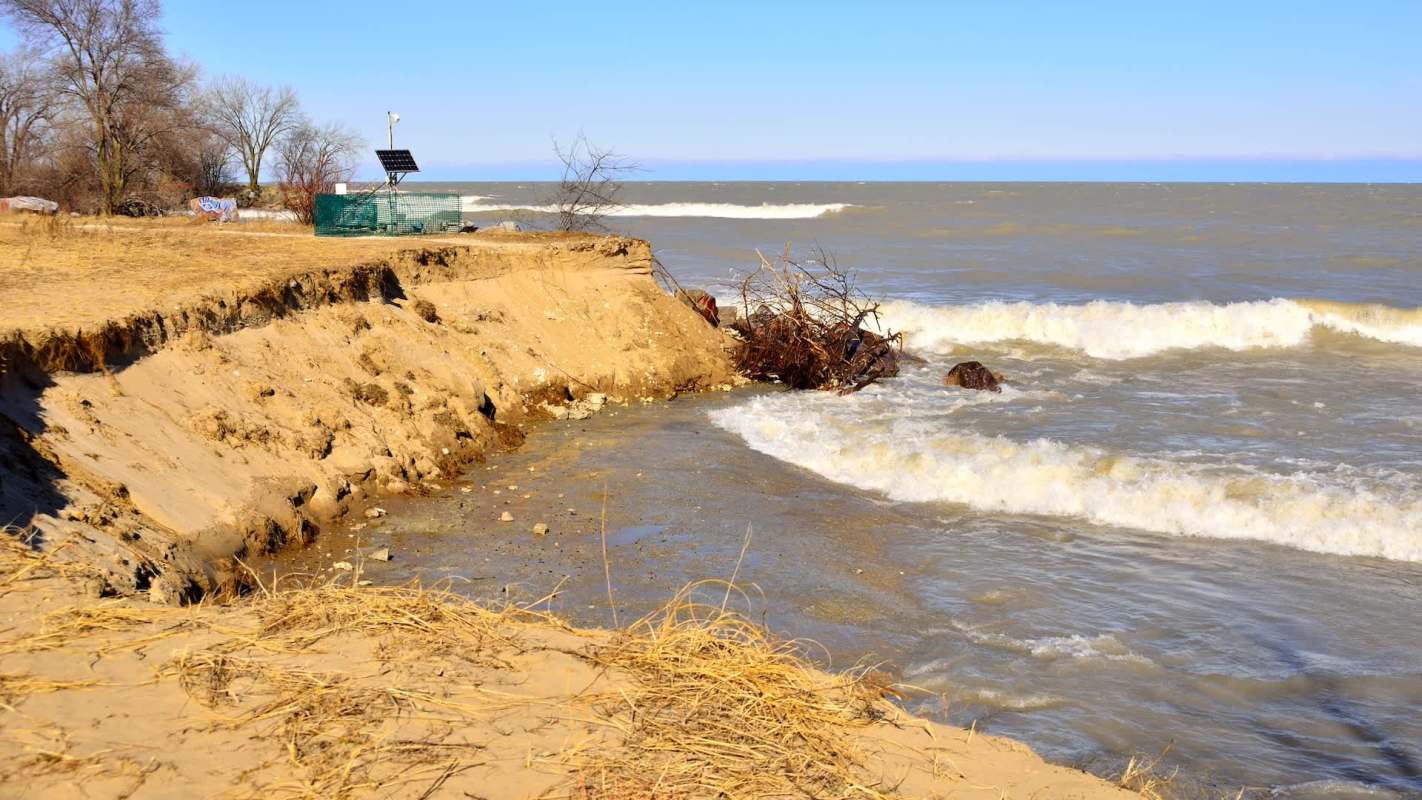
Southwest Michigan residents are working to save their shoreline, which is quickly eroding.
What's happening?
Researcher John Yellich, retired head of the Michigan Geological Survey, has undertaken the first coastal erosion study in Southwest Michigan in nearly a decade. As CBS News reported in early August, the study is unfolding as parts of the Lake Michigan shoreline deteriorate at a frightening pace.
On average, the region's shoreline is eroding at the rate of more than a foot each year. Certain areas, however, have lost 75 feet in four years.
Without action, experts say, beaches, bluffs, and homes could be washed away.
"As a Navy pilot, I'm used to panic, but I panicked," local resident John Barkley told CBS News. "There were some days here where we lost several feet. We saw the boardwalk collapse into the lake. We saw part of our drain system collapse into the lake."
Why is coastal erosion concerning?
The dangers of rapid coastal erosion are evident. Just ask the Michigan residents who have watched beaches wash away or the residents of coastal states who fear their communities could be underwater by the end of this century.
TCD Picks » Quince Spotlight
💡These best-sellers from Quince deliver affordable, sustainable luxury for all




Perhaps equally concerning is the exacerbating effect that human-caused pollution has had on such land loss.
As we spew heat-trapping gases into the atmosphere, the planet continues to warm, evidenced by the heat records now broken on a near-annual basis. And as the planet overheats, glaciers melt, sea levels rise, and weather events become more frequent and more severe, washing sand and soil away from coastlines.
"It's gotten worse because of the climate, and we are just more aware," Southwest Michigan resident Victoria Turbov told CBS. "We need to protect this place and other places and, you know, our environment in general."
What's being done about coastal erosion?
Turbov, Barkley, and other residents are championing the fight, with coastal neighborhoods working to keep their homes safe.
|
Do you think your city has good air quality? Click your choice to see results and speak your mind. |
 Definitely 🥰
 For example, they've helped to ensure that the terrain has been sculpted to add deep-rooted plants, which can help hold the land together. Adjusting irrigation systems and reinforcing beaches with rocks can also help strengthen the coastline against the threat of further erosion.
Their work shows the importance of understanding climate-related issues and taking local action to help preserve ecosystems and communities.
"This is an example of what catastrophic things can happen if you don't do the right things," Yellich told CBS.

Join our free newsletter for good news and useful tips, and don't miss this cool list of easy ways to help yourself while helping the planet.







