


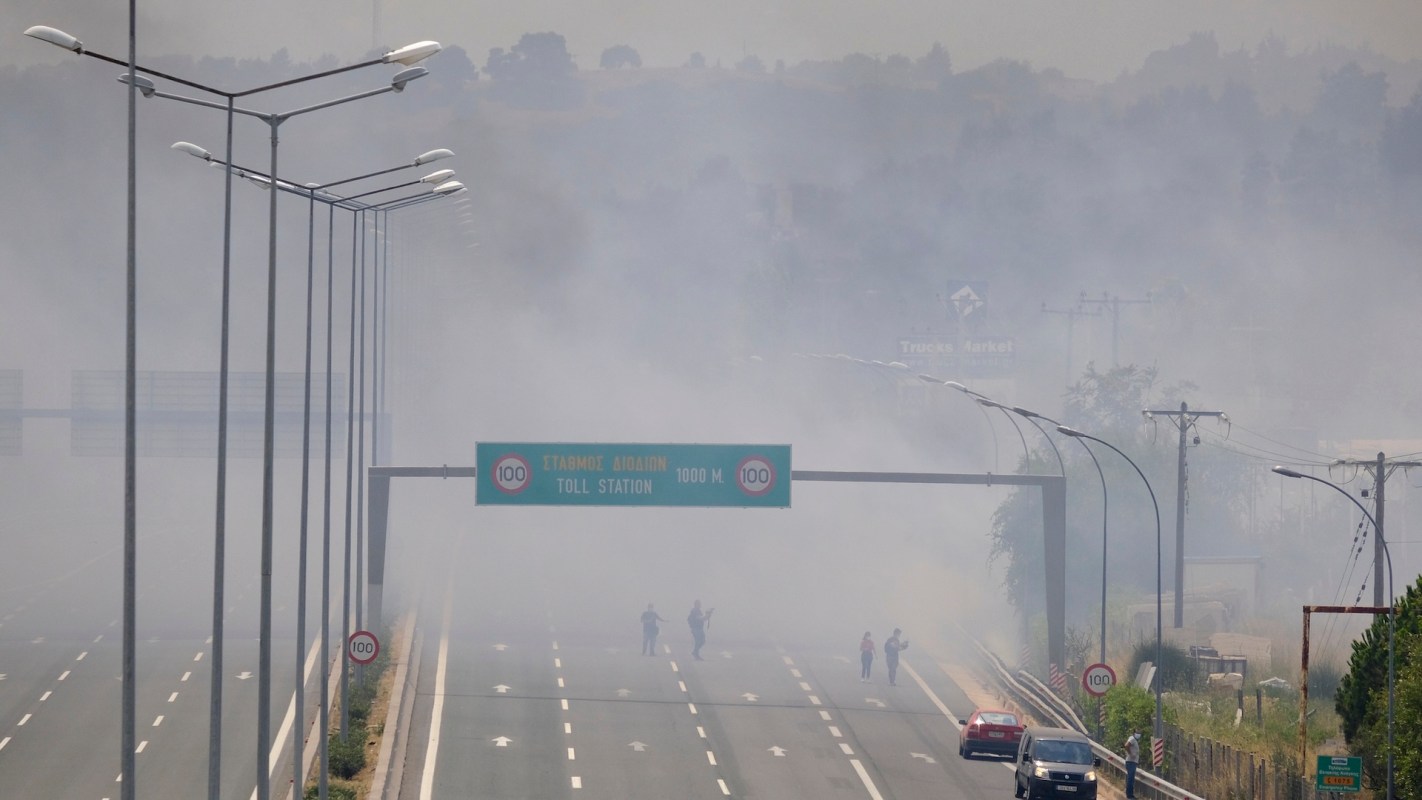
Even short-term exposure to wildfire smoke is far more deadly than previously understood, with death tolls due to particulate matter having been underestimated by 93%, found the authors of a new study published in The Lancet Planetary Health.
"Smoke can affect populations far away from the fires," said Cathryn Tonne, the study's co-author, according to the Guardian. "So many more people will be exposed to smoke than the immediate physical threat of the flames."
What's happening?
With wildfires charring record amounts of land this summer, particularly in Spain and Portugal, understanding the full health impacts of wildfire-smoke exposure has taken on new urgency.
Unfortunately, the situation is much more dire than previously thought.
For years, scientists had assumed that particulate matter from wildfire smoke was similar in its health risks to particulate matter from other sources, such as automobile exhaust. However, the new study proved this assumption to be false, with particulate matter from wildfires being much more harmful.
"Our paper shows evidence that — although it happens less often — the health impact for the same amount of particles is stronger for wildfire particles," explained Tonne, according to the Guardian.
TCD Picks » Quince Spotlight
💡These best-sellers from Quince deliver affordable, sustainable luxury for all




The study concluded that from 2004 to 2022, on average, 535 people died in Europe every year from short-term exposure to wildfire smoke, much higher than previously thought.
Further, the authors found that the risk of death increased significantly in the week after short-term exposure to wildfire smoke. Adding just 1 microgram of wildfire particulate matter to 1 cubic meter (1.3 cubic yards) of air raised the risk of all-cause mortality by 0.7%, respiratory mortality by 1%, and cardiovascular mortality by 0.9%.
Multiplied across the estimated 1 billion people exposed to wildfire smoke annually, these numbers mean that the global death toll due to even short-term exposure to wildfire smoke is significantly higher than previously understood.
Why are the health impacts of wildfire smoke important?
Rising global temperatures have made wildfires both more frequent and more severe, according to the California Air Resources Board. This means that each year, more and more people are exposed to wildfire smoke.
|
Do you worry about the quality of the air inside your home?
Click your choice to see results and speak your mind. |
 Yes — often 😬
 The new data sheds a more accurate light on the true risk that this exposure poses to human life.
"The results are concerning, considering that wildfires and other extreme events are increasing exponentially with climate change," Antonio Gasparrini of the London School of Hygiene & Tropical Medicine said of the new study, according to the Guardian.
It has long been understood that wildfires destroy lives, homes, businesses, crops, and livestock, causing the price of food and insurance premiums to go up far beyond the reach of the flames.
However, the new study has revealed just how deadly even short-term exposure to wildfire smoke can be. More concerning still, according to a May report from the Guardian, wildfire smoke can travel thousands of miles, meaning that essentially nowhere is safe from these dangerous particles.
What's being done about wildfire smoke?
In the immediate term, there are steps that you can take to protect yourself and your family from the health risks of wildfire-smoke exposure.
A study published in May found that indoor air pollution during a wildfire can be three times worse than under normal conditions, even with all doors and windows closed. However, the researchers did find that using an air purifier, though expensive, was an effective solution for improving indoor air quality.
In order to truly address the health risks posed by wildfire smoke, though, it is necessary to address the root causes. This means reversing the trend of rising global temperatures by significantly reducing the amount of heat-trapping pollution entering the atmosphere.
To help push for meaningful government action aimed at reducing planet-warming pollution, you can use your voice, support climate-friendly candidates, and contact your elected representatives to let them know where you stand.
Taking things a step further, driving an EV or installing solar panels on your home can reduce heat-trapping pollution while also saving you money on electricity and fuel costs.

Join our free newsletter for good news and useful tips, and don't miss this cool list of easy ways to help yourself while helping the planet.







