


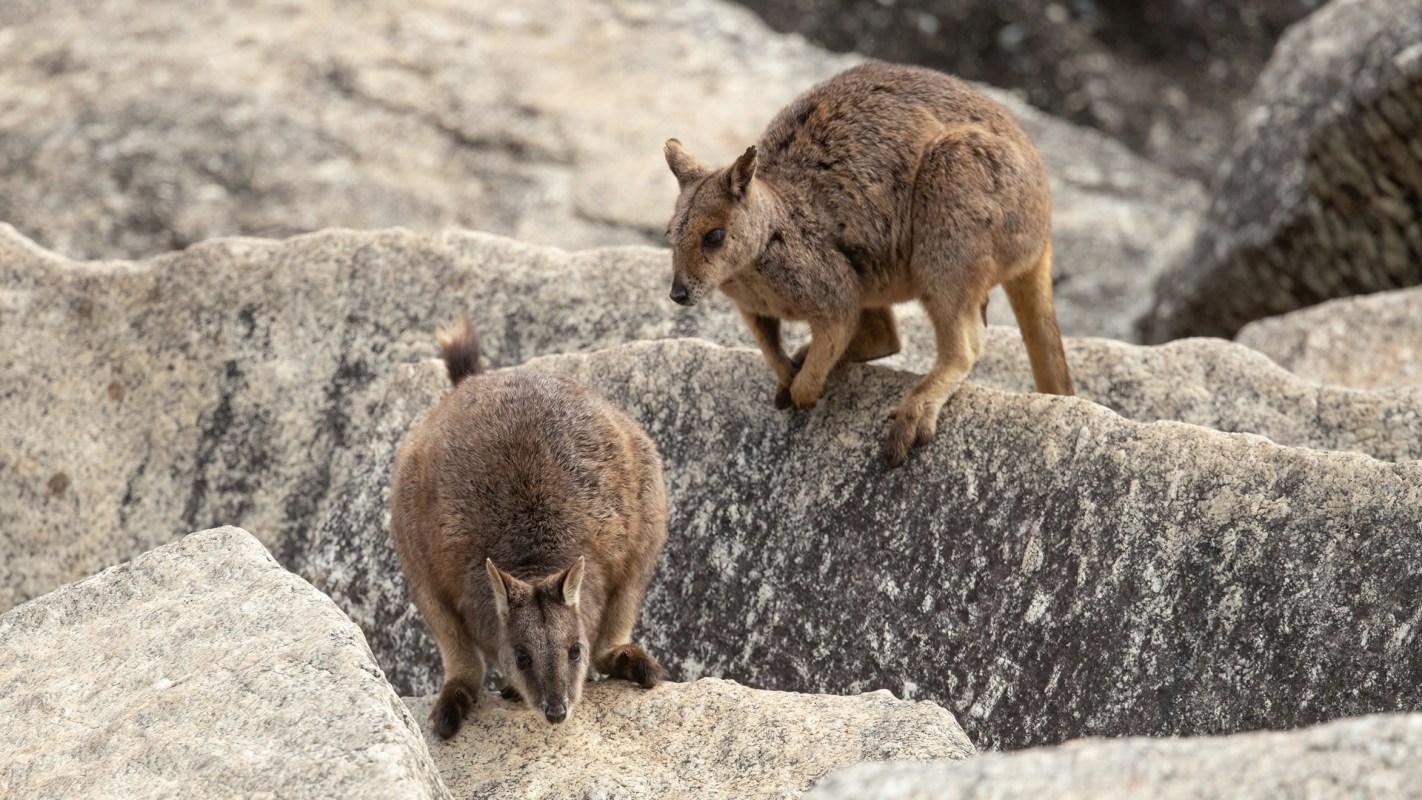
A motion-triggered camera in southeastern Australia just gave scientists (and the rest of us) a rare look into the lives of two iconic native species. Captured within Oxley Wild Rivers National Park, the short clip shows a brush-tailed rock-wallaby coming face to face with a spotted-tailed quoll, one of Australia's last native predators.
The Miami Herald reported that the moment, which was shared by the New South Wales National Parks and Wildlife Service, marked the first recorded instance of a rock-wallaby visibly reacting to a quoll's presence by puffing up its chest in defensive posturing. The behavior is "rarely documented" and proof that even in 2025, there's still so much we don't know about the natural world.
Both species are endangered. Park officials say elusive rock-wallabies are "hard to see in the wild" and live in steep, rocky terrain, while spotted-tailed quolls are secretive, semi-nocturnal hunters. Fewer than 14,000 quolls are thought to remain in the wild.
That's where trail cameras come in. As this footage shows, these devices are a great tool for conservation. By quietly and non-invasively capturing wildlife in action, they help researchers track endangered populations, observe animal behaviors, and measure the effectiveness of conservation efforts. They've been used to observe the behaviors of a rare pack of wolves and the elusive clouded leopard.
When it comes to protecting biodiversity, this footage is exciting. A healthy population of apex predators such as the quoll can keep prey populations balanced, making ecosystems more resilient. Smart land management and better protection of species don't just benefit animals, either — they benefit us, too. Cleaner air, more resilient local food sources, and thriving public lands are all part of the same picture.
This close encounter may have lasted only 30 seconds, but its impact offers "a valuable opportunity to better understand these animals' behavior, particularly because interactions between quolls and brush-tailed rock-wallabies have been rarely documented," a park spokesperson said. "The recording highlights that there is still much to learn about the animals and plants that live in NSW."
TCD Picks » Quince Spotlight
💡These best-sellers from Quince deliver affordable, sustainable luxury for all




|
Do you think America does a good job of protecting its natural beauty? Click your choice to see results and speak your mind. |
 Definitely 👍
Join our free newsletter for good news and useful tips, and don't miss this cool list of easy ways to help yourself while helping the planet.







