


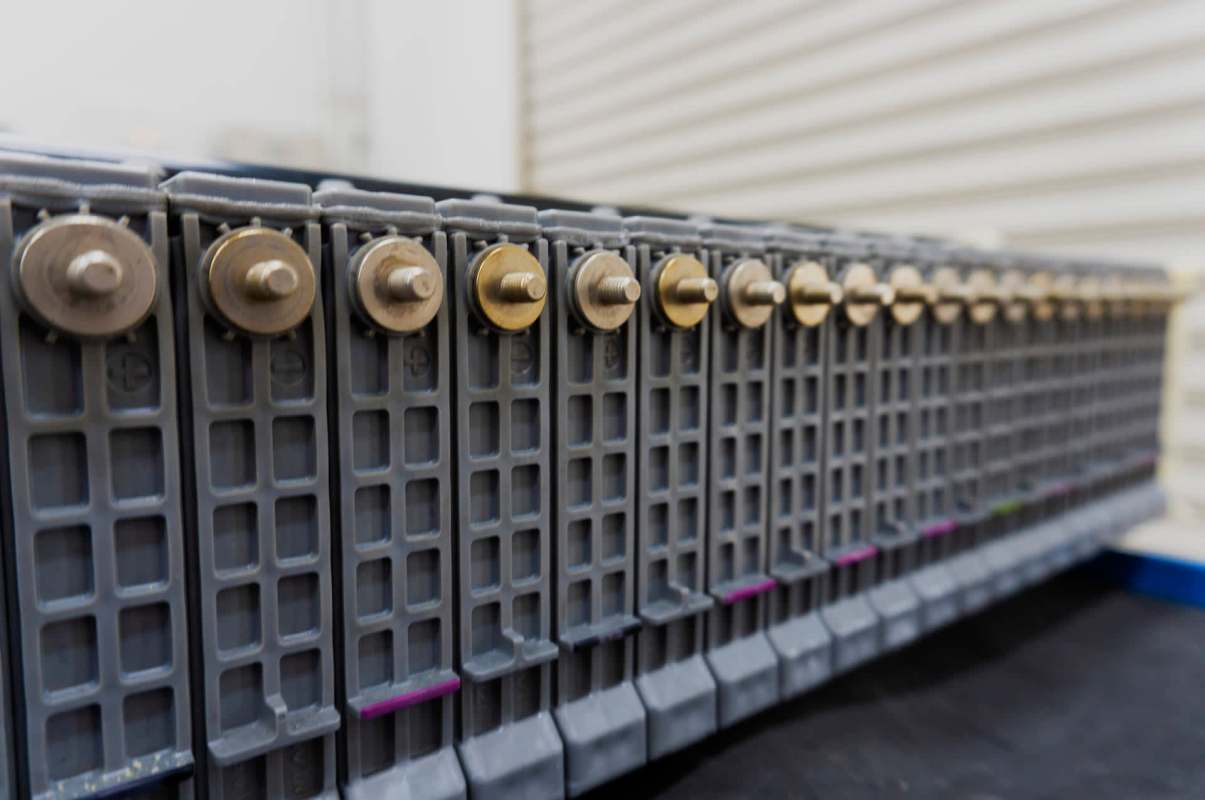
Ever had your phone die at the worst possible moment? Maybe in the middle of navigating a new city or right before that important Zoom call. We've all been there. And honestly, it's annoying.
But what if batteries could last so long that worrying about them became a thing of the past?
That's the kind of future scientists in South Korea are working toward. According to a report posted on Tech Xplore by the National Research Council of Science and Technology, researchers at the Korea Research Institute of Chemical Technology (KRICT) have found a surprisingly simple way to make solid-state batteries up to seven times more durable.
They used molybdenum disulfide — MoS₂, if you want to impress your friends — a mineral you'd usually find in lubricants, not powering your life.
It almost sounds too good to be true. But here's why it matters.
Traditional lithium-ion batteries have a risk. They rely on liquid electrolytes that can overheat or even catch fire. Solid-state batteries replace those liquids with solid materials, which is safer and gives them better energy density. Then there are anode-free solid-state batteries. They're like the overachievers of the battery world. They ditch the anode entirely, allowing for even smaller, more powerful designs. Unfortunately, they haven't been reliable enough for real-world use.
TCD Picks » Quince Spotlight
💡These best-sellers from Quince deliver affordable, sustainable luxury for all




MoS₂ might change that. Instead of using expensive metals to stabilize these batteries, the KRICT team coated battery components with thin MoS₂ films. During charging, it reacts with lithium to create a strong protective layer that stops the formation of dendrites, which are tiny spikes that can ruin a battery from the inside out.
In lab tests, these MoS₂-coated batteries ran for over 300 hours before failing. Regular batteries without the coating lasted only about 95 hours. That's more than triple the life span. Researchers also saw an 18% boost in how much energy the battery could hold, with capacity staying strong even after 20 charging cycles.
"This is a core next-generation technology that could accelerate the commercialization of all-solid-state batteries across various applications," KRICT President Young-Kuk Lee said in the Tech Xplore article.
Think about safer electric cars that drive farther without recharging, or homes storing more solar energy to cut monthly bills. It's the kind of innovation that could ripple through daily life without most people even noticing — except when their devices keep working longer than expected. This guide to installing solar panels can help you get started.
|
Should the U.S. invest more in battery innovations? Click your choice to see results and speak your mind. |
 Absolutely 💯
 Extending the life of batteries and their ability to store energy from sustainable sources will also help reduce pollution, curbing rising global temperatures.
Of course, this isn't something we'll see on store shelves tomorrow. The research team believes it could become a reality by 2032. Still, that's not too far off. Especially for a future where worrying about your battery life feels as outdated as carrying around extra phone chargers just in case.

Join our free newsletter for weekly updates on the latest innovations improving our lives and shaping our future, and don't miss this cool list of easy ways to help yourself while helping the planet.






