


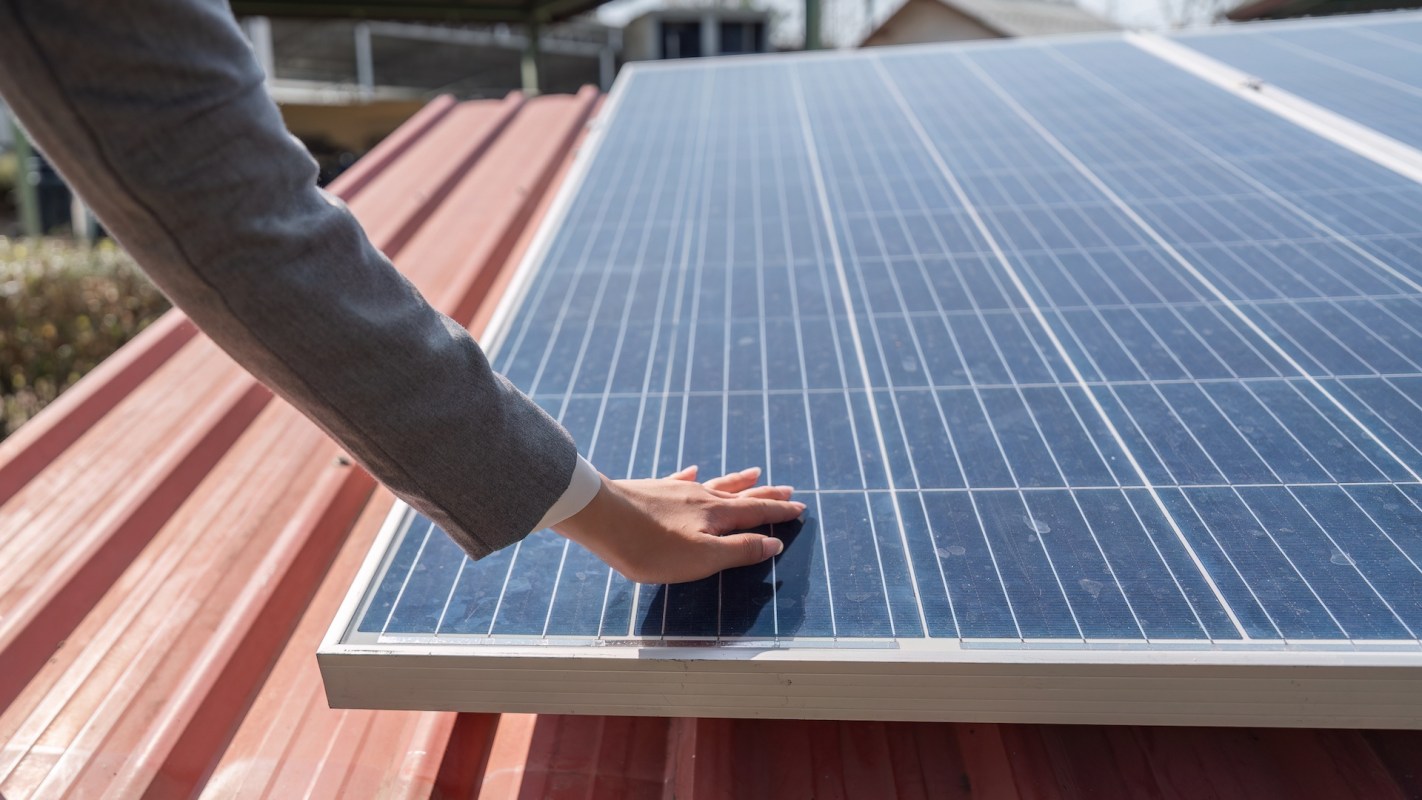
While the term "solar panel" traditionally refers to a device that draws energy from authentic sunlight, a research team from Taiwan's National Yang Ming Chiao Tung University has developed a solar cell that can harness the same power from indoor fluorescent lighting.
Hoping to make solar energy more versatile — solar panels are less effective at night and can respond poorly to the dirt and moisture of the outdoors — the researchers adjusted the composition of perovskite solar cells to make them receptive to different wavelengths of light, according to the American Institute of Physics.
"Because sunlight is not consistently available in all locations, ambient indoor lighting serves as a convenient and accessible energy source," the authors explained.
The study, published in the APL Energy journal, details the process of passivating — or lowering the reactivity of — the perovskite layer of a solar cell to counteract the instability and vulnerability of a modified perovskite solar cell. Under 2000 lux brightness, comparable to the fluorescent lights in most office buildings, the PeSCs achieved a power conversion efficiency rate of close to 40%, more than 10 percentage points higher than the top silicon-based solar cells in direct sunlight.
Finding renewable energy alternatives to fuel-based power sources is key to combating the planet's rising temperatures. In particular, installing solar panels can bring your home energy bills down near zero while cutting your household carbon pollution.
EnergySage can help you get started by finding and vetting local solar installers and saving you up to $10,000 on the process.
TCD Picks » Quince Spotlight
💡These best-sellers from Quince deliver affordable, sustainable luxury for all




Most conventional solar panels are silicon-based, but perovskite so far has proved a cost-effective and energy-efficient alternative. Were perovskite manufacturing to become more mainstream, as is the researchers' hope, solar energy would no doubt become more accessible and affordable, encouraging more homeowners to go solar.
"Because the poor reliability of PeSCs is a large challenge for their adoption, we hope our proposed method can pave the way toward the commercialization of perovskite solar panels," researcher Fang-Chung Chen explained.
|
If you were to install home solar panels, which of these factors would be your primary motivation? Click your choice to see results and speak your mind. |
 Energy independence ⚡
Join our free newsletter for weekly updates on the latest innovations improving our lives and shaping our future, and don't miss this cool list of easy ways to help yourself while helping the planet.






