


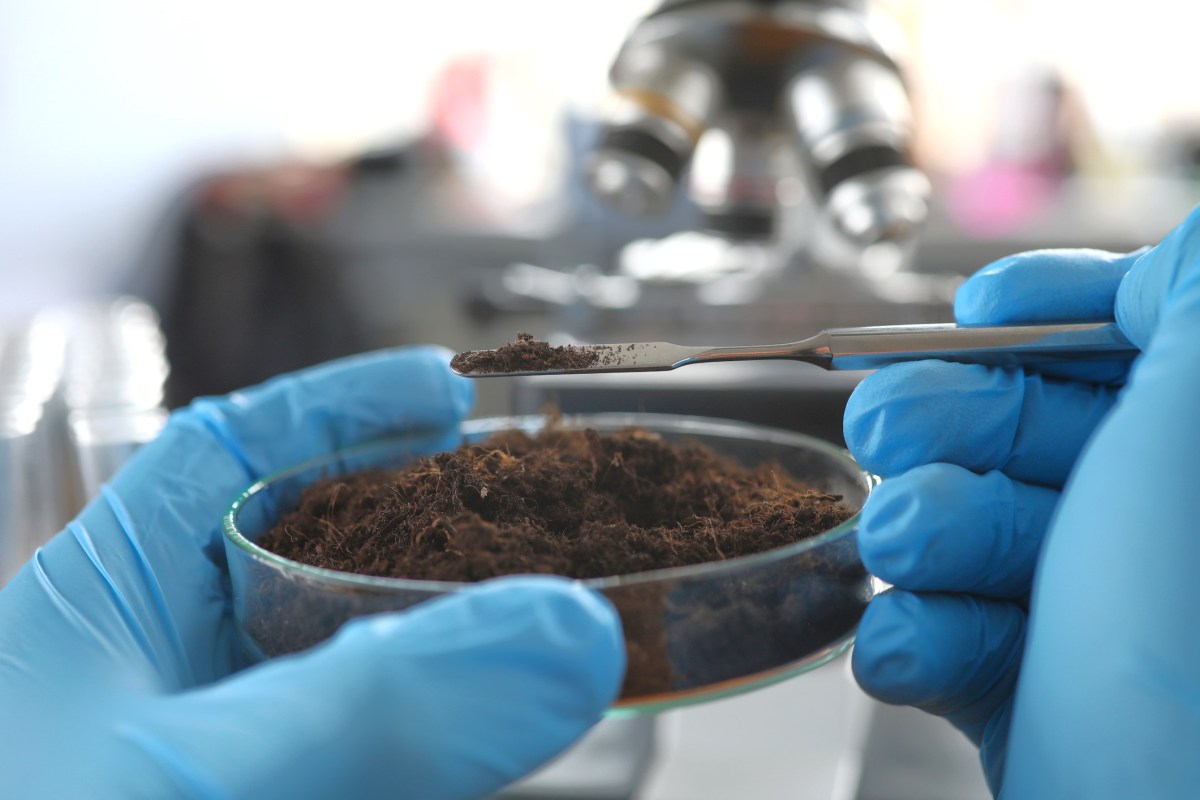
Researchers have identified an enzyme that could help reduce harmful runoff and fertilizer usage in food production.
The finding has the potential to reduce heat-trapping pollution and prevent deadly algal blooms while saving farmers money, which means a healthier environment and cheaper food.
A team from Michigan State University detailed the findings in a review article published in Applied and Environmental Microbiology, and the work was further summarized in a release posted to Phys.org.
"A significant amount of nitrogen fertilizer is lost because it's converted to a form that's easily leached away," Krystina Hird, the review article's lead author, said, per the release. "If we retain more of that nitrogen in the soil, it could have big, positive agricultural implications."
Nitrogen is essential to all life on Earth. Plants require nitrogen to build amino acids, proteins, and chlorophyll, according to Sound Agriculture. More nitrogen in the soil means healthier plants and larger crop yields, which allows for more food to be grown on less land.
Although 78% of the atmosphere is made up of nitrogen, plants can only access nitrogen through soil. Plants rely on tiny microbes in the ground to transform atmospheric nitrogen into forms they can use, per Sound Agriculture.
TCD Picks » Quince Spotlight
💡These best-sellers from Quince deliver affordable, sustainable luxury for all




For decades, farmers have supplemented this natural process by adding nitrogen fertilizers to the soil. Ammonium is one of the best forms of nitrogen for agricultural uses because it is positively charged, causing it to bond with negatively charged soil, per the Phys.org summary.
However, certain soil microbes transform ammonium into nitrite, which is negatively charged. Like the negative poles on two magnets repelling one another, nitrite and soil do not bond, making nitrite more susceptible to being washed away in runoff, explained Phys.org.
That's where the breakthrough enzyme, known as NrfA, comes in.
NrfA turns nitrite into ammonium, and, while it is not the only enzyme to do so, it is by far the most efficient, per the summary.
|
What is stopping you from upgrading to a heat pump system?
Click your choice to see results and speak your mind. |
 The cost of installation 💵
 Though this discovery is technical, it potentially could benefit billions of people every single day.
Nitrogen runoff, also known as nutrient pollution, occurs when water from fertilized agricultural lands washes into bodies of water, including rivers, lakes, and oceans. The influx of nutrients allows algae to flourish, according to the Environmental Protection Agency.
These algae consume oxygen from the water, creating low-oxygen dead zones where fish and other wildlife cannot survive.
Nitrogen runoff has negative consequences for human health as well. According to the NIH, nitrogen runoff contaminates both public drinking water sources and private wells. Its presence in drinking water has been linked to multiple cancers, hypothyroidism, and blue baby syndrome.
Lowering the amount of nitrogen fertilizer farmers use would reduce these public health risks and prevent dead zones while also combating heat-trapping pollution.
All told, the global food production system accounts for a whopping 35% of the planet-heating pollution humans generate. Fertilizer production, transportation, and application alone make up a jaw-dropping 5% to 6%, according to the University of Illinois Urbana-Champaign.
Producing and using less nitrogen fertilizer would be a big step toward lowering the pollution our global food supply produces.
That all of these benefits could possibly come from just one enzyme in the soil shows the incredible interconnectedness of our world and how delicate the balance is that we must maintain.
The next step for the team of Michigan State researchers will be to better understand the details of how the NrfA enzyme works.
"We're trying to get really specific and nitty-gritty," Hird said, per the Phys.org summary. "It's going to be like performing a delicate surgery."
The same could be said for addressing the many environmental challenges we currently face. Thankfully, discoveries like the NrfA enzyme give us hope that we can rise to meet them.

Join our free newsletter for weekly updates on the latest innovations improving our lives and shaping our future, and don't miss this cool list of easy ways to help yourself while helping the planet.






