


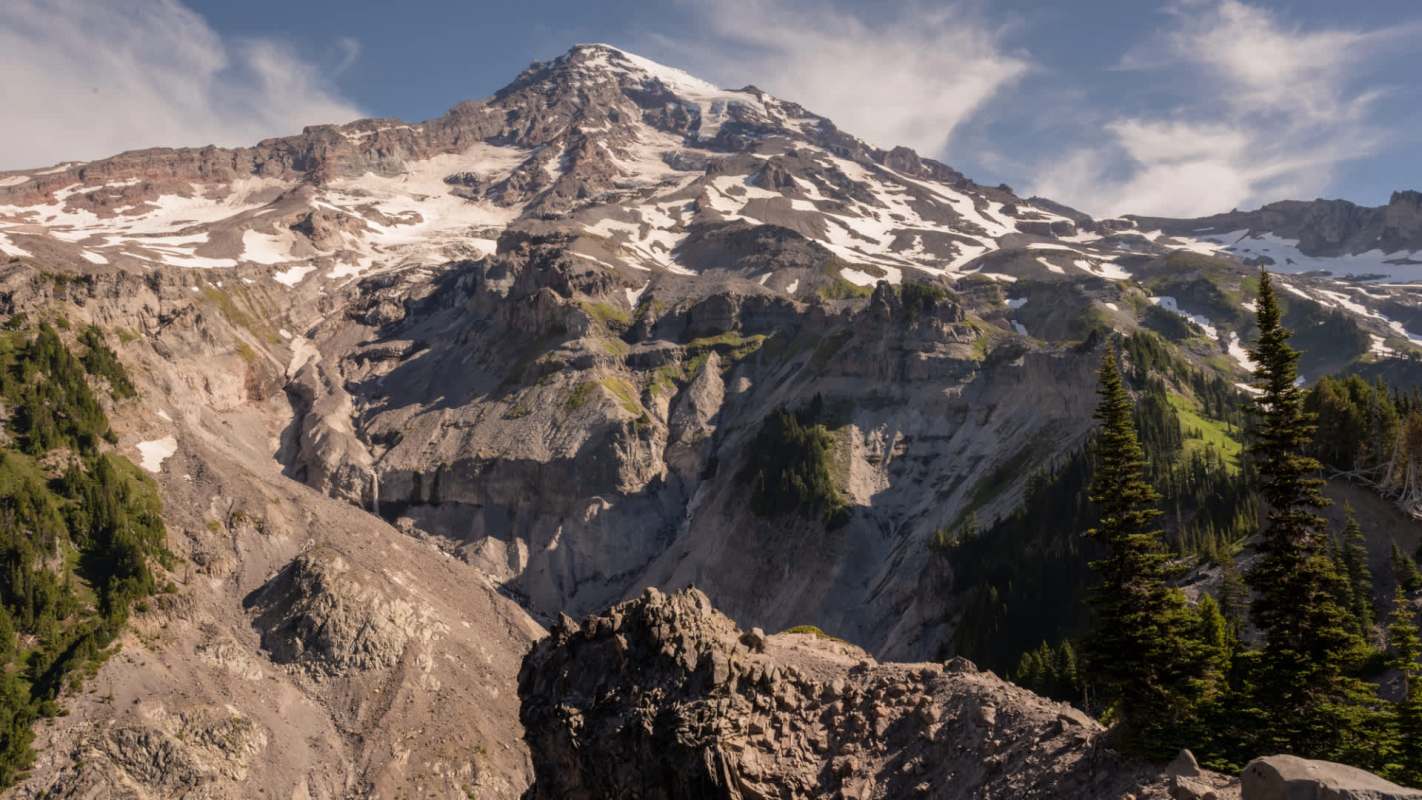
Mount Rainier's glaciers have always done more than decorate the skyline. The News Tribune reports they anchor ecosystems, feed rivers, and support nearby communities. Now, they're melting away faster than many imagined.
What's happening?
In the early 1900s, Mount Rainier had 30 glaciers. Today, it is estimated that only 26 remain, according to The News Tribune. Scientists say the Ohanapecosh Glacier may vanish within a decade.
Retired National Park Service geologist Jon Riedel told The News Tribune, "The trends were clear at Mount Rainier: that the glaciers were losing more to melt in the summer than they were gaining in the winter."
Years ago, tourists visited the Paradise Ice Caves, tucked inside the Paradise Glacier. "I think the real warning bell for a lot of people was — 'have you heard of the Paradise ice caves?'" Paul Kennard, a retired National Park Service geomorphologist, told The News Tribune.
The caves, famous for their glowing blue formations, closed in 1980 when falling ice made visits too dangerous. "Now, the caves are gone," Kennard said.
Why does this matter?
Melting glaciers do more than erase iconic views. They feed rivers that power homes, water crops, and keep fish alive.
TCD Picks » Quince Spotlight
💡These best-sellers from Quince deliver affordable, sustainable luxury for all




"These rivers are going to be really impacted by glaciers diminishing, and water resources in the Pacific Northwest might seem infinite, but they're not," Jill Pelto, art director for the North Cascades Glacier Climate Project, told The News Tribune.
A lack of glaciers means less meltwater, which threatens the salmon populations essential to local communities and wildlife. Jacques White, CEO of Long Live the Kings, said, "If fish or wildlife depend on large volumes of cold water into summer, they're not getting it because the major melt has occurred earlier."
Mauri Pelto, director of the North Cascade Glacier Climate Project, explained to The News Tribune, "There's certain glaciers that don't extend up toward the summit … those are the glaciers that are going to be lost in the next 20 years."
Rockfalls also become more common as ice disappears. In 2019, one rockfall killed a climber and injured two others on Liberty Ridge. Sudden glacial floods can send water and debris rushing down trails without warning.
|
Do you worry about air pollution in your town? Click your choice to see results and speak your mind. |
 All the time 💯
 What can be done?
Experts connect glacier loss to Earth's rising temperatures. Another study tracking Greenland's ice sheet found major losses linked to warmer seasons.
Large policy shifts matter, but daily choices help too. Walking or using public transit, switching to electric cars, and cutting out single-use plastics reduce pollution that fuels this warming. Some researchers are working to keep freshwater flowing from vanishing glaciers to the communities that rely on it.
For those wanting to understand how disappearing ice shapes lives, there are helpful guides exploring these critical issues.

Join our free newsletter for good news and useful tips, and don't miss this cool list of easy ways to help yourself while helping the planet.







