


In recent years, energy bills have soared across the U.S. Even in the midst of horrible inflation, power costs have risen faster than the rate of other goods.
One reason? The costs of dirty fuels like methane gas and heating oil are continuing to skyrocket.
And while clean, abundant energies like wind and solar are becoming cheaper each year, not everyone can take advantage of them.
Thankfully, there are plenty of actions you can take to lower your home's energy bills — without breaking the bank or launching into a remodeling project. Here are eight of the easiest and most cost-effective ways to slash your monthly power bills.
Quick and easy steps
1. Swap out old incandescent lightbulbs for LEDs
If you use incandescent bulbs in your home, you have the opportunity to seriously lower your energy bills with a quick swap.
But because LED bulbs use 75% less energy — despite being capable of shining brighter — you could save around $200 a year. In fact, if you're only looking for that classic yellowish dim light that many incandescents provide, you could replace 40-watt and even 100-watt incandescent bulbs with 2-watt LED bulbs and get essentially the same lighting vibe you've come to enjoy for 20 to 50 times less power drain, though most families will likely opt for LEDs in the 4-watt to 10-watt range.
TCD Picks » Quince Spotlight
💡These best-sellers from Quince deliver affordable, sustainable luxury for all




Either way, after 10 years of a full-house LED transition, you'd be up as much as a whopping $1,800 (after the initial cost of bulbs) while slashing air pollution to boot. The savings could end up even higher if electricity rates keep spiking and you haven't got solar panels (check TCD's Solar Explorer if you're considering it). It's no wonder the U.S. government effectively outlawed incandescent bulbs for not meeting efficiency standards in 2023.
Give it a try →
2. Unplug those 'energy vampires'
Energy vampires are your appliances, like coffee makers or TVs, that use energy even when they're not on — just by being plugged in. In addition to increasing the risk of house fires, these energy-sucking vampires can account for up to 20% of your monthly energy costs, according to the power company Duke Energy.
By unplugging those suckers when you're not using them, you can save well over $100 a year. You can pick up a Kill-a-Watt-style energy monitoring device for around $50-$100 or borrow one for free at many libraries.
If you identify vampires, you could fight them with smart home switches that allow you to cut the power to the device through a button or online app controls.
Give it a try →
Home temperature control
3. Make your house a smart home
Speaking of smart homes, there are many ways to leverage apps to schedule and optimize your devices and heating and cooling.
That's especially the case when you consider how we waste a ton of energy heating and lighting our homes, even when we're away. Luckily, a smart home — which is really just a term for a house with remote-controlled or automated appliances — makes changing your temperature and lighting easier and cheaper.
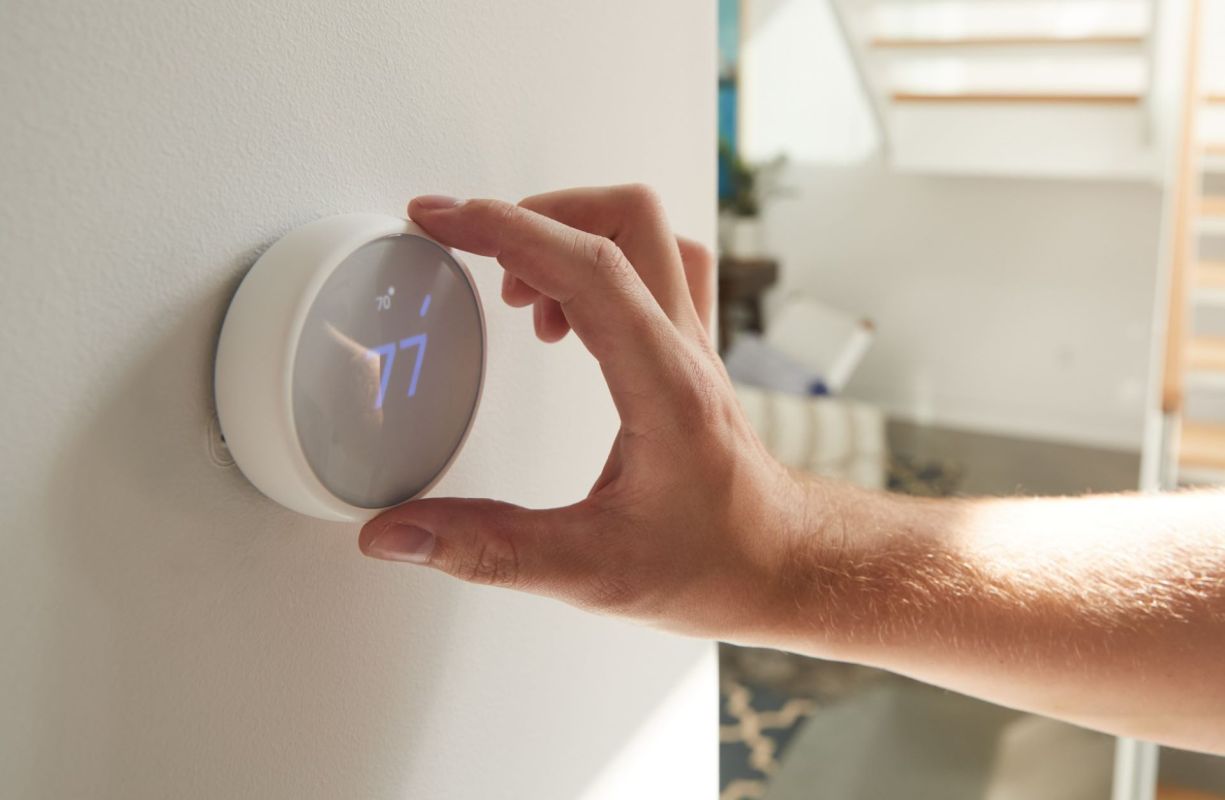
If you install a smart thermostat that reduces energy use when you're out of the house, you could save at least $50 a year. And they don't have to be expensive — this Energy Star-certified smart thermostat only costs $80, meaning it would more than pay for itself after two years.
One benefit of making your home's lighting smart is that you can turn your lights on or off from anywhere — even from bed. What's more, an estimate by energy company Palmetto puts annual savings from smart lighting at $240 a year.
Give it a try →
4. Weatherize your house
Weatherization refers to having your home properly insulated, sealed, and protected from the elements. Keeping your home better protected against the elements also leads to spending less on electricity (hundreds of dollars less, in fact), while creating less pollution.
Weatherizing can be pricey, but through the Inflation Reduction Act (IRA) and its Home Electrification and Appliances Rebate Program that remains in place after the Big Beautiful Bill ended many programs early, qualified households can get up to $1,600 in rebates to cover weatherization costs.
By also reducing your annual energy costs, those weatherizing and insulation upgrades would start paying for themselves before long.
Give it a try →
5. Install a heat pump
Heat pumps are the dual-threat heating and cooling appliances of the future.
Because they're between three and five times more efficient than traditional cooling and heating systems, you could expect to save nearly $850 a year in energy costs if you're upgrading from a propane or electric resistance furnace, or even more compared to the rapidly rising costs of oil heat.
Rewiring America estimates that for a 2,000-square-foot house, a heat pump system could cost about $14,000. But depending on income eligibility, you could get up to $8,000 back through the Home Electrification and Appliances Rebate Program, meaning it could easily pay for itself within seven years.
Even better, perhaps, is that some companies now lease big home savings products like solar panels and HVAC equipment, including TCD partner Palmetto, which has a Comfort Plan allowing for $0-down heat pump systems. Palmetto then also covers all maintenance costs for the system, so if anything goes wrong, it's theirs to fix to keep you as a paying customer.
Check out TCD's HVAC Explorer to learn more about heat pumps and other HVAC options.
Give it a try →
Energy-efficient appliances
6. Get an eco-friendly washer and dryer — and wash more often on cold
If you're due to get a new washer and dryer, energy-efficient models are a no-brainer choice. Because these eco-friendly appliances are cost-comparable with traditional, less-efficient ones, you'll enjoy pure savings when you upgrade.
You can save 25% on energy costs with Energy Star-certified washers, and 20% on dryers. Plus, through IRA incentives that were unaffected by the Big Beautiful Bill, you can get up to an $840 rebate for installing some eco-friendly clothes dryers.
Perhaps even better is simply washing on cold more often, saving up to $150 per year. Hot helps when you need to sanitize or in certain other situations, but many experts say that washing on cold works equally well for the vast majority of washing machine scenarios — especially since many washers and laundry detergents are now designed for that, as Tide's recent ad campaign has shown.
Give it a try →
7. Install a heat pump water heater
Heat pump technology can be used for water heaters, too. And because they're so much more efficient, homeowners who make the switch can expect to save about $330 annually on their energy bills.
Additionally, these water heaters last longer than traditional electric and gas water ones, representing even bigger savings. They are even more dynamite in a warmer climate, since they grab heat from the surrounding air and "pump" it into the water.
Still, since they're the superior technology, heat pump water heaters can cost an average of $1,500 more than traditional water heaters, according to Forbes. But rebates from the Home Electrification and Appliances Rebate Program make upgrading the clear economical choice, providing up to a $1,750 discount depending on income eligibility.
Money aside, you can seriously reduce the pollution your home creates by making this upgrade, taking 20,000 pounds of pollution out of the air over 10 years.
Some heat pump water heaters boast lifetime savings of over $6,000 compared to a new gas, propane, oil, or standard electric unit.
Give it a try →
8. Or install a tankless water heater
If heat pump water heaters aren't for you — or, if you're worried they'll take up too much space — you could also opt for a tankless water heater.
These water heaters can be up to about 33% more energy-efficient than conventional ones, and you'd still save over $100 a year on energy costs. The price of these high-efficiency, low-operating-cost units varies widely, with estimates from Forbes ranging from $500 to $2,300.
Give it a try →

Join our free newsletter for easy tips to save more, waste less, and help yourself while helping the planet.






